
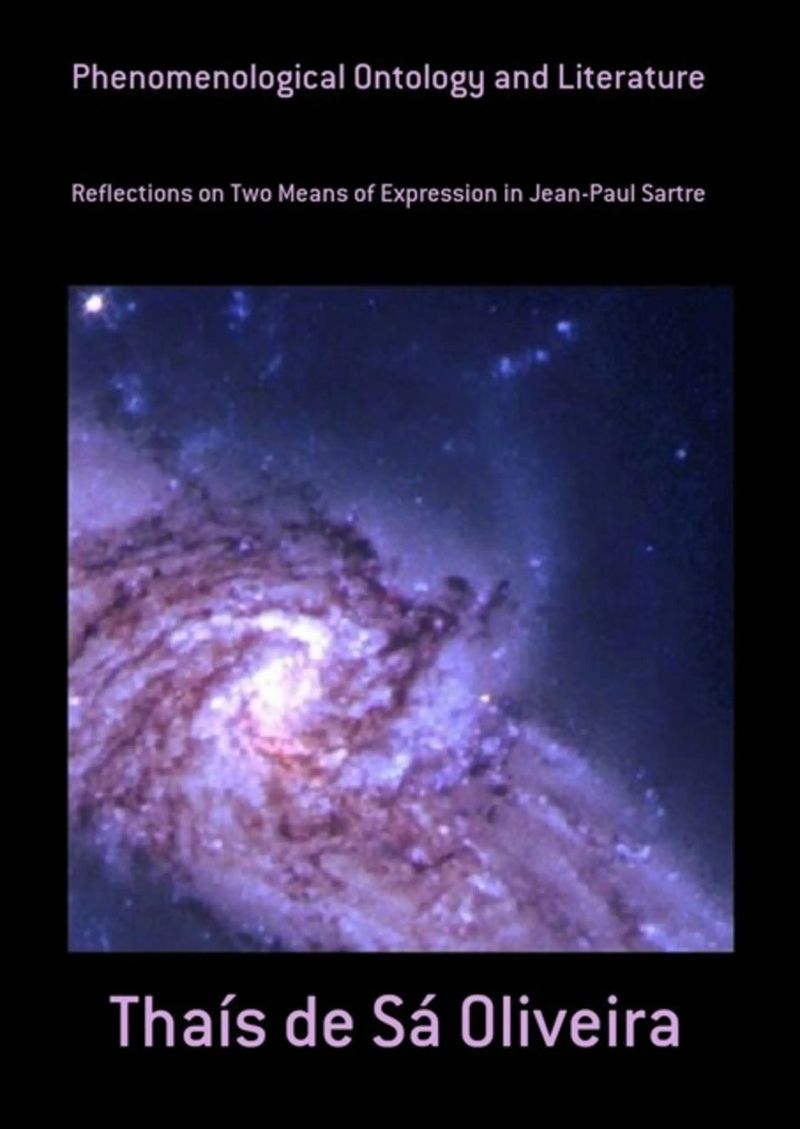
Phenomenological Ontology And Literature
By Thaís De Sá Oliveira


Length2h 27m
About this audiobook
Based on a bibliographic research, the present book aims to present two different ways of expression used by Jean-Paul Sartre – philosophy and literature – to develop his Existentialism. Through the exposure of the main ideas contained in his work "Being and Nothingness: an Essay on Phenomenological Ontology", the objective is articulate his philosophy with the characters presented in his literary works. Initiating with a brief biography of the philosopher, the text continues with an explanation of fundamental concepts for the understanding of his thought, in order to discuss how these concepts are reflected in his writing, such as in the theatrical play "The Flies", the novel "Nausea" and the short story "Intimacy". Aiming to contribute as a study resource for those interested in the work of Sartre, this book draws parallels between his philosophical work and his literary writings.
Audiobook details
GenrePhilosophy, Literary Classics
Length2 hrs 27 mins
Narrated byListen with 1,000+ voices
FormateBook with Audio
Publish dateApr 28, 2015
LanguageEnglish
Table of contents
1Phenomenological
22.4.1. Being-for-Others:
32.5. Anguish 2.6. Bad-Faith 2.7. Original Project
4Introduction
5In July of 1943, Jean-Paul Sartre and
Mostrar todos os capítulosVer menos
6In 1963, Sartre wrote “The Words” as
7Being-in-Itself
8Mário Giordani (1997, p. 101):
99). His thought considers that:
10Freedom
11Anguish
12identifies himself with his behavior, as well as
13105). Sartre states
14things, because he
15Original Project
16itself-for-itself, man
17freedom in the midst of a miserable existence.
18Freedom in Orestes
19ruffian by
20about the dangers with which the people of
21Bad-Faith in Electra
22keen sword,‖
23Questions about the reason why she
24not something eternal and public but personal
25me, in step?‖ (Sartre, 2005a, p. 49). Then she
26the
27the crowd realizes
28―the custom of the city forbids my punishing
29decision
30I'm Orestes, your
31always thinking of his strength and of my
32that he
33themselves‖ (Sartre, 2005a, p. 77).
34But I have kept order‖ (Sartre, 2005a, p. 77).
35doubt in relation to her feelings about what
36Electra declares:
37Because of her feeling of guilt, she
38“Intimacy”
39her husband. Inside the taxi, Lulu confesses
40The other attitude of the being-for-
41112). Another moment in which an act of bad-
More from Thaís De Sá Oliveira

The Art of LivingThich Nhat Hanh5h 1m4.5 (14.2K)$24 · $0.00
Moral Letters to LuciliusLucius Annaeus Seneca24h 26m4.5 (71.7K)$0.99 · $0.00
Lessons in TruthH. Emilie Cady3h 50m4.5 (2.4K)$20 · $0.00
Letters from a StoicSeneca6h 5m4.4 (80.4K)$6 · $0.00
The Discourses of EpictetusP. E. MATHESOM12h 47m4.4 (17.7K)$1.20 · $0.00
IlluminationsWalter Benjamin10h 12m4.4 (16.2K)$20 · $0.00
That Bird Has My WingsJarvis Jay Masters9h 49m4.4 (13.7K)$29 · $0.00

Tâo Teh KingLaozi2h 34m4.4 (230.9K)$2 · $0.00
SymposiumPlato3h 26m4.4 (97.9K)$1.20 · $0.00

Buddhist Boot CampTimber Hawkeye2h 39m4.4 (8.4K)$18 · $0.00
Enchiridion & The Discourses of Epictetus (Annotated)Arrian Epictetus18h 9m4.4 (3.5K)$2 · $0.00

The Meditations of the Emperor Marcus Aurelius AntoninusEmperor of Rome Marcus Aurelius5h 41m4.4 (1.8M)$1 · $0.00
Crime and PunishmentFyodor Dostoevsky23h 11m4.4 (1.3M)$12 · $0.00

MeditationsMarcus Aurelius5h 52m4.4 (433.7K)$1 · $0.00
Everyday DharmaSuneel Gupta5h 2m4.5 (761)$20 · $0.00

The Joyful Wisdom ("La Gaya Scienza")Friedrich Wilhelm Nietzsche11h 37m4.4 (26.6K)$1 · $0.00
The Art of LivingEpictetus, Sharon Lebell3h 16m4.4 (50.1K)$18 · $0.00
MeditationsEmperor Of Rome Marcus Aurelius7h 23m4.3 (477.5K)$1.20 · $0.00

The Imitation of ChristThomas à Kempis6h 27m4.3 (84.6K)$21 · $0.00

Sadhana: the realisation of lifeRabindranath Tagore3h 49m4.4 (8.6K)$6 · $0.00

To Kill a MockingbirdHarper Lee12h 18m4.5 (7.4M)$29 · $0.00

These Precious DaysAnn Patchett11h 14m4.5 (45.2K)$29 · $0.00
TWELFTH NIGHTWilliam Shakespeare, Sidney Lee16h 38m4.6 (2.8K)$1.99 · $0.00

The Complete Histories / History Plays of William Shakespeare (Annotated)William Shakespeare29h 42m4.6 (2.3K)$0.99 · $0.00

Braving the TruthRachel Held Evans11h 31m4.7 (359)$29 · $0.00

The Old Man and the Sea (Annotated)Ernest Hemingway4h 27m4.6 (1.4K)$2 · $0.00

Henry V (The Play, Historical Background and Analysis of the Character in the Play)William Shakespeare, William Hazlitt8h 50m4.6 (1.3K)$1.99 · $0.00

H. P. LOVECRAFT Ultimate Collection: Novellas, Short Stories, Poetry & Essays (Annotated)H. P. Lovecraft12h 28m4.6 (2.3K)$2 · $0.00
Time RegainedMarcel Proust16h 8m4.5 (10.6K)$1.99 · $0.00
The Mis-Education of the NegroCarter Goodwin Woodson4h 32m4.5 (28.4K)$10 · $0.00

TORAH - Bilingual Edition: English/Hebrew (Annotated)Max Margolis, JPS28h 26m4.6 (1K)$2 · $0.00

Betty Crocker picture cooky bookBetty Crocker, Inc. General Mills2h 13m4.5 (6.5K)$1 · $0.00

The Complete Tales of Beatrix PotterBeatrix Potter3h 36m4.5 (75K)$3 · $0.00

Anne of Green GablesL. M. Montgomery11h 1m4.5 (1.2M)$2.30 · $0.00

Crime and Punishment (The Unabridged Garnett Translation) (Annotated)Fyodor Dostoevsky24h 25m4.5 (15.4K)$0.99 · $0.00

The North American IndianEdward S. Curtis, Frederick Webb Hodge6h4.5 (1.2K)$2 · $0.00

The Picture of Dorian Gray: The Uncensored 13 Chapter Version + The Revised 20 Chapter Version (Annotated)Oscar Wilde16h 12m4.5 (2.8K)$0.99 · $0.00

Grimoire Of The Everyday WitchIsadora Lys / Virginia Santos5h 35m4.5 (3.9K)$9 · $0.00

Winnie-the-PoohAlan Alexander Milne2h 52m4.5 (401.1K)$3 · $0.00
Sitting PrettyRebekah Taussig7h 33m4.5 (18.9K)$26 · $0.00
You may also like

Three GuineasVirginia Woolf9h 23m4.1 (9.1K)$2 · $0.00

A History of WarfareJohn Keegan19h 13m4.1 (7.5K)$32
Hegel's Phenomenology of MindGeorg Wilhelm Friedrich Hegel27h 45m4.1 (29.6K)$1.99 · $0.00

A Chill in the AirIris Origo4h 20m4.2 (1.2K)$20 · $0.00

Character BuildingBooker T. Washington4h 46m4.6 (286)$2 · $0.00

Letters to a Young ArtistAnna Deavere Smith4h 29m4.2 (975)$12 · $0.00
Desperately Seeking Shah RukhShrayana Bhattacharya19h 14m4.3 (3.6K)$18 · $0.00
Peace Is Every StepThich Nhat Hanh3h 29m4.4 (63.7K)$14 · $0.00
Three Guineas (a book-length essay) (Annotated)Virginia Woolf9h 39m3.9 (6K)$1.99 · $0.00
DisciplineRanda Abdel-Fattah5h 29m4.3 (1.8K)$26 · $0.00

Drum-TapsWalt Whitman1h 35m4.2 (522)$7 · $0.00

Essays on NationalismRabindranath Tagore4h 3m4.2 (11.5K)$1.99 · $0.00
The Eyes of AsiaRudyard Kipling1h 28m$1 · $0.00
Pablo PicassoLifeInk Press1h 59m4.1 (15)$4 · $0.00

The Essential John Dewey: 20+ Books in One EditionJohn Dewey87h 20m$0.99 · $0.00
SargentDonald Wigal1h 44m4.1 (34)$13.50 · $0.00
THE LAW OF SUCCESS Lesson Fifteen – TOLERANCENapoleon Hill59m$4.70 · $0.00

Krzysztof Zanussi. Portrait of a FriendDariusz Domański2h 2m$13 · $0.00

THE SECOND WAVELydia Frances Hooper5h 47m$7
August Macke and artworksAugust Macke, Walter Cohen1h 52m4.3 (20)$15 · $0.00