
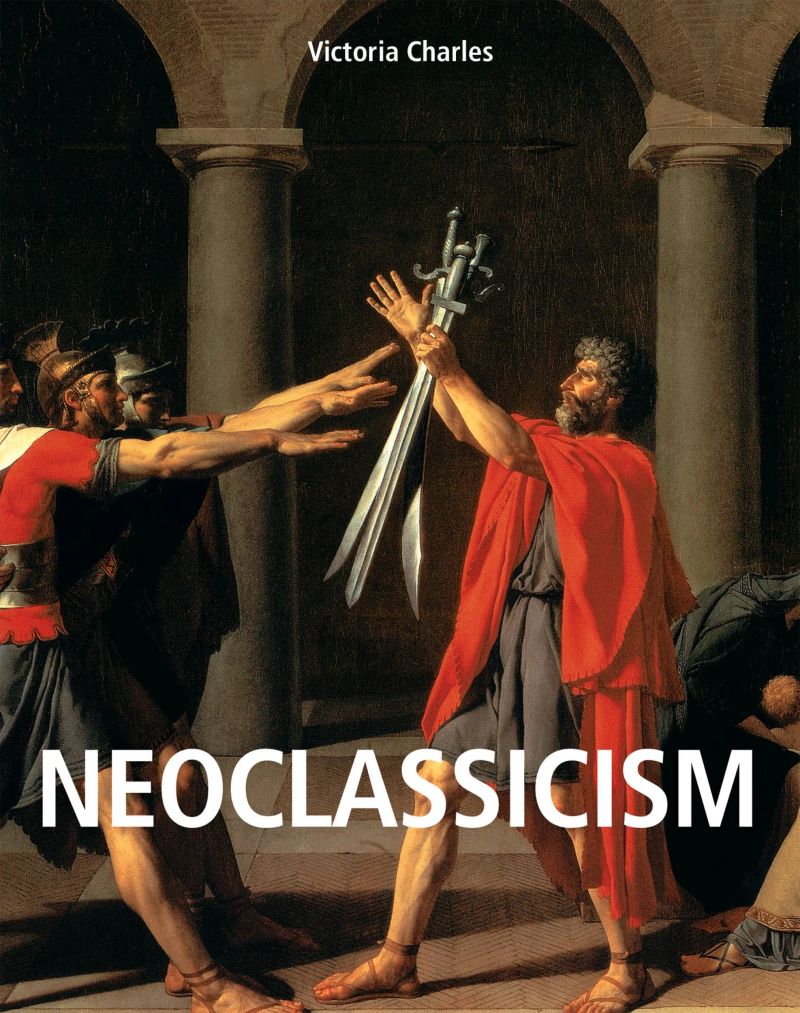
Neoclassicism
Antiquity reborn in reason, harmony, and heroic idealsDe Victoria Charles


Duração1h 24m
Sobre este audiolivro
In the arts, Neoclassicism is a historical tradition or aesthetic attitude based on the art of Greece and Rome in antiquity. The movement started around the 18th-century, age of Enlightenment, and continued into the early 19th-century The general credo associated with the aesthetic attitude of Classicism was that art had to be rational and therefore morally better. Neoclassicists also believed that art should be cerebral, not sensual and therefore characterised by clarity of form, sober colours and shallow space. It was a reaction against both the surviving Baroque and Rococo styles, and a desire to return to the perceived ""purity"" of the arts of Rome. The important artists of the movement include the sculptors Antonio Canova,Jean-Antoine Houdon and Bertel Thorvaldsen, and the painters J.A.D. Ingres, Jacques-Louis David and Anton Raphael Mengs.
Detalhes do audiolivro
GêneroOther
Duração1 h 24 min
Narrado porOuça com mais de 1.000 vozes
FormatoeBook com áudio
Data de publicação9 de dez. de 2019
IdiomaInglês
Sumário
1Introduction
2INTRODUCTION
3A HISTORY OF NEOCLASSICISM
4The Precursors of Neoclassicism
5The Neoclassical Period
Mostrar todos os capítulosVer menos
6Of Neoclassical Inspiration
7Neoclassicism elsewhere the world
8Sculpture
9Architecture
10The Expressive Moods of Neoclassicism
11The Decline
12THE ARTISTS
13Jacques-Louis David (1748 Paris – 1825 Brussels)
14Jean–Auguste Dominique Ingres (1780 Montauban – 1867 Paris)
15Joseph Marie Vien (1716 Montpellier – 1809 Paris)
16Anton Raphaël Mengs (1728 Aussig – 1779 Rome)
17Johann Heinrich Fuseli (Zürich 1741 – London 1825)
18Antonio Canova (1757, Possagno – 1822, Venice)
19Henri Matisse. A quest for light, colour and freedom
1000 Meisterwerke der Angewandten KunstVictoria Charles9h 41min$15.50 · $0.00
1000 Portraits de génieVictoria Charles, Klaus H. Carl12h 6min4.0 (10)$18 · $0.00

Art Deco. The world of Art Deco unveiledVictoria Charles1h 28min3.4 (65)$13 · $0.00

El RenacimientoVictoria Charles3h 32min3.8 (44)$15 · $0.00
El libro definitivo sobre PicassoVictoria Charles, Anatoli Podoksik7h 13min4.8 (10)$19 · $0.00

Caspar David Friedrich. Mystique et NatureVictoria Charles3h 2min4.4 (25)$16 · $0.00
1000 Retratos de los Grandes MaestrosVictoria Charles, Klaus H. Carl10h 6min4.1 (18)$18 · $0.00
Salvador DalíVictoria Charles2h 41min$13 · $0.00
Salvador DalíVictoria Charles2h 38min4.3 (35)$13 · $0.00

Albrecht Dürer 1471-1528Victoria Charles2h 36min3.3 (25)$16 · $0.00
Pablo Picasso - El minotauro de la pinturaVictoria Charles, Anatoli Podoksik4h 52min$16 · $0.00
Salvador Dalí «Yo soy el surrealismo»Victoria Charles, Eric Shanes4h 41min4.6 (11)$16 · $0.00
Das ultimative Buch über PicassoVictoria Charles, Anatoli Podoksik7h 20min4.2 (163)$19 · $0.00
Medieval Art in the Christian WestVictoria Charles, Klaus H. Carl7h 57min$19 · $0.00

GotikVictoria Charles, Klaus H. Carl4h 43min4.0 (34)$15 · $0.00
Dalí 1904-1989Victoria Charles46min3.6 (54)$15 · $0.00
Francisco Goya: Uma vida na arteVictoria Charles1h 20min4.1 (19)$8 · $0.00
Sandro BotticelliVictoria Charles1h 24min4.2 (36)$8 · $0.00
Sandro BotticelliVictoria Charles1h 38min4.2 (26)$8 · $0.00
BotticelliVictoria Charles1h 34min4.2 (26)$8 · $0.00
The Holy Bible - 1 SamuelKing James2h 13min4.8 (1.6K)$3 · $0.00

The American Standard Bible — The Gospel of MatthewMatthew3h 56min4.7 (3K)$2 · $0.00

Bad Fat Black GirlSesali Bowen6h 32min4.7 (2.8K)$24 · $0.00
The King James Audio Bible New Testament CompleteChristopher Glyn20h 2min4.7 (2.6K)$10 · $0.00
Faiths CheckbookCharles Spurgeon12h 44min4.7 (3.2K)$11 · $0.00

Ten Things I Wish You Knew About Your Child's Mental HealthDr. Billy Garvey4h 53min4.7 (2.4K)$20 · $0.00

Designing Terry Pratchett’s DiscworldPaul Kidby3h 52min4.7 (343)$20 · $0.00
The Lives of BrianBrian Johnson9h 45min4.6 (3.5K)$29 · $0.00
Expository Thoughts on the Gospel of LukeJ.C. Ryle27h 13min4.7 (536)$18 · $0.00

CrossroadsKaleb Dahlgren7h 56min4.6 (4.9K)$26 · $0.00

Across the RiverKent Babb11h 40min4.6 (927)$29 · $0.00

Brain Training for RidersAndrea Monsarrat Waldo5h 56min4.7 (550)$19 · $0.00

My Effin' LifeGeddy Lee17h 11min4.6 (13.1K)$40 · $0.00
Kings and PawnsHoward Bryant10h 9min4.6 (678)$29 · $0.00

The Elementia Chronicles #2: The New OrderSean Fay Wolfe11h 17min4.6 (841)$29 · $0.00
The ActsLuke2h 55min4.6 (19.7K)$12 · $0.00

New Testament - Easy NavigationWorld English Bible19h 35min4.6 (1.3K)$1.30 · $0.00

Woodcraft and Camping (Annotated)George Washington Sears3h 30min4.6 (1.2K)$1.99 · $0.00

The Hate U GiveAngie Thomas11h 50min4.5 (1.1M)$8 · $0.00
The King of AttoliaMegan Whalen Turner10h 23min4.5 (61.3K)$29 · $0.00
Você também pode gostar
Ideas Have Consequences, Expanded EditionRichard M. Weaver7h 58min4.3 (3.3K)$17
The American FutureSimon Schama15h 59min3.9 (1.4K)$33 · $0.00

How to Test Negative for StupidJohn Kennedy8h 13min4.7 (9.7K)$28 · $0.00

FeminaJanina Ramirez11h 56min4.2 (9.1K)$8 · $0.00

A History of the Arab PeoplesAlbert Hourani21h 5min4.1 (7.3K)$32

A Defence of VirginiaRobert Lewis Dabney10h4.0 (98)$1 · $0.00

History of the United States of America, Volume VIGeorge Bancroft17h 17min$25

A Defence of Virginia (Annotated)Robert Lewis Dabney9h 49min4.6 (12)$0.99 · $0.00

The Grandes DamesStephen Birmingham11h 32min4.2 (236)$27 · $0.00

The Origin, Tendencies and Principles of GovernmentVictoria C. Woodhull12h 37min$2 · $0.00

The History of Protestantism (Annotated)James Aitken Wylie131h 24min4.0 (67)$2 · $0.00

The Philippines - Past and Present (Vol. 1&2) (Annotated)Dean C. Worcester40h 29min4.0 (26)$2 · $0.00

The Greatest Works of Elizabeth Cady Stanton (Annotated)Elizabeth Cady Stanton206h 29min$2 · $0.00
Gustave CourbetGeorges Riat6h 1min4.6 (11)$18 · $0.00

Madame de Staël (Annotated)Bella Duffy7h 38min$0.99 · $0.00

The Best of the World's Classics (All 10 Volumes)Henry Cabot Lodge70h 49min4.3 (35)$1.99 · $0.00

REBEL YELL: History of the Confederacy, Memoirs and Biographies of the Confederate Leaders & Official DocumentsJohn Esten Cooke, Jefferson Davis, Robert E. Lee, Frank H. Alfriend, Heros von Borcke144h 20min4.3 (11)$1.99 · $0.00

Discovering Great PlaysLeonard Peikoff13h 49min4.8 (21)$23 · $0.00
Pictures of German Life in the 18th and 19th Centuries (Vol. 1&2) (Annotated)Gustav Freytag21h 58min$1.99 · $0.00
Patrician & PlebeianThomas J. Wertenbaker5h 13min$1.99 · $0.00