
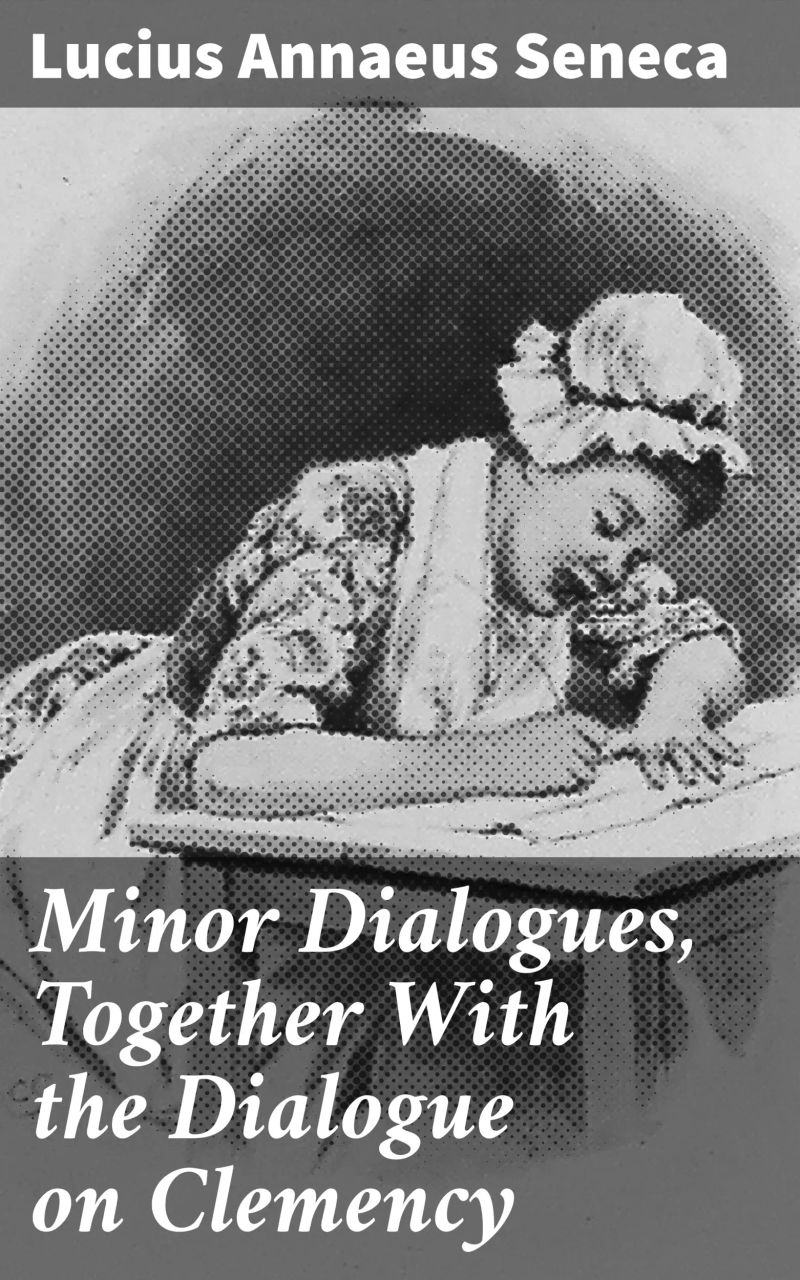
Minor Dialogues, Together With the Dialogue on Clemency
Exploring Stoic Wisdom and Moral Philosophy in Ancient RomeDe Lucius Annaeus Seneca


Duração11h 13m
Sobre este audiolivro
In "Minor Dialogues, Together With the Dialogue on Clemency," Seneca delves into the complexities of moral philosophy, offering insights into human behavior and ethics through a series of thought-provoking dialogues. The literary style is characterized by its brevity and directness, showcasing Stoic principles while engaging the reader in contemplative discourse. Seneca navigates themes of virtue, self-control, and the importance of clemency, making these works not only philosophical treatises but also reflections on the human condition in an increasingly turbulent Roman society, rich in historical and cultural contexts. Lucius Annaeus Seneca, a statesman, dramatist, and philosopher of the Silver Age of Latin literature, was deeply influenced by his tumultuous life, including his forced exile and complex relationship with the Imperial court. His philosophical inquiries reflect a desire to understand how one can lead a virtuous life amid the chaos of the world, ultimately shaping his views on ethics and statecraft, which he elucidates compellingly in this collection. "Minor Dialogues, Together With the Dialogue on Clemency" is essential reading for anyone interested in Stoic philosophy, moral dilemmas, and the intricate interplay between ethics and governance. Through Seneca's eloquent prose and profound insights, readers will find not only intellectual enrichment but also practical guidance for cultivating virtue in their own lives.
Detalhes do audiolivro
GêneroPhilosophy
Duração11 h 13 min
Narrado porOuça com mais de 1.000 vozes
FormatoeBook com áudio
Data de publicação5 de nov. de 2021
IdiomaInglês
Sumário
1PREFACE.
2THE FIRST BOOK OF THE DIALOGUES OF L. ANNAEUS SENECA, ADDRESSED TO LUCILIUS. “WHY, WHEN A PROVIDENCE EXISTS, ANY MISFORTUNES BEFALL GOOD MEN;” OR, “OF PROVIDENCE”
3THE SECOND BOOK OF THE DIALOGUES OF L. ANNAEUS SENECA, ADDRESSED TO SERENUS. “THAT THE WISE MAN CAN NEITHER RECEIVE INJURY NOR INSULT,” OR, AN ESSAY ON THE FIRMNESS OF THE WISE MAN.
4THE THIRD BOOK OF THE DIALOGUES OF L. ANNAEUS SENECA, ADDRESSED TO NOVATUS. OF ANGER. Book I.
5THE FOURTH BOOK OF THE DIALOGUES OF L. ANNAEUS SENECA, ADDRESSED TO NOVATUS. OF ANGER. Book II.
Mostrar todos os capítulosVer menos
6THE FIFTH BOOK OF THE DIALOGUES OF L. ANNAEUS SENECA, ADDRESSED TO NOVATUS. OF ANGER. Book III.
7THE SIXTH BOOK OF THE DIALOGUES OF L. ANNAEUS SENECA, ADDRESSED TO MARCIA. OF CONSOLATION.
8THE SEVENTH BOOK OF THE DIALOGUES OF L. ANNAEUS SENECA, ADDRESSED TO GALLIO. OF A HAPPY LIFE.
9THE EIGHTH BOOK OF THE DIALOGUES OF L. ANNAEUS SENECA, ADDRESSED TO SERENUS. OF LEISURE.
10THE NINTH BOOK OF THE DIALOGUES OF L. ANNAEUS SENECA, ADDRESSED TO SERENUS. OF PEACE OF MIND.
11THE TENTH BOOK OF THE DIALOGUES OF L. ANNAEUS SENECA, ADDRESSED TO PAULINUS.[1] OF THE SHORTNESS OF LIFE.
12THE ELEVENTH BOOK OF THE DIALOGUES OF L. ANNAEUS SENECA, ADDRESSED TO HIS MOTHER, HELVIA. OF CONSOLATION.
13THE TWELFTH BOOK OF THE DIALOGUES OF L. ANNAEUS SENECA, ADDRESSED TO POLYBIUS. OF CONSOLATION.
14THE FIRST BOOK OF THE DIALOGUE OF L. ANNAEUS SENECA, ADDRESSED TO NERO CAESAR. ON CLEMENCY.
15THE SECOND BOOK OF THE DIALOGUE OF L. ANNAEUS SENECA, ADDRESSED TO NERO CAESAR. ON CLEMENCY.
Mais de Lucius Annaeus Seneca
Moral Letters to LuciliusLucius Annaeus Seneca24h 26min4.5 (71.7K)$1.99 · $0.00
Minor Dialogues, Together With the Dialogue on Clemency (Annotated)Lucius Annaeus Seneca12h 29min4.1 (35)$2 · $0.00
Seneca's Morals of a Happy Life, Benefits, Anger and Clemency (Annotated)Lucius Annaeus Seneca12h 37min4.1 (51)$2 · $0.00
Yale Classics (Vol. 2) (Annotated)Lucius Annaeus Seneca, Julius Caesar, Boethius, Horace, Plutarch, Apuleius, Virgil, Persius, Terence, Ammianus Marcellinus, Sallust, Juvenal, Lucan, Suetonius, Tibullus, Tacitus, Petronius, Cornelius Nepos, Lucretius, Martial, Catullus, Cicero, Claudian, Pliny the Younger, Saint Augustine of Hippo, Plautus, Ennius, Propertius, The Metamorphoses, Augustus, Quintilian332h 3min$2 · $0.00
Seneca's Morals of a Happy Life, Benefits, Anger and ClemencyLucius Annaeus Seneca11h 32min4.1 (51)$1 · $0.00
ApocolocyntosisLucius Annaeus Seneca1h 50min3.8 (888)$2 · $0.00
The Greatest Works of Roman Classical LiteratureLucius Annaeus Seneca, Julius Caesar, Boethius, Horace, Plutarch, Apuleius, Virgil, Persius, Terence, Ammianus Marcellinus, Sallust, Juvenal, Lucan, Suetonius, Tibullus, Tacitus, Petronius, Cornelius Nepos, Lucretius, Martial, Catullus, Cicero, Claudian, Pliny the Younger, Saint Augustine of Hippo, Plautus, Ennius, The Metamorphoses, Augustus, Quintilian332h 55min$1 · $0.00
Seneca's Morals of a Happy Life, Benefits, Anger and ClemencyLucius Annaeus Seneca12h 28min4.3 (184)$2 · $0.00
Moral Letters to LuciliusLucius Annaeus Seneca25h 24min4.4 (67.9K)$2 · $0.00
The Greatest Works of Roman Classical Literature (Annotated)Lucius Annaeus Seneca, Julius Caesar, Boethius, Horace, Plutarch, Apuleius, Virgil, Persius, Terence, Ammianus Marcellinus, Sallust, Juvenal, Lucan, Suetonius, Tibullus, Tacitus, Petronius, Cornelius Nepos, Lucretius, Martial, Catullus, Cicero, Claudian, Pliny the Younger, Saint Augustine of Hippo, Plautus, Ennius, The Metamorphoses, Augustus, Quintilian331h 48min4.5 (12)$1.99 · $0.00
Die GemütsruheLucius Annaeus Seneca1h 12min4.3 (281)$13 · $0.00

Auf dem Weg zum Glück: Die große Hörbuch Box der philosophischen Anregungen, Teil 1Lucius Annaeus Seneca, Friedrich Nietzsche, Georg Christoph Lichtenberg, Johann Wolfgang von Goethe11h 26min$21 · $0.00
Lucius Annaeus Seneca: Vom Zorn – De iraLucius Annaeus Seneca5h 2min4.3 (2.4K)$12 · $0.00
Kahlil Gibran. Classic CollectionKahlil Gibran2h 55min4.5 (4K)$10 · $0.00
The Magic PresenceGodfré Ray King10h 21min4.6 (307)$1.20 · $0.00
The Art of LivingThich Nhat Hanh5h 1min4.5 (14.2K)$24 · $0.00
Moral Letters to LuciliusLucius Annaeus Seneca24h 26min4.5 (71.7K)$1.99 · $0.00
Complete Works of Marcus AureliusMarcus Aurelius5h 1min4.5 (2.4K)$10 · $0.00
Lessons in TruthH. Emilie Cady3h 50min4.5 (2.4K)$20 · $0.00
Letters from a StoicSeneca6h 5min4.4 (80.4K)$6 · $0.00
The Discourses of EpictetusP. E. MATHESOM12h 47min4.4 (17.7K)$1.20 · $0.00

IlluminationsWalter Benjamin10h 12min4.4 (16.2K)$20 · $0.00
The Awakening of IntelligenceJ. Krishnamurti19h 1min4.5 (2.7K)$7 · $0.00
That Bird Has My WingsJarvis Jay Masters9h 49min4.4 (13.7K)$29 · $0.00

Tâo Teh KingLaozi2h 34min4.4 (230.9K)$2 · $0.00
SymposiumPlato3h 26min4.4 (97.9K)$1.20 · $0.00

Buddhist Boot CampTimber Hawkeye2h 39min4.4 (8.4K)$18 · $0.00
Commentaries On Living 2J Krishnamurti9h 58min4.5 (606)$6 · $0.00
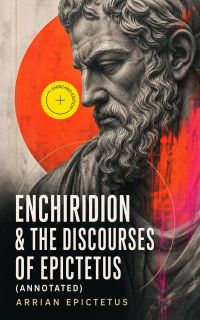
Enchiridion & The Discourses of Epictetus (Annotated)Arrian Epictetus18h 9min4.4 (3.5K)$2 · $0.00
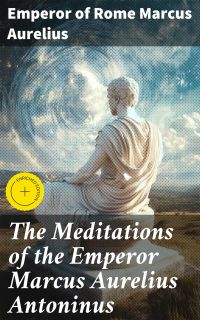
The Meditations of the Emperor Marcus Aurelius AntoninusEmperor of Rome Marcus Aurelius5h 41min4.4 (1.8M)$1 · $0.00
Crime and PunishmentFyodor Dostoevsky23h 11min4.4 (1.3M)$12 · $0.00
Everyday DharmaSuneel Gupta5h 2min4.5 (761)$20 · $0.00
The Joyful Wisdom ("La Gaya Scienza")Friedrich Wilhelm Nietzsche11h 37min4.4 (26.6K)$1 · $0.00
Você também pode gostar

An Iron WillOrison Swett Marden1h 24min4.1 (1.8K)$3 · $0.00

The Life of Rev. David Brainerd, Chiefly Extracted from His Diary (Annotated)David Brainerd12h 28min4.2 (2.2K)$2 · $0.00
The Imitation of ChristThomas à Kempis8h 38min4.3 (125.9K)$5.20 · $0.00
The Imitation of ChristThomas à Kempis6h 27min4.3 (84.6K)$21 · $0.00

Taking My Life BackRebekah Gregory5h 3min4.2 (780)$20

Be Joyful (Philippians)Warren W. Wiersbe4h 52min4.5 (1.6K)$15 · $0.00
The Power of SufferingJohn MacArthur, Jr.4h 43min4.4 (574)$15 · $0.00
Saint Thomas Aquinas (Annotated)G. K. Chesterton6h 59min4.2 (14.6K)$2.99 · $0.00
ApologyPlato1h 10min4.3 (75.4K)$2
The Existentialist's Survival GuideGordon Marino6h 2min3.8 (1.6K)$24 · $0.00
The Imitation of ChristThomas à Kempis6h 51min4.3 (39.4K)$1.99 · $0.00
The Hidden Smile of GodJohn Piper3h 56min4.4 (1.7K)$20

The Science of Being GreatWallace D. Wattles2h 16min4.3 (7.9K)$1 · $0.00

The Science of Being Great: Personal Self-Help Book of Wallace D. Wattles (Unabridged) (Annotated)Wallace D. Wattles3h 14min4.2 (3.4K)$2 · $0.00

Behind the BadgeAdam Davis10h 18min4.7 (2.7K)$10 · $0.00

Sinking of the Titanic and Great Sea DisastersLogan Marshall7h 55min3.8 (2.1K)$2.30
Fear and TremblingSoren Kierkegaard5h 37min4.2 (62.3K)$5 · $0.00
The Discourses of EpictetusP. E. MATHESOM12h 47min4.4 (17.7K)$1.20 · $0.00

Be Patient (Job)Warren W. Wiersbe6h 24min4.5 (649)$17 · $0.00

Hidden PotentialWendy Pope4h 40min4.3 (652)$15 · $0.00