
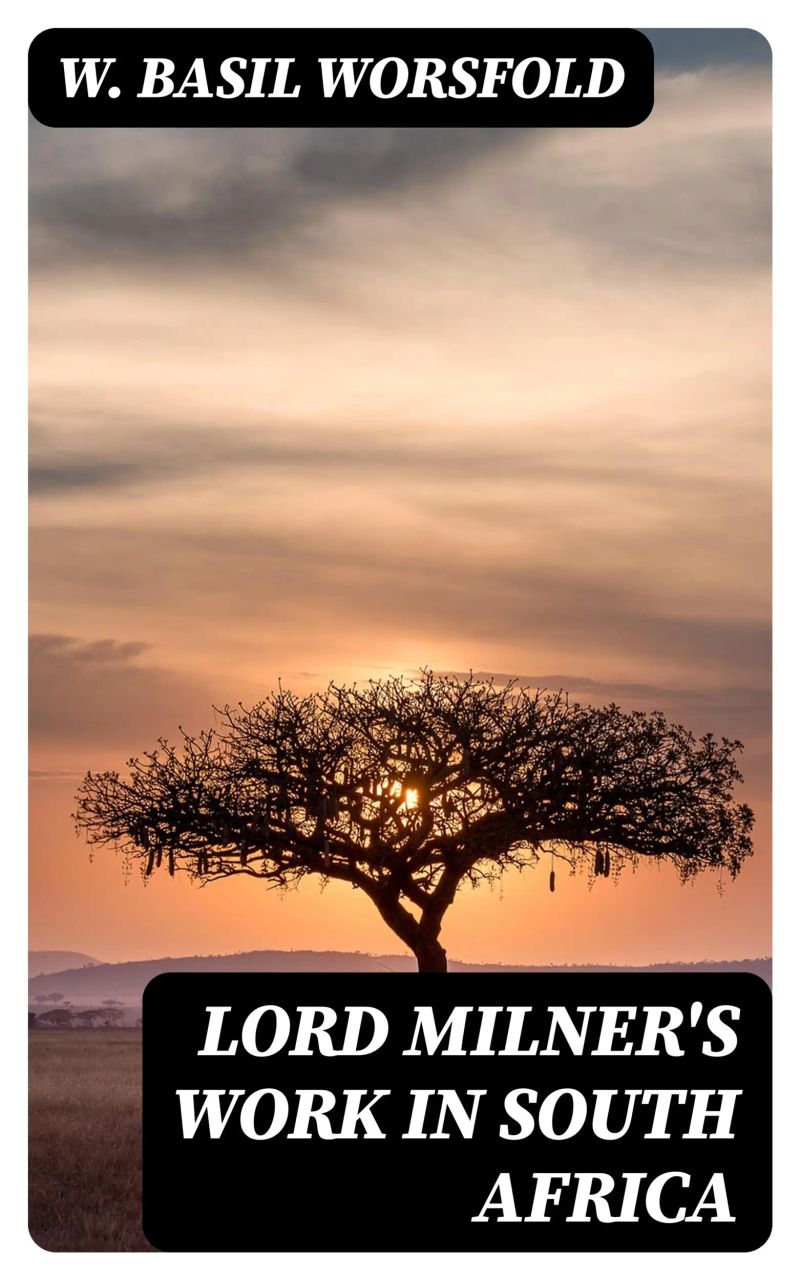
Lord Milner's Work in South Africa
From its Commencement in 1897 to the Peace of Vereeniging in 1902De W. Basil Worsfold


Duração12h 24m
Sobre este audiolivro
In "Lord Milner's Work in South Africa," W. Basil Worsfold offers an incisive examination of Alfred Milner's pivotal role in shaping South African politics during the early 20th century, particularly in the aftermath of the Second Anglo-Boer War. The book employs a critical historical narrative style, meticulously weaving together extensive primary sources and personal anecdotes that illuminate Milner's policies and their profound implications on British Imperial ambitions. Worsfold situates Milner within the broader context of imperialist thought, highlighting the complexities of governance, economic exploitation, and social transformation during a tumultuous era marked by conflict and colonial expansion. Worsfold, an acclaimed historian with a focus on British imperialism, draws upon his extensive background in political history and engagement with contemporary colonial debates to articulate nuanced perspectives on Milner's character and influence. His scholarly rigor reflects years of accessible research and analysis, making this work not only a biography of a crucial historical figure but also an insightful critique of imperial ideology and its ramifications on South African society. For readers intrigued by imperial history and its lasting legacies, Worsfold's insightful text serves as an essential addition to the canon of colonial studies. This book is a must-read for anyone seeking to understand the intricate dynamics of power, governance, and national identity within the context of South Africa's colonial past.
Detalhes do audiolivro
GêneroHistory
Duração12 h 24 min
Narrado porOuça com mais de 1.000 vozes
FormatoeBook com áudio
Data de publicação22 de nov. de 2022
IdiomaInglês
Sumário
1CHAPTER II
7CHAPTER VIII
2CHAPTER III
8CHAPTER IX
3CHAPTER IV
9CHAPTER X
4CHAPTER V
10CHAPTER XI
5CHAPTER VI
11CHAPTER XII (pt. 1)
Mostrar todos os capítulosVer menos
6CHAPTER VII
12CHAPTER XII (pt. 2)
Mais de W. Basil Worsfold

A Brief History of IntelligenceMax S. Bennett12h 18min4.6 (6.6K)$29 · $0.00

Ghosts of HiroshimaCharles Pellegrino8h 59min4.5 (877)$23
Medium RawAnthony Bourdain9h4.1 (65.6K)$29 · $0.00

Suicidal EmpathyGad Saad8h 24min4.1 (736)$28 · $0.00

How Soccer Explains the WorldFranklin Foer7h 22min3.9 (14.9K)$24 · $0.00
The Assassination of Leon TrotskyH. Keith Melton, Nigel West14h 8min$33 · $0.00

All American PatriotismRachel Campos-Duffy8h 53min$29 · $0.00

History of the Decline and Fall of the Roman Empire — Volume 1Edward Gibbon20h 18min4.3 (14.6K) · 1297Grátis

MotherlandJulia Ioffe17h 52min4.7 (2.5K)$40 · $0.00

Where Cowards Go to DieBenjamin Sledge8h 42min4.7 (351)$20 · $0.00

RevolutionariesSanjeev Sanyal11h 23min4.6 (2.6K)$29 · $0.00
Days of Love and Rage: A Story of RevolutionAnand Gopal22h 36min4.7 (584)$34 · $0.00

We Crossed a Bridge and It TrembledWendy Pearlman6h4.6 (5.2K)$24 · $0.00

Unbroken Bonds of BattleJohnny Joey Jones8h 31min4.6 (2.6K)$8 · $0.00

The Daughter of AuschwitzTova Friedman, Malcolm Brabant7h 54min4.6 (16.7K)$26 · $0.00

Lily's PromiseLily Ebert, Dov Forman8h 54min4.6 (16.1K)$29 · $0.00
On Democracies and Death CultsDouglas Murray10h 38min4.6 (6.5K)$29 · $0.00

Across the RiverKent Babb11h 40min4.6 (927)$29 · $0.00

Balcony Over Jerusalem: A Middle East Memoir - Israel, Palestine and BeyondJohn Lyons12h 37min4.6 (1.4K)$33 · $0.00

BeyondStephen Walker15h 39min4.6 (3.2K)$33 · $0.00
Você também pode gostar

The Cold War's Killing FieldsPaul Thomas Chamberlin22h 31min4.3 (939)$46 · $0.00
HellenicaXenophon15h 2min4.2 (4.4K)$1 · $0.00
History of the United States During Thomas Jefferson's Administrations (Complete 4 Volumes)Henry Adams52h 49min4.4 (362)$1.99 · $0.00

Capital and IdeologyThomas Piketty48h 57min4.4 (7.2K)$40

The City-State of BostonMark Peterson26h 16min4.2 (359)$30

Federalist vs. Anti-Federalist: ALL Essays and Articles in One EditionAlexander Hamilton, James Madison, John Jay, Samuel Bryan, Patrick Henry20h 50min4.5 (266)$1.99 · $0.00
The Lincoln-Douglas DebatesAbraham Lincoln, Stephen Douglas16h 5min4.2 (472)$30

The Iraq WarJohn Keegan8h 6min3.7 (1.3K)$17

Great Britain and the American Civil WarEphraim Douglass Adams23h 23min3.6 (53)$1 · $0.00

Lord Milner's Work in South AfricaW. Basil Worsfold12h 25min$1 · $0.00

The Swedish-Norwegian Union CrisisKarl Nordlund4h 32min$2 · $0.00

An Humble Address and Earnest Appeal to Those Respectable Personages in Great-Britain and IrelandJosiah Tucker2h 22min$1 · $0.00
Mad as HellScott Rasmussen, Doug Schoen10h 44min3.2 (115)$20 · $0.00

The Great ConspiracyJohn Alexander Logan26h 53min3.8 (17)$1.99 · $0.00
American Revolution: A Constitutional Interpretation (Annotated)Charles Howard McIlwain5h 17min3.9 (109)$1.99 · $0.00

Black America: A Study Of The Ex-Slave And His Late MasterSir W. Laird Clowes6h 24min$2
The ObamiansJames Mann14h 31min3.8 (402)$23 · $0.00

The Struggle for Imperial Unity: Recollections & ExperiencesGeorge T. Denison8h 42min$2 · $0.00

About IrelandE. Lynn Linton2h 44min3.4 (16)$1 · $0.00

West Pointers and the Civil WarWayne Wei-siang Hsieh8h 58min3.6 (30)$20