


Duração4h 4m
Sobre este audiolivro
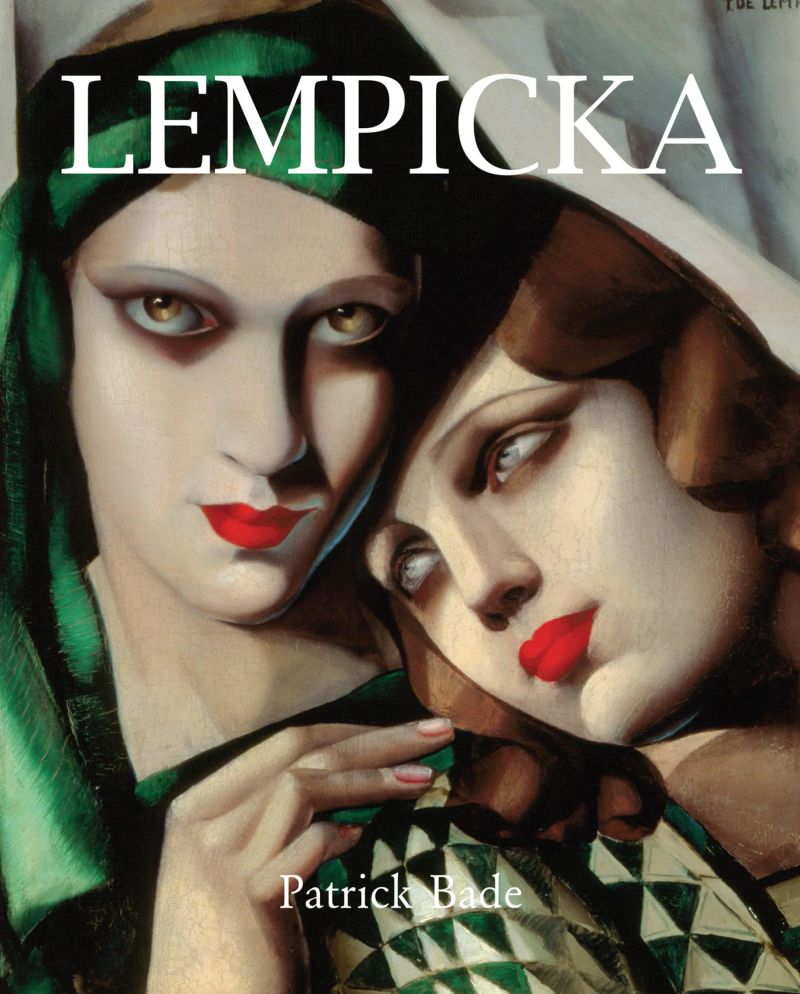
The smoothly metallic portraits, nudes and still lifes of Tamara de Lempicka encapsulate the spirit of Art Deco and the Jazz Age, and reflect the elegant and hedonistic life-style of a wealthy, glamorous and privileged elite in Paris between the two World Wars. Combining a formidable classical technique with elements borrowed from Cubism, Lempicka's art represented the ultimate in fashionable modernity while looking back for inspiration to such master portraitists as Ingres and Bronzino. This book celebrates the sleek and streamlined beauty of her best work in the 1920s and 30s. It traces the extraordinary life story of this talented and glamorous woman from turn of the century Poland and Tsarist Russia, through to her glorious years in Paris and the long years of decline and neglect in America, until her triumphant rediscovery in the 1970s when her portraits gained iconic status and world-wide popularity.
Detalhes do audiolivro
Avaliação★★★★ 4,2 (213)
Inclui Amazon, Goodreads, LibraryThing
GêneroOther
Duração4 h 4 min
Narrado porOuça com mais de 1.000 vozes
FormatoeBook com áudio
Data de publicação8 de mai. de 2012
IdiomaInglês
Sumário
1LEMPICKA
2INDEX
3Introduction
4Barry Friedman Ltd., New York.
5novel or movie.
Mostrar todos os capítulosVer menos
6Russian aristocrats, artists and intellectuals, often with hardly less colourful adventures than
7Private Collection.
8Gabo, Pevsner and Cocteau.
9overnight guest.
10Antoine Pevsner and, after 1933, Naum Gabo and Vassili Kandinsky.
11succession; Maurice Denis (1870-1943) and André Lhote (1885-1962).
12Barry Friedman Ltd., New York.
13Early Life
14Rhythm, 1924. Oil on canvas, 160 x 144 cm, Private Collection.
15notorious Turkish Bath.
16Puvis’ example. Denis’ fellow Nabi Eduard Vuillard (1868-
17Private Collection.
18Art Deco
19The Life
20French Symbolist painter Pierre Puvis de Chavannes suffered from
21architects and designers such as Richard Riemerschmid and Peter
22more beautiful than the Winged Victory of Samothrace.” When
23The Futurist Manifesto stated “We wish to glorify war.” Certainly
24Private Collection, Paris.
25clean engine room of an ocean liner.
26urban traffic.
27The Life
28Spring, 1930. Oil on panel, 41 x 33 cm, Private Collection.
29De Lempicka understood, like any purveyor of soft-core pornography, that partial nudity
30such as Ingres and Gérôme.
31New York.
32Lempicka’s urban sophistication.
33Barry Friedman Ltd., New York.
34geometricised floral decoration so evident in the 1925 Paris exhibition. Nevertheless de
35sunbursts, electrification, mechanisation and transportation.”
36Lempicka - the abstracted, metallic forms and surfaces, the Manhatten back-drops and
37world of Haute Couture.
38Bugatti self-portrait.
39Private Collection.
40the metallic sheen of her white dress.
41Beauvais.
42brown or black.
43house-keeper and mistress Aelis Mazoyer.
44The Life
45Private Collection.
46of the silver screen.
47Page 97
48American Jazz.
49Fernand Leger, André Derain, Brancusi, Coco Chanel, the popular entertainers Mistinguett and
50a considerable fortune and extensive landed properties throughout the former Austro-
Edvard MunchPatrick Bade1h 25min4.1 (54)$8 · $0.00

LempickaPatrick Bade3h 36min4.2 (168)$13 · $0.00

Félicien RopsPatrick Bade1h 5min3.7 (14)$13 · $0.00
Aubrey BeardsleyPatrick Bade1h 15min4.3 (42)$13 · $0.00
MunchPatrick Bade1h 20min3.9 (40)$8 · $0.00

KlimtPatrick Bade1h 2min4.3 (257)$8 · $0.00
MuchaPatrick Bade1h 12min4.1 (288)$8 · $0.00

Felicien RopsPatrick Bade58min4.1 (27)$13 · $0.00

Gustav Klimt und KunstwerkePatrick Bade, Jane Rogoyska1h 21min4.3 (80)$15 · $0.00
Auguste RenoirPatrick Bade55min4.0 (52)$13 · $0.00

Alfons MuchaPatrick Bade, Victoria Charles2h 51min4.4 (31)$16 · $0.00
Aubrey BeardsleyPatrick Bade1h 2min4.3 (24)$13 · $0.00

Henri de Toulous Lautrec: Kunst und intrigenPatrick Bade1h$13 · $0.00
SchielePatrick Bade1h 16min4.3 (33)$8 · $0.00

Felicien RopsPatrick Bade1h 4min3.8 (35)$13 · $0.00
Aubrey BeardsleyPatrick Bade1h 16min4.3 (12)$13 · $0.00

Gustav Klimt și opere de artăPatrick Bade, Jane Rogoyska1h 19min$15 · $0.00

Alphonse Mucha et œuvres d'artPatrick Bade1h 26min4.0 (120)$15 · $0.00

Alphonse MuchaPatrick Bade, Victoria Charles2h 57min4.1 (31)$16 · $0.00
KlimtPatrick Bade58min3.7 (52)$8 · $0.00
The Holy Bible - 1 SamuelKing James2h 13min4.8 (1.6K)$3 · $0.00
The American Standard Bible — The Gospel of MatthewMatthew3h 56min4.7 (3K)$2 · $0.00

Bad Fat Black GirlSesali Bowen6h 32min4.7 (2.8K)$24 · $0.00
The King James Audio Bible New Testament CompleteChristopher Glyn20h 2min4.7 (2.6K)$10 · $0.00

Faiths CheckbookCharles Spurgeon12h 44min4.7 (3.2K)$11 · $0.00

Ten Things I Wish You Knew About Your Child's Mental HealthDr. Billy Garvey4h 53min4.7 (2.4K)$20 · $0.00

Designing Terry Pratchett’s DiscworldPaul Kidby3h 52min4.7 (343)$20 · $0.00
The Lives of BrianBrian Johnson9h 45min4.6 (3.5K)$29 · $0.00
Expository Thoughts on the Gospel of LukeJ.C. Ryle27h 13min4.7 (536)$18 · $0.00

CrossroadsKaleb Dahlgren7h 56min4.6 (4.9K)$26 · $0.00

Across the RiverKent Babb11h 40min4.6 (927)$29 · $0.00

Brain Training for RidersAndrea Monsarrat Waldo5h 56min4.7 (550)$19 · $0.00

My Effin' LifeGeddy Lee17h 11min4.6 (13.1K)$40 · $0.00

Kings and PawnsHoward Bryant10h 9min4.6 (678)$29 · $0.00

The Elementia Chronicles #2: The New OrderSean Fay Wolfe11h 17min4.6 (841)$29 · $0.00

The ActsLuke2h 55min4.6 (19.7K)$12 · $0.00

New Testament - Easy NavigationWorld English Bible19h 35min4.6 (1.3K)$1.30 · $0.00

Woodcraft and Camping (Annotated)George Washington Sears3h 30min4.6 (1.2K)$1.99 · $0.00

The Hate U GiveAngie Thomas11h 50min4.5 (1.1M)$8 · $0.00

The King of AttoliaMegan Whalen Turner10h 23min4.5 (61.3K)$29 · $0.00
Você também pode gostar
Ante-Nicene Church Fathers (All 9 Volumes)Athanasius of Alexandria, Gregory of Nyssa, Clement of Rome, Polycarp, Ignatius, Papias, Barnabas, Justin Martyr, Irenaeus, Commodianus, Mathetes, The Pastor of Hermas, Tatian, Theophilus536h 23min4.6 (2.3K)$1.99 · $0.00

Harvard Classics: Complete 51-Volume AnthologyJohann Wolfgang von Goethe, Gotthold Ephraim Lessing, Thomas Carlyle, Plato, René Descartes, Immanuel Kant, Charles Darwin, Martin Luther, Robert Louis Stevenson, William Shakespeare, Dante Alighieri, Euripides, Percy Bysshe Shelley, Charles Lamb, Henry David Thoreau, Samuel Johnson, John Stuart Mill, David Hume, Joseph Addison, John Locke, John Fletcher, Francis Beaumont, Leigh Hunt, Epictetus, Thomas De Quincey, Samuel Taylor Coleridge, Jonathan Swift, Christopher Marlowe, Jacob Grimm, Wilhelm Grimm, William Hazlitt, Marcus Tullius Cicero, Daniel Defoe, Aesop, Richard Henry Dana, John Dryden, Philip Massinger, Pedro Calderón de la Barca, John Ruskin, Oliver Wendell Holmes, Ernest Renan, Robert Burns, David Garrick, Ralph Waldo Emerson, John Webster, Izaak Walton, John Bunyan, James Russell Lowell, Charles Augustin Sainte-Beuve, Homer, Edmund Burke, Plutarch, Molière, Aeschylus, Michael Faraday, Sophocles, William Makepeace Thackeray, Benjamin Franklin, Pierre Corneille, Jean Racine, Voltaire, Robert Browning, Oliver Goldsmith, Thomas Dekker, John Milton, Aristophanes, Blaise Pascal, Virgil, Simon Newcomb, William Penn, Walter Bigges, Philip Sidney, Herodotus, Walter Raleigh, Francis Bacon, Giuseppe Mazzini, Francis Pretty, George Berkeley, Thomas Hobbes, Adam Smith, Alessandro Manzoni, Abraham Cowley, Michel de Montaigne, Ben Jonson, John Woolman, Benvenuto Cellini, Sydney Smith, Jean Froissart, William Henry Harrison, William Harvey, Marcus Aurelius, Hans Christian Andersen, Thomas Malory, George Gordon Byron, Thomas à Kempis, Richard Steele, Thomas Browne, Archibald Geikie, Thomas Babington Macaulay, Tacitus, William Roper, Hippocrates, Miguel de Cervantes, Thomas More, Friedrich von Schiller, Philip Nichols, Louis Pasteur, Joseph Lister, Jean Jacques Rousseau, Pliny the Younger, Edgar Alan Poe, Saint Augustine, Brinsley Sheridan, Hermann Ludwig Ferdinand von Helmholtz, Francis Drake, Edward Haies, Niccolo Machiavelli, Ambroise Paré, William A. Neilson986h 17min4.4 (1.1K)$1.99 · $0.00
The Existence and Attributes of God (Vol. 1&2)Stephen Charnock69h 43min4.7 (2.8K)$2 · $0.00

Tomorrow, the WorldStephen Wertheim9h 10min4.1 (580)$20

The Constitution of Japan, 1946Japan2h 12min4.2 (287)$2 · $0.00
Thinking the Twentieth CenturyTony Judt15h 4min4.3 (3.1K)$25

Small Acts of DefianceMichelle Wright10h 22min4.0 (1.6K)$29 · $0.00

Hands of TimeRebecca Struthers8h 8min4.4 (1.3K)$26 · $0.00

History of the United States (Vol. 1-7)Charles A. Beard, Mary R. Beard23h 4min4.0 (1.5K)$1.99 · $0.00

An Exact Exposition of the Orthodox FaithJohn of Damascus10h 13min4.6 (487)$1 · $0.00
The House of MorganRon Chernow34h 34min4.2 (15.2K)$30

The Soul of GeniusJeffrey Orens10h 9min3.9 (206)$20
Woodrow Wilson and the World WarCharles Seymour8h 25min3.5 (11)$2.30
Narrative of the Life of J. D. GreenJacob D. Green2h 19min$1.99 · $0.00

The Best of the World's Classics (Vol.1-10) (Annotated)Henry Cabot Lodge70h 53min4.2 (18)$1.99 · $0.00
Kurt Cobain: A short biography5 Minutes, 5 Minute Biographies, George Fritsche6min5.0 (1)$1 · $0.00

Lilith (Annotated)Ada Langworthy Collier1h 43min$2 · $0.00

Doctors of RhythmJake Brown19h 55min$25
In the Company of AngelsNicole Mary Kelby4h 57min3.6 (341)$20

After the Breakup, We're Still Together in the Cloud - How to Separate Accounts, Subscriptions, and Device Access After a Relationship Ends, Keep Your Own Files, and Arrange a Safe Handover of Shared Services Without a Digital WarMax Paradox6h 31min$5.10