


Duração14h 16m
Sobre este audiolivro
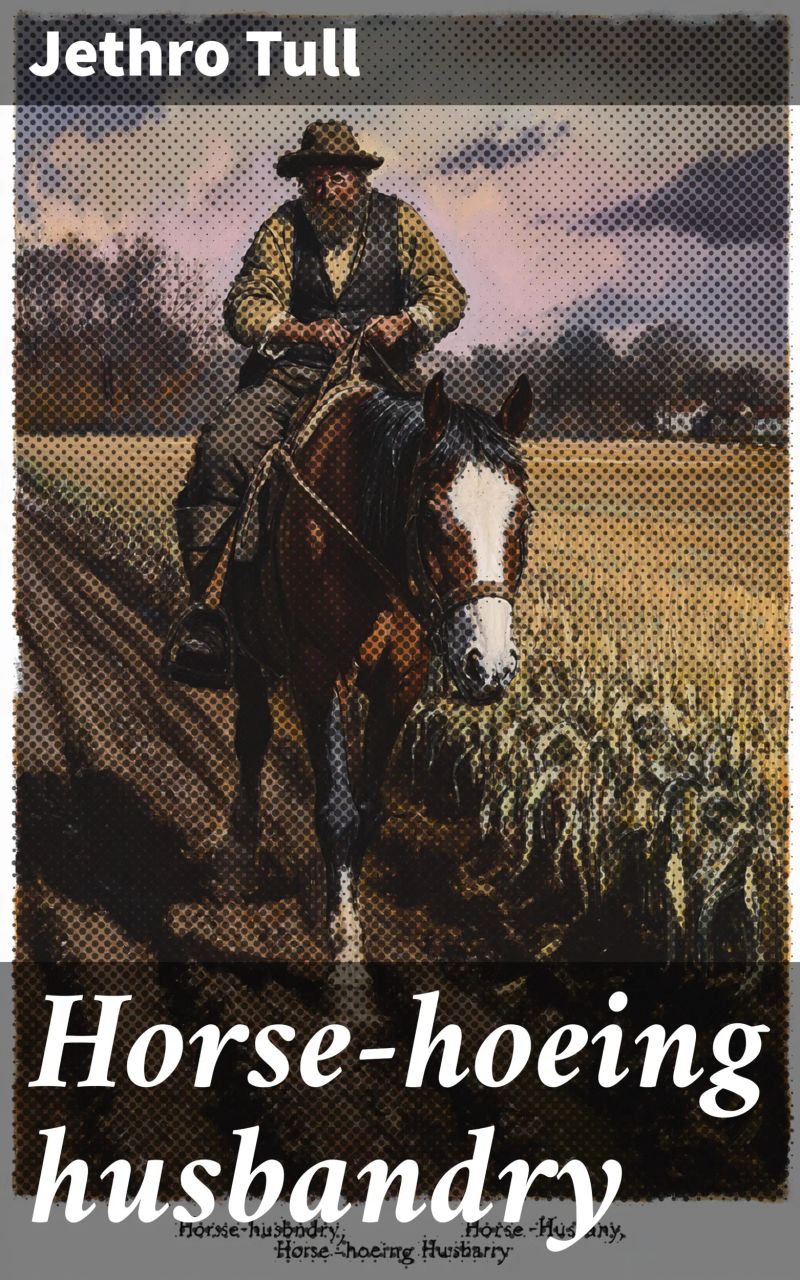
In "Horse-hoeing Husbandry," Jethro Tull presents an innovative treatise that revolutionizes agricultural practices in the early 18th century. Tull's literary style is characterized by a systematic and empirical approach, drawing upon observation and experimentation to espouse the importance of systematic farming techniques. His discourse on the use of the seed drill and horse-drawn hoe reflects a profound understanding of agronomy, marking a pivotal shift towards the scientific methods that would later define modern agriculture. By integrating practical advice with theoretical insights, Tull situates his work within the burgeoning field of agricultural science, contributing significantly to the broader Enlightenment discourse on improvement and progress. Jethro Tull, an English agriculturist and inventor, was deeply influenced by his own experiences on his farm in Berkshire. Having initially pursued a degree in law, Tull's transition to agriculture came from a personal desire to enhance crop yield and soil management. His innovative mindset, coupled with the socio-economic pressure for increased food production during England's agrarian transformation, spurred him to synthesize his observations into practical applications, leading to the publication of this influential work. "Horse-hoeing Husbandry" is essential reading for anyone interested in the evolution of agricultural practices and the scientific revolution. Tull's methodological approach not only provides insights into 18th-century farming but also offers timeless principles that resonate with contemporary agricultural challenges. Readers will find in Tull's work a fertile ground for understanding the relationship between agriculture, technology, and sustainability.
Detalhes do audiolivro
GêneroScience and Nature
Duração14 h 16 min
Narrado porOuça com mais de 1.000 vozes
FormatoeBook com áudio
Data de publicação24 de abr. de 2025
IdiomaInglês
Sumário
1Introduction
2THE PREFACE.
3A Method how to find the Distance to which Roots extend Horizontally.
4Remarks on the Mints, &c.
5CHAP. II. Of Food of Plants.
Mostrar todos os capítulosVer menos
6CHAP. III. Of Pasture of Plants.
7CHAP. IV. Of DUNG.
8CHAP. V. Of Tillage.
9CHAP. VI. Of Hoeing.
10CHAP. VII. Of Weeds.
11CHAP. VIII. Of Turneps.
12Of Partitions.
13CHAP. X. Of Smuttiness.
14First, Want of Nourishment.
15Secondly, Want of Air.
16Thirdly, Want of the Sun’s Rays.
17CHAP. XII. Of St. Foin.
18CHAP. XIII. Of Luserne.
19CHAP. XIV. Of Change of Species.
20CHAP. XV. Of Change of Individuals.
21CHAP. XVI. Of Ridges.
22II. Of the different Goodness of a Crop.
23III. The Certainty of a Crop.
24IV. The Condition in which the Land is left after a Crop.
25CHAP. XVIII. Of Ploughs.
26CHAP. XIX. The Description of a Four-coulter’d Plough.
27The Mortise.
28The Setting-Screw.
29CHAP. XXI. Of the Wheat-Drill.
30CHAP. XXII. Of the Turnep-Drill.
31CHAP. XXIII. Of the Hoe-Plough, &c.
32Explanation of Plate VII.
33An Appendix to Chap. IX. of Wheat, p. 138. containing Memoranda for the Practisers of this Husbandry.
34INDEX.

A Brief History of IntelligenceMax S. Bennett12h 18min4.6 (6.6K)$29 · $0.00
The Story of BirdsSteve Brusatte11h 49min4.6 (401)$29 · $0.00

LiftoffEric Berger9h 4min4.6 (9.5K)$29 · $0.00
Black Earth WisdomLeah Penniman11h 54min4.6 (577)$8 · $0.00

Total Cat MojoJackson Galaxy10h 13min4.5 (8.4K)$23 · $0.00

My Life Among the UnderdogsTia Torres5h 51min4.5 (4K)$24 · $0.00

What It Takes to Save a LifeKwane Stewart6h4.6 (556)$24 · $0.00

Pastoral SongJames Rebanks8h 35min4.5 (12K)$26 · $0.00
How Stella Learned to TalkChristina Hunger7h4.5 (10.9K)$24 · $0.00

Craig & FredCraig Grossi8h 6min4.5 (9.6K)$26 · $0.00
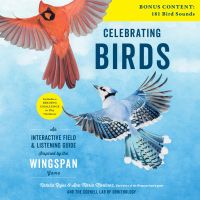
Celebrating BirdsNatalia Rojas, Ana Maria Martinez6h 47min4.6 (330)$24 · $0.00

Saving JemimaJulie Zickefoose4h 59min4.5 (749)$20 · $0.00

Will's Red CoatTom Ryan8h 23min4.5 (2.3K)$26 · $0.00
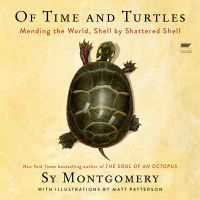
Of Time and TurtlesSy Montgomery10h 34min4.5 (5K)$29 · $0.00

THE WOLF TRILOGY: Call of the Wild, White Fang & The Son of the WolfJack London17h 31min4.5 (2.4K)$1.99 · $0.00

Zen and the Art of Saving the PlanetThich Nhat Hanh9h 20min4.5 (3.9K)$29 · $0.00

BLACK BEAUTY (With Original Illustrations)Anna Sewell7h 31min4.5 (1.3K)$1.99 · $0.00

Bottle of LiesKatherine Eban14h 25min4.4 (12K)$33 · $0.00
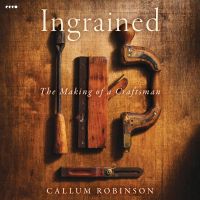
IngrainedCallum Robinson8h 10min4.5 (1.1K)$26 · $0.00

The Lion Tracker's Guide To LifeBoyd Varty3h 1min4.4 (4.8K)$18 · $0.00
Você também pode gostar
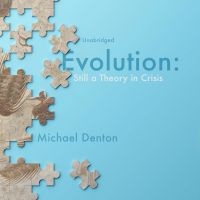
EvolutionMichael Denton11h 4min4.2 (556)$20
The New OrganonFrancis Bacon9h 3min3.9 (2.3K)$0.60 · $0.00
WHY DO CLOCKS RUN CLOCKWISEDavid Feldman58min3.8 (2.3K)$11 · $0.00
Modern PaintersJohn Ruskin77h 25min4.1 (1.7K)$1.99 · $0.00
The Age of WonderSir Richard Holmes21h 27min4.2 (19.5K)$32

Evidence as to Man's Place in NatureThomas Henry Huxley2h 36min3.9 (1.4K)$1 · $0.00

Meander, Spiral, ExplodeJane Alison5h 50min4.2 (3.2K)$20 · $0.00
Do Penguins Have Knees?David Feldman1h 23min3.8 (1K)$16 · $0.00
A Manual of the Antiquity of ManJ. P. MacLean4h 43min$1 · $0.00
On an Inversion of Ideas as to the Structure of the UniverseOsborne Reynolds46min$1 · $0.00

The Letter of Petrus Peregrinus on the Magnet, A.D. 1269De Maricourt active 13th century Pierre1h 41min$2 · $0.00
The Dragon SeekersChristopher McGowan8h 12min$17
The Analysis of Beauty (Annotated)William Hogarth6h 26min3.9 (139)$2 · $0.00

Rembrandt and His WorksJohn Burnet4h 33min$1 · $0.00
The Changing Conceptions of the Universe - From Newton to Einstein -Benjamin Harrow, Albert Einstein, Arthur Stanley Eddington, Joseph Sweetman Ames, Joseph John Thomson, Frank Watson Dyson3h 11min3.6 (16)$1.99 · $0.00
On the Motion of the Heart and Blood in Animals (Annotated)William Harvey3h 31min4.0 (742)$1.20 · $0.00
Impressionism and Post-ImpressionismNathalia Brodskaïa16h 2min4.5 (14)$19
Legacy of Cotton: A Collection of Seven Informative BooksJohn T. Taylor, Frederick Wilkinson, George Howard Alford, Broadus Mitchell, George W. Daniels, Andreas Wilhelm Cramer69h 51min$1.99 · $0.00
The Biology of Sex - A Study of the Sex Problem According to the Latest Facts Disclosed By Biology & EvolutionGideon Dietrich1h 42min$2.30
ImpressionismNathalia Brodskaïa4h 14min3.9 (82)$15