
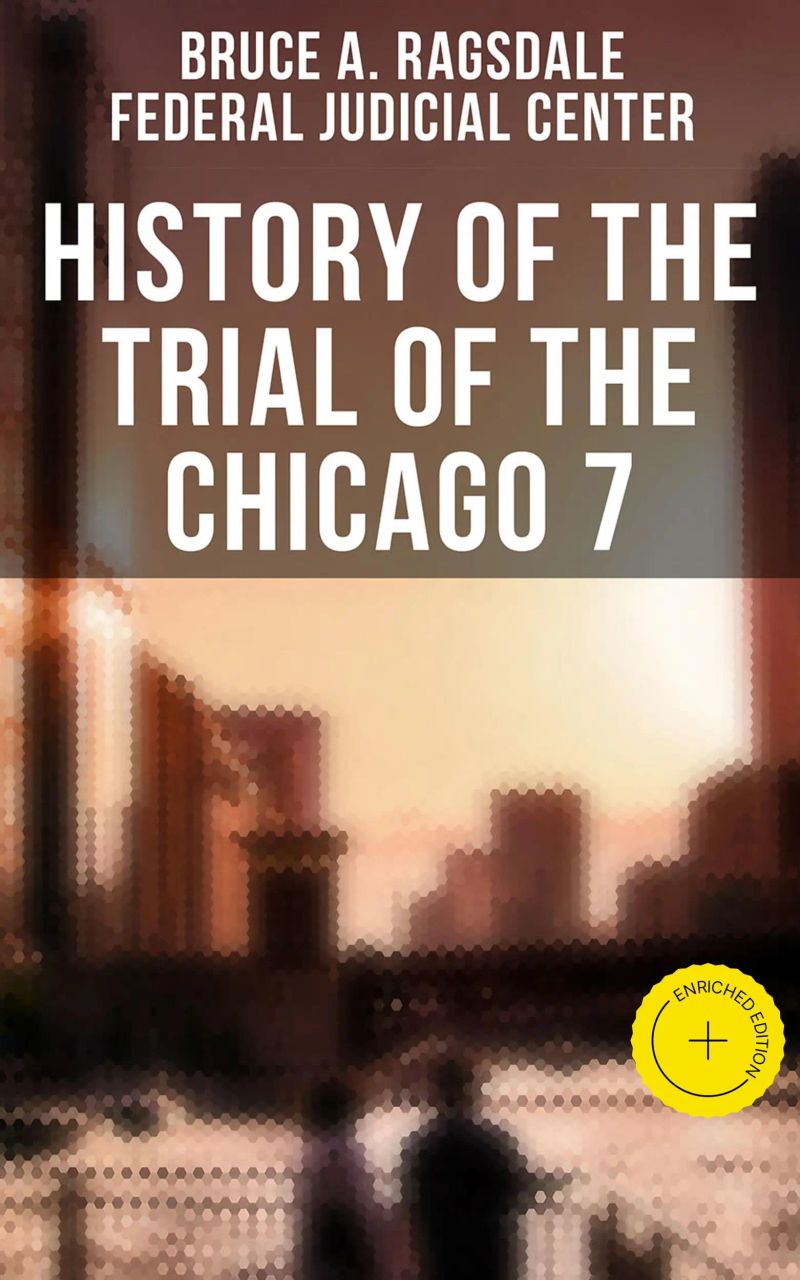
History of the Trial of the Chicago 7
Enriched edition. History, Legacy and Trial TranscriptBy Bruce A. Ragsdale, Federal Judicial Center


Length10h 55m
About this audiobook
The "History of the Trial of the Chicago 7" expertly encapsulates a pivotal moment in American judicial and political history through a collection of essays that explore varying narratives and interpretations. This anthology juxtaposes a range of literary styles, from meticulous historiographic analysis to compelling narrative reenactments, offering a comprehensive view on the complexities of this notable trial. The works within this collection dissect the multifarious societal and political dynamics of the late 1960s, reflecting on the antiwar movements, civil rights activism, and the profound clash between counterculture and established governmental structures. This collection stands out for its scholarly rigor and accessibility to both academics and lay readers interested in this era. Bruce A. Ragsdale, a recognized scholar from the Federal Judicial Center, brings together an impressive assembly of historians and legal experts, creating a dialogic exploration that transcends typical historical narratives. These contributors, who have thoroughly examined the archives and engaged with contemporary scholarship, offer a nuanced perspective on the trial's influence on American legal and cultural landscapes. This anthology aligns with and contributes to discussions on legal reform, societal shifts, and political advocacy, piercing through a historical veneer to reveal enduring truths about justice and civic responsibility. "History of the Trial of the Chicago 7" invites readers to delve into a richly curated academic journey that bridles none of its intellectual zeal. Its breadth and depth make it an indispensable resource for those interested in legal history, political activism, and the intricate interplay of societal forces in shaping judicial outcomes. This volume is not just a mere recount; it is an essential portal to understanding the layers of American history and the evolution of its judicial conscience, making it a must-read for scholars, students, and anyone eager to grasp the enormity of historical influence on contemporary society.
In this enriched edition, we have carefully created added value for your reading experience:
- Hand‐picked Memorable Quotes shine a spotlight on moments of literary brilliance.
- Interactive footnotes clarify unusual references, historical allusions, and archaic phrases for an effortless, more informed read.
Audiobook details
GenrePolitics and Government, Literary Classics
Length10 hrs 55 mins
Narrated byListen with 1,000+ voices
FormateBook with Audio
Publish dateJan 4, 2022
LanguageEnglish
Table of contents
1The Story of North American Discovery and Exploration
2The Chicago Conspiracy Trial: A Short Narrative
3Planning for the Democratic National Convention of 1968
4Organizing protests at the Democratic convention
5Confrontations in Chicago
Mostrar todos os capítulosVer menos
6Investigating the violence
7Indictment
8Judge and jury
9A mistrial for Bobby Seale
10The government’s case
11The defense strategy
12Procedural disputes
13Court theater
14Contempt and a verdict
15Appeals
16Legacy
17The Judicial Process: A Chronology
18The Federal Courts and Their Jurisdiction
19U.S. District Court for the Northern District of Illinois
20U.S. Court of Appeals for the Seventh Circuit
21Legal Questions Before the Federal Courts
221. Were the seven defendants guilty of engaging in a conspiracy to incite a riot?
232. Did the defendants violate the Anti-Riot Act by using interstate commerce with the intent to incite a riot and by committing at least one overt act to promote a riot?
243. Were John Froines and Lee Weiner guilty of instructing demonstrators in the manufacture and use of incendiary devices?
254. Was the Anti-Riot Act of 1968 unconstitutional?
265. Were the defendants and their attorneys guilty of criminal contempt?
276. Did the jury selection process protect the defendants’ right to a fair trial?
287. Did Judge Hoffman unfairly restrict the defense’s right to submit evidence and call witnesses?
298. Did the attitude and demeanor of Judge Hoffman and the government attorneys violate the defendants’ right to a fair trial?
30Legal Arguments in Court
31The attorneys for the defendants
32Biographies
33The judges
34The defendants
35The attorneys
36Media Coverage and Public Debates
37Historical Documents
38Testimony of Abbie Hoffman, December 23 & 29, 1969
39Testimony of Rennie Davis, January 24, 1970
40Assistant U.S. Attorney Richard Schultz, closing argument for the government, February 11, 1970
41Leonard Weinglass, closing argument for the defendants, February 12, 1970
42William Kunstler, closing argument for the defendants, February 13, 1970
43U.S. Attorney Thomas Foran, closing argument for the government, February 13, 1970
44Judge Hoffman, charge to the jury, February 14, 1970
45U.S. Court of Appeals for the Seventh Circuit, decision on the defendants’ appeal of the contempt convictions, May 11, 1972
46U.S. Court of Appeals for the Seventh Circuit, decision on the defendants’ appeal of the criminal convictions, November 21, 1972
47Judge Edward Gignoux, decision on the retrial of the contempt convictions—comments on the proper conduct of a trial, December 6, 1973
48Anti-Riot Act
49“The Strategy of Confrontation,” report of the Daley administration
50Walker Report summary
More from Bruce A. Ragsdale, Federal Judicial Center

Balcony Over Jerusalem: A Middle East Memoir - Israel, Palestine and BeyondJohn Lyons12h 37m4.6 (1.4K)$33 · $0.00
RiggedMollie Hemingway12h 48m4.6 (4.2K)$23 · $0.00
SledgehammerDavid Friedman8h 21m4.7 (589)$26 · $0.00
Citizenship in a Republic (Annotated)Theodore Roosevelt2h 44m4.6 (1.4K)$2 · $0.00
No EscapeNury Turkel9h 30m4.6 (809)$28 · $0.00

Always FaithfulThomas Schueman, Zainullah Zaki12h 12m4.6 (977)$29 · $0.00
UnthinkableJamie Raskin15h 8m4.5 (9.3K)$8 · $0.00
My Fourth Time, We DrownedSally Hayden13h 59m4.6 (2.9K)$23 · $0.00
A Revolution of Common SenseScott Jennings9h 29m4.6 (528)$29 · $0.00
Statement From the Dock at the Rivonia TrialNelson Mandela2h 18m4.6 (1.3K)$1 · $0.00
Lessons from the EdgeMarie Yovanovitch17h 11m4.5 (5.9K)$40 · $0.00
To Rescue the American SpiritBret Baier10h 12m4.5 (2.7K)$8 · $0.00
StonewalledSharyl Attkisson15h 19m4.5 (4.3K)$33 · $0.00
The World According to Orwell: 1984 & Animal FarmGeorge Orwell15h 42m4.6 (1.1K)$1 · $0.00
Basic EconomicsThomas Sowell18h 32m4.5 (29.3K)$28 · $0.00
To Rescue the RepublicBret Baier, Catherine Whitney11h 42m4.5 (8.6K)$29 · $0.00
Modern WarriorsPete Hegseth7h 10m4.5 (4.7K)$24 · $0.00
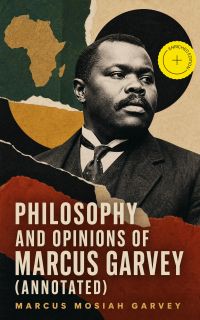
Philosophy and Opinions of Marcus Garvey (Annotated)Marcus Mosiah Garvey4h 42m4.5 (1.7K)$1.99 · $0.00

A Plague Upon Our HouseScott W. Atlas MD10h 37m4.5 (3.4K)$20 · $0.00

One Bright MoonAndrew Kwong12h 21m4.5 (813)$29 · $0.00
To Kill a MockingbirdHarper Lee12h 18m4.5 (7.4M)$29 · $0.00

These Precious DaysAnn Patchett11h 14m4.5 (45.2K)$29 · $0.00
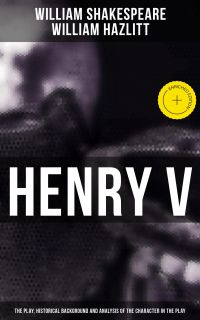
Henry V (The Play, Historical Background and Analysis of the Character in the Play)William Shakespeare, William Hazlitt8h 50m4.6 (1.3K)$1.99 · $0.00
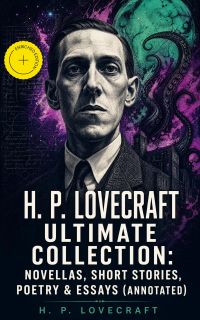
H. P. LOVECRAFT Ultimate Collection: Novellas, Short Stories, Poetry & Essays (Annotated)H. P. Lovecraft12h 28m4.6 (2.3K)$2 · $0.00
Time RegainedMarcel Proust16h 8m4.5 (10.6K)$1.99 · $0.00
Lessons in TruthH. Emilie3h 50m4.6 (1.4K)$4.70 · $0.00

TORAH - Bilingual Edition: English/Hebrew (Annotated)Max Margolis, JPS28h 26m4.6 (1K)$2 · $0.00

Betty Crocker picture cooky bookBetty Crocker, Inc. General Mills2h 13m4.5 (6.5K)$1 · $0.00

The Complete Tales of Beatrix PotterBeatrix Potter3h 36m4.5 (75K)$3 · $0.00

Anne of Green GablesL. M. Montgomery11h 1m4.5 (1.2M)$2.30 · $0.00
Crime and Punishment (The Unabridged Garnett Translation) (Annotated)Fyodor Dostoevsky24h 25m4.5 (15.4K)$1.99 · $0.00

The North American IndianEdward S. Curtis, Frederick Webb Hodge6h4.5 (1.2K)$2 · $0.00
The Picture of Dorian Gray: The Uncensored 13 Chapter Version + The Revised 20 Chapter Version (Annotated)Oscar Wilde16h 12m4.5 (2.8K)$1.99 · $0.00

Grimoire Of The Everyday WitchIsadora Lys / Virginia Santos5h 35m4.5 (3.9K)$9 · $0.00

Winnie-the-PoohAlan Alexander Milne2h 52m4.5 (401.1K)$3 · $0.00
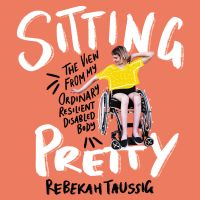
Sitting PrettyRebekah Taussig7h 33m4.5 (18.9K)$26 · $0.00

The Poetic Edda & The Prose EddaSnorri Sturluson, Saemund Sigfusson9h 34m4.5 (4K)$1 · $0.00

The Complete Satires & Essays of Mark Twain (Annotated)Mark Twain23h 21m4.5 (1.1K)$2 · $0.00

Anne of Green GablesLucy Maud Montgomery11h 10m4.4 (1.3M)$8 · $0.00
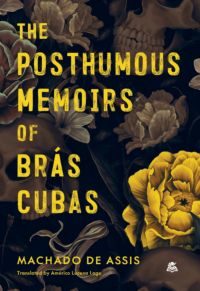
The Posthumous Memoirs Of Brás CubasMachado De Assis7h 39m4.4 (120.4K)$5 · $0.00
You may also like
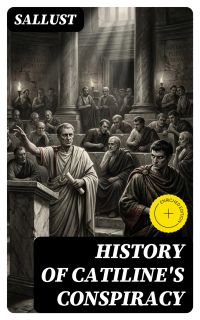
History of Catiline's ConspiracySallust3h 39m4.0 (3.5K)$1 · $0.00
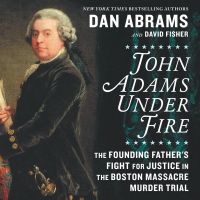
John Adams Under FireDan Abrams, David Fisher9h 54m3.9 (1.8K)$27 · $0.00
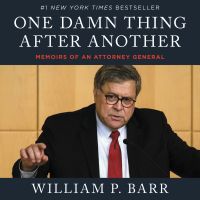
One Damn Thing After AnotherWilliam P. Barr22h 2m4.0 (5.3K)$46 · $0.00

A Disease in the Public MindThomas Fleming11h 42m4.0 (1.1K)$20

The Unarmed TruthJohn Dodson8h 55m4.4 (369)$20 · $0.00
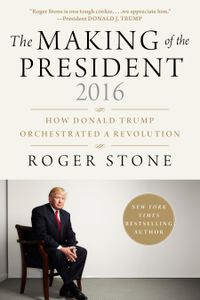
The Making of the President 2016Stone, Roger18h 10m3.8 (1.7K)Free
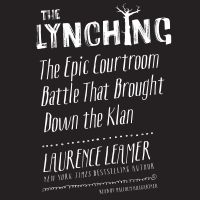
The LynchingLaurence Leamer10h 18m4.2 (3.1K)$29 · $0.00
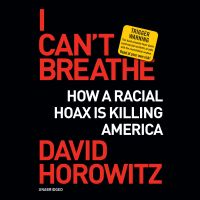
I Can’t BreatheDavid Horowitz6h 7m4.3 (604)$17 · $0.00
Devil in the GroveGilbert King17h 53m4.5 (21.4K)$40 · $0.00
The Catiline ConspiracySallust3h 17m4.0 (4.9K)$1 · $0.00
Courage Under FireSteven A. Sund12h 3m4.1 (2.1K)$25
The Trial of the Chicago 7: History, Legacy and Trial TranscriptBruce A. Ragsdale, Federal Judicial Center10h 52m$2 · $0.00
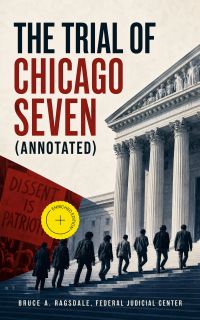
The Trial of Chicago Seven (Annotated)Bruce A. Ragsdale, Federal Judicial Center10h 57m$2 · $0.00

The Red Hand of UlsterGeorge A. Birmingham8h 3m3.0 (28)$1 · $0.00
ChallengeV. Sackville-West7h 5m2.9 (210)$2 · $0.00
The History of a CrimeVictor Hugo17h 3m3.7 (107)$2 · $0.00
The Great Conspiracy, CompleteJohn Alexander Logan27h 16m3.8 (17)$2.30
AyodhyaKrishna Jha, Dhirendra K. Jha6h 3m4.0 (290)$24 · $0.00
AutobiographyAlbert Parsons1h 25m4.3 (23)$2 · $0.00
NIGEL FARAGE BIOGRAPHYArthur Payne56m$8.50 · $0.00