

Hira Singh : when India came to fight in Flanders
A Tale of Identity and Sacrifice on Flanders' BattlefieldDe Talbot Mundy


Duração6h 32m
Sobre este audiolivro
In "Hira Singh: When India Came to Fight in Flanders," Talbot Mundy weaves a remarkable tapestry of adventure and historical insight, detailing the lesser-known contributions of Indian soldiers during World War I. The novel is set against the backdrop of the brutal trenches of Flanders, blending vivid imagery with a narrative steeped in cultural nuances. Mundy's writing showcases a distinctive literary style that intertwines thrilling action with poignant character development, illustrating the complexities of colonialism and identity while exploring themes of honor and camaraderie among diverse forces. Talbot Mundy, a significant figure in early 20th-century literature, drew upon his personal experiences and extensive travels in India to craft his narratives. His deep understanding of Indian culture and societal structures informed his portrayal of characters like Hira Singh, highlighting issues of loyalty and valor amidst the chaos of war. Mundy'Äôs own ambivalence towards British imperialism offers a nuanced perspective that challenges conventional narratives of the time, illuminating the multifaceted roles of colonial subjects in global conflicts. This book is a compelling read for anyone interested in military history, colonial narratives, or intercultural relationships. Mundy'Äôs thoughtfully constructed world draws readers into the complexities of the human experience during wartime, making "Hira Singh" an essential addition to the discourse on colonial contributions and identity politics in literature.
Detalhes do audiolivro
Avaliação★★★★ 4,0 (40)
Inclui Goodreads
GêneroHistorical Fiction, Action and Adventure
Duração6 h 32 min
Narrado porOuça com mais de 1.000 vozes
FormatoeBook com áudio
Data de publicação19 de mai. de 2021
IdiomaInglês
Sumário
1PREFACE
6CHAPTER V
2CHAPTER I
7CHAPTER VI
3CHAPTER II
8CHAPTER VII
4CHAPTER III
9CHAPTER VIII
5CHAPTER IV

Das Mysterium der Grabkammer des Pharaos CheopsTalbot Mundy7h 11min3.8 (14)$1 · $0.00

Löwe von PetraTalbot Mundy6h 35min3.7 (31)$1 · $0.00

Jimgrim SeriesTalbot Mundy135h 27min4.0 (583)$1.99 · $0.00
The Mystery of Khufu's Tomb (Unabridged)Talbot Mundy7h 22min3.8 (144)$1.99 · $0.00

Affair in Araby (Spy Thriller)Talbot Mundy6h 29min3.4 (34)$1.99 · $0.00

Jimgrim and Allah's Peace (Spy Thriller)Talbot Mundy8h 56min$1.99 · $0.00
The Devil's Guard (Thriller Novel)Talbot Mundy11h 10min3.8 (190)$1.99 · $0.00

Affair in Araby (Annotated)Talbot Mundy6h 31min$2 · $0.00
JIMGRIM - Complete Spy Thrillers Series (Annotated)Talbot Mundy136h 43min$2 · $0.00
Lion of Petra (Annotated)Talbot Mundy6h 45min4.3 (23)$2 · $0.00

JIMGRIM - Complete Series (Annotated)Talbot Mundy136h 27min$2 · $0.00
The Devil's Guard (Annotated)Talbot Mundy11h 12min3.7 (62)$2 · $0.00
The Mystery of Khufu's Tomb (Annotated)Talbot Mundy7h 22min3.8 (14)$2 · $0.00

Jimgrim and Allah's Peace (Annotated)Talbot Mundy9h 37min3.8 (39)$2 · $0.00
The Eye of ZeitoonTalbot Mundy8h 40min$2 · $0.00

The Lost TrooperTalbot Mundy7h 19min$2 · $0.00

Affair in ArabyTalbot Mundy5h 17min3.7 (114)$2 · $0.00
Full MoonTalbot Mundy7h 39min$1 · $0.00

Caves of TerrorTalbot Mundy3h 53min3.3 (48)$2 · $0.00

The Ghost by the Billabong (The Matilda Saga, #5)Jackie French14h 58min4.6 (773)$33 · $0.00

The Labyrinth of the SpiritsCarlos Ruiz Zafon27h 55min4.5 (77.2K)$53 · $0.00

ShivajiRanjit Desai25h 13min4.6 (3.1K)$24 · $0.00

The Things We Cannot SayKelly Rimmer13h 48min4.5 (359.1K)$33 · $0.00

Lieutenant Hornblower (Annotated)C. S. Forester11h 41min4.5 (2.9K)$2 · $0.00

A Christmas Carol (Illustrated Edition)Charles Dickens3h 23min4.5 (21.2K)$1.99 · $0.00

Rilla of InglesideLucy Maud Montgomery11h 44min4.5 (48.2K)$2 · $0.00

The Viennese DressmakerKathryn Gauci11h 46min4.5 (2.1K)$23 · $0.00
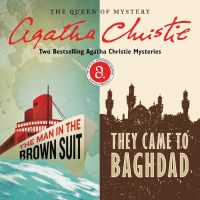
The Man in the Brown Suit & They Came to BaghdadAgatha Christie15h 43min4.6 (495)$33 · $0.00

Under the Light of the Italian MoonJennifer Anton12h 28min4.5 (5.3K)$23 · $0.00

Jubilee, 50th Anniversary EditionMargaret Walker15h 43min4.5 (9.5K)$25 · $0.00

Pride and PrejudiceJane Austen14h 44min4.4 (4.7M)$2 · $0.00

Flying Colours (Annotated)Cecil Louis Troughton Smith9h 26min4.4 (10.1K)$2 · $0.00
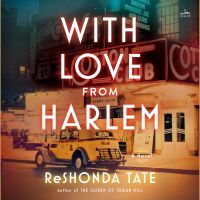
With Love from HarlemReShonda Tate13h 48min4.5 (2K)$6 · $0.00

Sweet Home Highland ChristmasMay McGoldrick, Jan Coffey2h 54min4.5 (1.4K)$7 · $0.00

Rilla of InglesideL. M. Montgomery12h 25min4.4 (67.5K)$2 · $0.00

Death Comes for the Archbishop (Annotated)Willa Cather9h 13min4.4 (4.7K)$2 · $0.00

The Long FallPenelope Wilcock8h 5min4.5 (458)$20 · $0.00

The Alice NetworkKate Quinn15h 7min4.4 (887.1K)$33 · $0.00

The Goddess of WarsawLisa Barr13h 4min4.4 (36.4K)$33 · $0.00
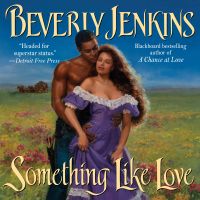
Something Like LoveBeverly Jenkins10h 21min4.6 (2.7K)$29 · $0.00
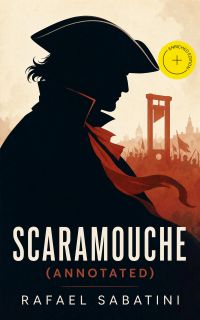
Scaramouche (Annotated)Rafael Sabatini15h 24min4.6 (1.8K)$2 · $0.00

Jubal Stone: U.S. Marshal: Blood Trail To Hell: A Western Adventure NovelCasey Nash3h 42min4.6 (3.2K)$18 · $0.00
The Labyrinth of the SpiritsCarlos Ruiz Zafon27h 55min4.5 (77.2K)$53 · $0.00
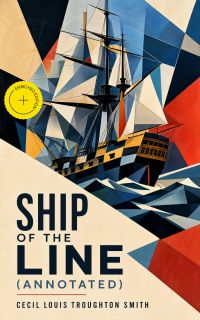
Ship of the Line (Annotated)Cecil Louis Troughton Smith11h 13min4.6 (1K)$2 · $0.00
ShivajiRanjit Desai25h 13min4.6 (3.1K)$24 · $0.00
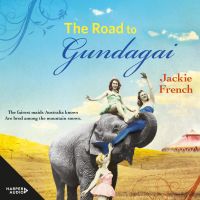
The Road to Gundagai (The Matilda Saga, #3)Jackie French12h 31min4.6 (1.2K)$33 · $0.00
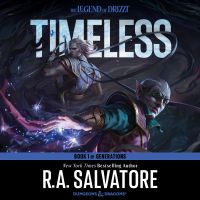
TimelessR. A. Salvatore12h 30min4.5 (8K)$33 · $0.00
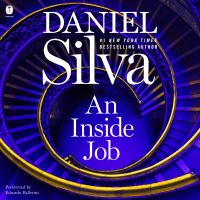
An Inside JobDaniel Silva9h 28min4.4 (26.3K)$29 · $0.00

The CommodoreP. T. Deutermann11h 53min4.5 (2.4K)$20 · $0.00

A Closed and Common OrbitBecky Chambers11h 30min4.4 (140.7K)$29 · $0.00
Thud!Terry Pratchett10h 31min4.4 (112.6K)$8 · $0.00
All Quiet on the Western Front (Annotated)Erich Maria Remarque8h 34min4.4 (12.9K)$1.99 · $0.00
Exit FeeBrad Taylor3h 16min4.5 (1.9K)$18 · $0.00
The Alice NetworkKate Quinn15h 7min4.4 (887.1K)$33 · $0.00

The Ohio River Trilogy: Betty Zane, The Spirit of the Border & The Last TrailZane Grey29h 8min4.4 (1.8K)$1 · $0.00
A Darkness ReturnsRaymond E. Feist19h 29min4.4 (1.9K)$40 · $0.00

THE VALLEY OF SILENT MEN (Annotated)James Oliver Curwood8h 25min4.5 (420)$2 · $0.00
West of the TularosaLouis L’Amour5h 53min4.4 (3.6K)$20 · $0.00

The Emperor's FistJay Allan8h 37min4.5 (272)$26 · $0.00
Você também pode gostar

MI9Helen Fry13h 4min3.9 (1.5K)$23

The Girls Who Stepped Out of LineMajor General Mari K. Eder US Army (Ret.)10h 3min4.2 (4.7K)$20

UnbreakableRebecca E. F. Barone5h 54min4.2 (404)$17
Monopoly XPhilip E. Orbanes8h 54min4.1 (346)$29 · $0.00

Twelve Desperate MilesTim Brady9h 47min4.0 (663)$30

The First SaluteBarbara W. Tuchman12h 47min4.1 (4.3K)$23

Sharpe's FuryBernard Cornwell5h 44min4.3 (17.7K)$24 · $0.00
What Really Happened: The Death of HitlerRobert J. Hutchinson8h 36min4.1 (357)$20

The Secret WarMax Hastings30h 40min4.1 (6K)$53 · $0.00

Hitler in Los AngelesSteven J. Ross13h 59min4.2 (1.7K)$23

GreenmantleJohn Buchan9h 39min3.8 (8.6K)Grátis

Our Man in TokyoSteve Kemper14h 28min4.3 (955)$33 · $0.00

The Lost Girls of ParisPam Jenoff11h 42min4.1 (286.7K)$29 · $0.00
Is Paris Burning?Larry Collins, Dominique Lapierre15h 12min4.3 (5.5K)$25
Above SuspicionHelen MacInnes10h 37min4.1 (2.7K)$20 · $0.00

Hanoi’s WarLien-Hang T. Nguyen15h 13min4.2 (407)$23 · $0.00

Louise’s BlunderSarah R. Shaber6h 36min4.2 (470)$17

The Glory and the DreamWilliam Manchester57h 18min4.5 (2.8K)$30

The Last Lion: Winston Spencer Churchill, Vol. 3William Manchester, Paul Reid53h 24min4.5 (11.2K)$35
The Art SpyMichelle Young11h 51min4.1 (4.1K)$8 · $0.00