
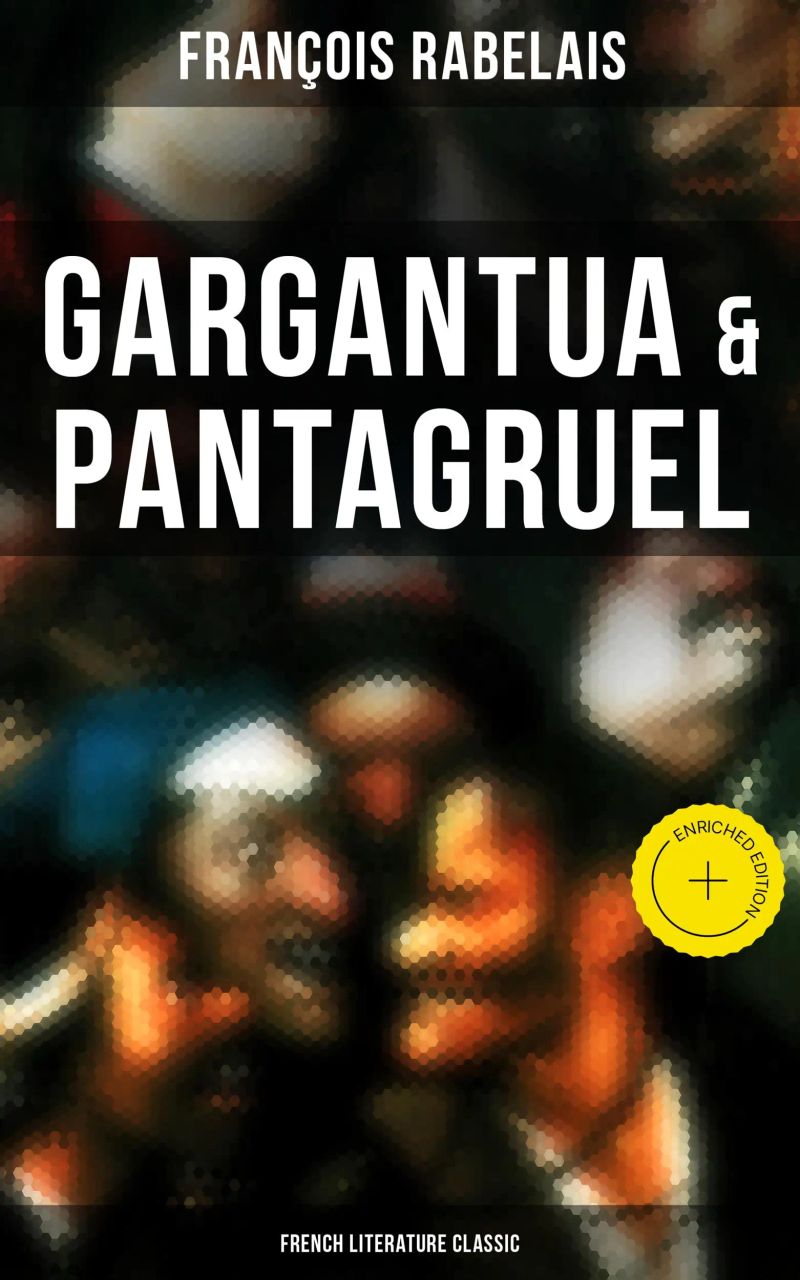
Gargantua & Pantagruel (French Literature Classic)
Enriched edition. A Rabelaisian Pentalogy of Giant Adventures, Political Satire & Renaissance HumorBy François Rabelais


Length36h 2m
About this audiobook
François Rabelais's 'Gargantua & Pantagruel' is a monumental work of French literature, known for its satirical and humorous take on society, education, and human nature. Written in the 16th century, this classic novel consists of five books following the adventures of the giant Gargantua and his son Pantagruel, exploring themes of morality, religion, and the absurdities of the world. Rabelais's unique blend of comedy, philosophy, and folklore makes this work a significant contribution to Renaissance literature. The book is filled with witty wordplay, social commentary, and larger-than-life characters, making it a must-read for those interested in the evolution of literature and the human experience. François Rabelais, a French Renaissance writer and physician, drew upon his extensive knowledge of classical texts, theology, and humanist ideas to craft 'Gargantua & Pantagruel.' His background as a scholar and a man of the world is reflected in the depth and breadth of his writing, which continues to captivate readers centuries later. Rabelais's bold and imaginative approach to storytelling sets him apart as a literary giant of his time. I highly recommend 'Gargantua & Pantagruel' to anyone with a love for classic literature, satire, and thought-provoking content. Rabelais's masterful storytelling and profound insights into the human condition make this work a timeless masterpiece worthy of exploration and appreciation.
In this enriched edition, we have carefully created added value for your reading experience:
- A succinct Introduction situates the work's timeless appeal and themes.
- The Synopsis outlines the central plot, highlighting key developments without spoiling critical twists.
- A detailed Historical Context immerses you in the era's events and influences that shaped the writing.
- An Author Biography reveals milestones in the author's life, illuminating the personal insights behind the text.
- A thorough Analysis dissects symbols, motifs, and character arcs to unearth underlying meanings.
- Reflection questions prompt you to engage personally with the work's messages, connecting them to modern life.
- Hand‐picked Memorable Quotes shine a spotlight on moments of literary brilliance.
- Interactive footnotes clarify unusual references, historical allusions, and archaic phrases for an effortless, more informed read.
Audiobook details
Rating★★★★ 3.8 (23K)
Includes Goodreads, LibraryThing, Amazon, StoryGraph
GenreLiterary Classics
Length36 hrs 2 mins
Narrated byListen with 1,000+ voices
FormateBook with Audio
Publish dateDec 17, 2020
LanguageEnglish
Table of contents
1The Calvary (Musaicum Romance Classics)
2Introduction
3Synopsis
4Historical Context
5Author Biography
Mostrar todos os capítulosVer menos
6Gargantua & Pantagruel (French Literature Classic)
7Introduction.
8FRANCIS RABELAIS.
9Chapter 1.XIII.—How Gargantua’s wonderful understanding became known to his father Grangousier, by the invention of a torchecul or wipebreech.
10Chapter 1.XXIII.—How Gargantua was instructed by Ponocrates, and in such sort disciplinated, that he lost not one hour of the day.
11Chapter 1.XXXIV.—How Gargantua left the city of Paris to succour his country, and how Gymnast encountered with the enemy.
12Chapter 1.XLIII.—How the scouts and fore-party of Picrochole were met with by Gargantua, and how the Monk slew Captain Drawforth (Tirevant.), and then was taken prisoner by his enemies.
13THE SECOND BOOK.
14The Author’s Prologue.
15Chapter 2.X.—How Pantagruel judged so equitably of a controversy, which was wonderfully obscure and difficult, that, by reason of his just decree therein, he was reputed to have a most admirable judgment.
16Chapter 2.XXIII.—How Pantagruel departed from Paris, hearing news that the Dipsodes had invaded the land of the Amaurots; and the cause wherefore the leagues are so short in France.
17Chapter 2.XXIV.—A letter which a messenger brought to Pantagruel from a lady of Paris, together with the exposition of a posy written in a gold ring.
18Chapter 2.XXXI.—How Pantagruel entered into the city of the Amaurots, and how Panurge married King Anarchus to an old lantern-carrying hag, and made him a crier of green sauce.
19Chapter 3.X.—How Pantagruel representeth unto Panurge the difficulty of giving advice in the matter of marriage; and to that purpose mentioneth somewhat of the Homeric and Virgilian lotteries. (pt. 1)
20Chapter 3.X.—How Pantagruel representeth unto Panurge the difficulty of giving advice in the matter of marriage; and to that purpose mentioneth somewhat of the Homeric and Virgilian lotteries. (pt. 2)
21Chapter 3.XXV.—How Panurge consulteth with Herr Trippa.
22Chapter 3.XXIX.—How Pantagruel convocated together a theologian, physician, lawyer, and philosopher, for extricating Panurge out of the perplexity wherein he was.
23Chapter 3.XXXIX.—How Pantagruel was present at the trial of Judge Bridlegoose, who decided causes and controversies in law by the chance and fortune of the dice.
24Chapter 3.XLVIII.—How Gargantua showeth that the children ought not to marry without the special knowledge and advice of their fathers and mothers.
25THE FOURTH BOOK
26The Author’s Prologue.
27Chapter 4.XVII.—How Pantagruel came to the islands of Tohu and Bohu; and of the strange death of Wide-nostrils, the swallower of windmills.
28Chapter 4.XXVII.—Pantagruel’s discourse of the decease of heroic souls; and of the dreadful prodigies that happened before the death of the late Lord de Langey.
29Chapter 4.XXXVII.—How Pantagruel sent for Colonel Maul-chitterling and Colonel Cut-pudding; with a discourse well worth your hearing about the names of places and persons.
30Chapter 4.LVIII.—How, at the court of the master of ingenuity, Pantagruel detested the Engastrimythes and the Gastrolaters.
31Chapter 4.LXIII.—How Pantagruel fell asleep near the island of Chaneph, and of the problems proposed to be solved when he waked.
32THE FIFTH BOOK.
33Chapter 5.XVI.—How Pantagruel came to the island of the Apedefers, or Ignoramuses, with long claws and crooked paws, and of terrible adventures and monsters there.
34Chapter 5.XVIII.—How our ships were stranded, and we were relieved by some people that were subject to Queen Whims (qui tenoient de la Quinte).
35Chapter 5.XXXV.—How we went underground to come to the Temple of the Holy Bottle, and how Chinon is the oldest city in the world.
36Analysis
37Reflection
38Memorable Quotes
More from François Rabelais

To Kill a MockingbirdHarper Lee12h 18m4.5 (7.4M)$29 · $0.00

These Precious DaysAnn Patchett11h 14m4.5 (45.2K)$29 · $0.00

Pride & Prejudice (Annotated)Jane Austen15h 10m4.7 (13.3K)$2 · $0.00

The Jeeves and Wooster Stories: The Complete Collection (33 Books)P. G. Wodehouse21h 57m4.7 (2.8K)$15 · $0.00

The Gulag Archipelago Volume 3Aleksandr I. Solzhenitsyn21h 56m4.7 (8.9K)$46 · $0.00

This Side of Paradise - The Original 1920 Edition (Annotated)F. Scott Fitzgerald11h 30m4.6 (1.6K)$2 · $0.00
The Great Gatsby: Original 1925 Edition (An F. Scott Fitzgerald Classic NovelFrancis Scott Fitzgerald4h 45m4.6 (9.3K)$18 · $0.00

The Complete Histories / History Plays of William Shakespeare (Annotated)William Shakespeare29h 42m4.6 (2.3K)$1.99 · $0.00

Braving the TruthRachel Held Evans11h 31m4.7 (359)$29 · $0.00

The Old Man and the Sea (Annotated)Ernest Hemingway4h 27m4.6 (1.4K)$2 · $0.00

Twelfth Night (The Unabridged Play) + The Classic Biography (Annotated)William Shakespeare, Sidney Lee16h 38m4.6 (1.4K)$2 · $0.00

Henry V (The Play, Historical Background and Analysis of the Character in the Play)William Shakespeare, William Hazlitt8h 50m4.6 (1.3K)$1.99 · $0.00
H. P. LOVECRAFT Ultimate Collection: Novellas, Short Stories, Poetry & Essays (Annotated)H. P. Lovecraft12h 28m4.6 (2.3K)$2 · $0.00
Time RegainedMarcel Proust16h 8m4.5 (10.6K)$1.99 · $0.00
Lessons in TruthH. Emilie3h 50m4.6 (1.4K)$4.70 · $0.00

TORAH - Bilingual Edition: English/Hebrew (Annotated)Max Margolis, JPS28h 26m4.6 (1K)$2 · $0.00

Betty Crocker picture cooky bookBetty Crocker, Inc. General Mills2h 13m4.5 (6.5K)$1 · $0.00

The Complete Tales of Beatrix PotterBeatrix Potter3h 36m4.5 (75K)$3 · $0.00

Anne of Green GablesL. M. Montgomery11h 1m4.5 (1.2M)$2.30 · $0.00

Crime and Punishment (The Unabridged Garnett Translation) (Annotated)Fyodor Dostoevsky24h 25m4.5 (15.4K)$1.99 · $0.00
You may also like
Gargantua and Pantagruel François Rabelais,33h 14m4.0 (21.8K)Free
Mr. Midshipman EasyFrederick Marryat15h 14m3.9 (1.7K)$2.30
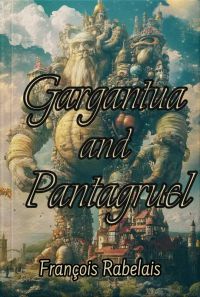
Gargantua and Pantagruel François Rabelais33h 6m3.9 (22.5K)Free

The Complete Novels of Mark Twain - 12 Books in One Volume (Illustrated Edition)Mark Twain154h 17m4.5 (2.8K)$2 · $0.00
Pepper & Salt; or, Seasoning for Young FolkHoward Pyle3h 12m4.2 (1.4K)$2 · $0.00
The Princess And The GoblinGeorge Macdonald5h 6m4.1 (55K)Free
The Princess and the GoblinGeorge MacDonald5h 2m4.1 (54.8K)$10 · $0.00
The Hero's Guide to Saving Your KingdomChristopher Healy9h 4m4.2 (14.2K)$29 · $0.00

Gargantua & PantagruelFrançois Rabelais36h 2m4.0 (20K)$2 · $0.00

The Complete Poems of Rudyard Kipling – 570+ Titles in One Edition (Annotated)Rudyard Kipling23h 1m4.5 (1K)$2 · $0.00

The Princess And The Goblin George Macdonald5h 6m4.2 (72.1K)Free

In the Reign of TerrorG. A. Henty9h 36m4.0 (3.5K)$2.30
The Ravenmaster’s SecretElvira Woodruff4h 16m4.2 (3.7K)$12

The Legend of Ulenspiegel (Vol. 1&2) (Annotated)Charles de Coster21h 12m4.1 (1.4K)$2 · $0.00

CandideVoltaire3h 41m3.9 (354.1K)$20

The Complete Works of Mark Twain: Novels, Short Stories, Memoirs, Travel Books & More (Illustrated)Mark Twain416h 11m4.5 (5.1K)$1.99 · $0.00

The Hans Christian Andersen CollectionHans Christian Andersen3h 27m4.3 (110.2K)$20
The Complete Short Stories of Washington IrvingWashington Irving73h 48m4.2 (815)$2 · $0.00
The Olive Fairy BookVarious10h 23m4.2 (2.5K)$2 · $0.00
LambChristopher Moore15h 22m4.3 (211.3K)$33 · $0.00