
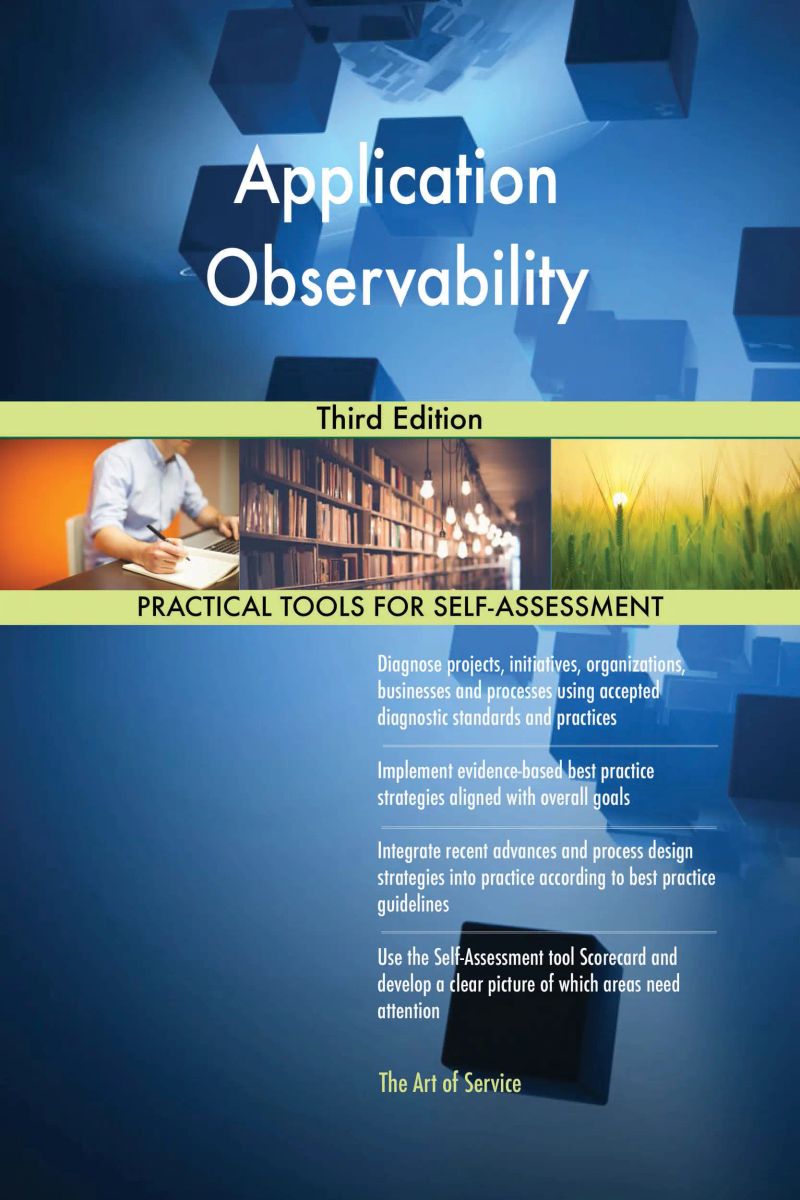
Application Observability Third Edition
De Gerardus Blokdyk


Duração4h 15m
Sobre este audiolivro
Is there any existing Application Observability governance structure? Where do ideas that reach policy makers and planners as proposals for Application Observability strengthening and reform actually originate? How do you determine the key elements that affect Application Observability workforce satisfaction? how are these elements determined for different workforce groups and segments? What situation(s) led to this Application Observability Self Assessment? What are the Essentials of Internal Application Observability Management?
Defining, designing, creating, and implementing a process to solve a challenge or meet an objective is the most valuable role… In EVERY group, company, organization and department.
Unless you are talking a one-time, single-use project, there should be a process. Whether that process is managed and implemented by humans, AI, or a combination of the two, it needs to be designed by someone with a complex enough perspective to ask the right questions. Someone capable of asking the right questions and step back and say, 'What are we really trying to accomplish here? And is there a different way to look at it?'
This Self-Assessment empowers people to do just that - whether their title is entrepreneur, manager, consultant, (Vice-)President, CxO etc... - they are the people who rule the future. They are the person who asks the right questions to make Application Observability investments work better.
This Application Observability All-Inclusive Self-Assessment enables You to be that person.
All the tools you need to an in-depth Application Observability Self-Assessment. Featuring 676 new and updated case-based questions, organized into seven core areas of process design, this Self-Assessment will help you identify areas in which Application Observability improvements can be made.
In using the questions you will be better able to:
- diagnose Application Observability projects, initiatives, organizations, businesses and processes using accepted diagnostic standards and practices
- implement evidence-based best practice strategies aligned with overall goals
- integrate recent advances in Application Observability and process design strategies into practice according to best practice guidelines
Using a Self-Assessment tool known as the Application Observability Scorecard, you will develop a clear picture of which Application Observability areas need attention.
Your purchase includes access details to the Application Observability self-assessment dashboard download which gives you your dynamically prioritized projects-ready tool and shows your organization exactly what to do next. You will receive the following contents with New and Updated specific criteria:
- The latest quick edition of the book in PDF
- The latest complete edition of the book in PDF, which criteria correspond to the criteria in...
- The Self-Assessment Excel Dashboard, and...
- Example pre-filled Self-Assessment Excel Dashboard to get familiar with results generation
…plus an extra, special, resource that helps you with project managing.
INCLUDES LIFETIME SELF ASSESSMENT UPDATES
Every self assessment comes with Lifetime Updates and Lifetime Free Updated Books. Lifetime Updates is an industry-first feature which allows you to receive verified self assessment updates, ensuring you always have the most accurate information at your fingertips.
Detalhes do audiolivro
GêneroBusiness and Economics
Duração4 h 15 min
Narrado porOuça com mais de 1.000 vozes
FormatoeBook com áudio
Data de publicação18 de set. de 2018
IdiomaInglês
Sumário
1About The Art of Service
2Acknowledgments
3Included Resources - how to access
4Your feedback is invaluable to us
5Purpose of this Self-Assessment
Mostrar todos os capítulosVer menos
6How to use the Self-Assessment
7Application ObservabilityScorecard Example
8Application ObservabilityScorecard
9BEGINNING OF THE SELF-ASSESSMENT:
10CRITERION #1: RECOGNIZE
11CRITERION #2: DEFINE:
12CRITERION #3: MEASURE:
13CRITERION #4: ANALYZE:
14CRITERION #5: IMPROVE:
15CRITERION #6: CONTROL:
16CRITERION #7: SUSTAIN:
17Application Observability and Managing Projects, Criteria for Project Managers:
181.0 Initiating Process Group: Application Observability
191.1 Project Charter: Application Observability
201.2 Stakeholder Register: Application Observability
211.3 Stakeholder Analysis Matrix: Application Observability
222.0 Planning Process Group: Application Observability
232.1 Project Management Plan: Application Observability
242.2 Scope Management Plan: Application Observability
252.3 Requirements Management Plan: Application Observability
262.4 Requirements Documentation: Application Observability
272.5 Requirements Traceability Matrix: Application Observability
282.6 Project Scope Statement: Application Observability
292.7 Assumption and Constraint Log: Application Observability
302.8 Work Breakdown Structure: Application Observability
312.9 WBS Dictionary: Application Observability
322.10 Schedule Management Plan: Application Observability
332.11 Activity List: Application Observability
342.12 Activity Attributes: Application Observability
352.13 Milestone List: Application Observability
362.14 Network Diagram: Application Observability
372.15 Activity Resource Requirements: Application Observability
382.16 Resource Breakdown Structure: Application Observability
392.17 Activity Duration Estimates: Application Observability
402.18 Duration Estimating Worksheet: Application Observability
412.19 Project Schedule: Application Observability
422.20 Cost Management Plan: Application Observability
432.21 Activity Cost Estimates: Application Observability
442.22 Cost Estimating Worksheet: Application Observability
452.23 Cost Baseline: Application Observability
462.24 Quality Management Plan: Application Observability
472.25 Quality Metrics: Application Observability
482.26 Process Improvement Plan: Application Observability
492.27 Responsibility Assignment Matrix: Application Observability
502.28 Roles and Responsibilities: Application Observability
Chaos Strategy A Complete Guide - 2020 EditionGerardus Blokdyk4h 30min$78
Data Catalogs A Complete Guide - 2020 EditionGerardus Blokdyk4h 27min$71
Compliance Technologies A Complete Guide - 2019 EditionGerardus Blokdyk4h 34min$71
Workplace relationships Complete Self-Assessment GuideGerardus Blokdyk4h 10min$42
Configuration Manager A Complete Guide - 2019 EditionGerardus Blokdyk4h 41min$71
IBM TRIRIGA Leased And Owned Property Contract Management A Complete Guide - 2020 EditionGerardus Blokdyk5h 1min$78
High-Performance Computing Enterprise A Clear and Concise ReferenceGerardus Blokdyk4h 19min$71
Separation process Standard RequirementsGerardus Blokdyk1h 55min$42
Business Impact Analysis BIA The Ultimate Step-By-Step GuideGerardus Blokdyk1h 49min$42
Salesforce Pardot A Complete Guide - 2019 EditionGerardus Blokdyk4h 55min$71
Enterprise Video Content Management A Complete Guide - 2019 EditionGerardus Blokdyk4h 56min$71
Consumer choice Standard RequirementsGerardus Blokdyk1h 55min$42
Software Testing A Complete Guide - 2019 EditionGerardus Blokdyk5h 7min$71
intrusion detection A Complete Guide - 2019 EditionGerardus Blokdyk4h 43min$71
Quality Engineering A Complete Guide - 2020 EditionGerardus Blokdyk4h 35min$78
Customer Management BPO Services A Complete Guide - 2020 EditionGerardus Blokdyk4h 43min$71
iTunes Connect A Complete Guide - 2019 EditionGerardus Blokdyk4h 39min$71
NERC CIP A Complete Guide - 2020 EditionGerardus Blokdyk4h 35min$78
Data Strategy A Clear and Concise ReferenceGerardus Blokdyk4h 7min$71

Never Split the DifferenceChris Voss, Tahl Raz8h 7min4.4 (277.7K)$26 · $0.00
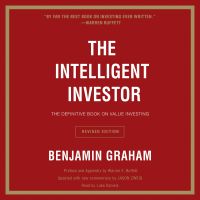
The Intelligent Investor Rev Ed.Benjamin Graham17h 48min4.3 (191.5K)$40 · $0.00
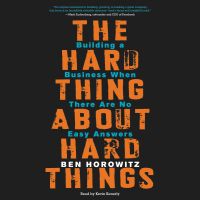
The Hard Thing About Hard ThingsBen Horowitz7h 57min4.2 (134.3K)$26 · $0.00
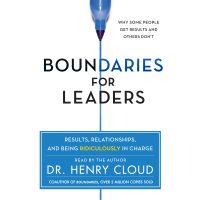
Boundaries for LeadersHenry Cloud7h 36min4.3 (3.6K)$26 · $0.00
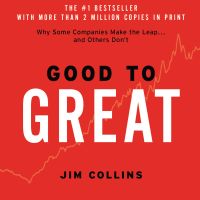
Good to GreatJim Collins9h 59min4.1 (325.2K)$29 · $0.00
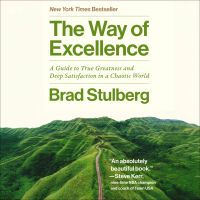
The Way of ExcellenceBrad Stulberg6h 46min4.2 (1.1K)$24 · $0.00

Trillion Dollar CoachEric Schmidt, Jonathan Rosenberg, Alan Eagle5h 40min4.1 (22.2K)$24 · $0.00
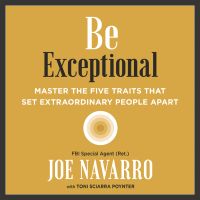
Be ExceptionalJoe Navarro, Toni Sciarra Poynter9h 11min4.0 (1.3K)$29 · $0.00
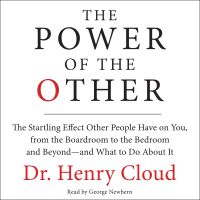
The Power of the OtherHenry Cloud5h 52min4.2 (3.5K)$24 · $0.00

This Is Going to HurtAdam Kay5h 47min4.4 (444.7K)$24 · $0.00

Big TrustShadé Zahrai, Fayçal Sekkouah8h 36min4.6 (406)$26 · $0.00
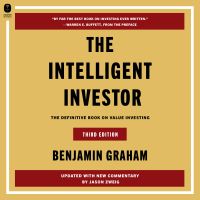
The Intelligent Investor Third EditionBenjamin Graham, Jason Zweig20h4.4 (156.6K)$46 · $0.00

Bottle of LiesKatherine Eban14h 25min4.4 (12K)$33 · $0.00

The Antiracist Business BookTrudi Lebrón6h 10min4.6 (275)$17 · $0.00

The FormulaJoshua Robinson, Jonathan Clegg10h 41min4.4 (6.9K)$29 · $0.00

Let Them LeadJohn U. Bacon7h 10min4.5 (1.4K)$24 · $0.00

Secrets of the Millionaire MindT. Harv Eker5h 11min4.4 (301.4K)$24 · $0.00

The Person You Mean to BeDolly Chugh9h 6min4.4 (7.2K)$29 · $0.00
BoundlessNick Kostov, Sean McLain9h 17min4.5 (1.1K)$29 · $0.00

Everyday DharmaSuneel Gupta5h 2min4.5 (761)$20 · $0.00
Você também pode gostar
High-Performance Computing Enterprise A Clear and Concise ReferenceGerardus Blokdyk4h 19min$71
Software Testing A Complete Guide - 2019 EditionGerardus Blokdyk5h 7min$71
NERC CIP A Complete Guide - 2020 EditionGerardus Blokdyk4h 35min$78
Distribution Channels A Complete Guide - 2021 EditionGerardus Blokdyk4h 37min$78
RCM Standard RequirementsGerardus Blokdyk1h 55min$42
IBM WebSphere Adapters The Ultimate Step-By-Step GuideGerardus Blokdyk1h 56min$42
Voice Of Customer A Complete Guide - 2020 EditionGerardus Blokdyk4h 31min$71
Sensitive Information A Complete Guide - 2024 EditionGerardus Blokdyk4h 40min$78
Contract Management A Complete Guide - 2021 EditionGerardus Blokdyk4h 40min$78
Professional Services education Third EditionGerardus Blokdyk4h 16min$71
Extensible Authentication Protocol Standard RequirementsGerardus Blokdyk4h 17min$71
EDR Solutions Third EditionGerardus Blokdyk4h 7min$71
International Sports Management Third EditionGerardus Blokdyk4h 18min$71
Supply Chain Optimization A Complete Guide - 2021 EditionGerardus Blokdyk4h 42min$78
Financial analysis A Complete Guide - 2019 EditionGerardus Blokdyk4h 44min$71
Application Organization A Complete Guide - 2019 EditionGerardus Blokdyk4h 34min$71
Rapid Tooling A Complete Guide - 2020 EditionGerardus Blokdyk4h 26min$78
Teams Complete Self-Assessment GuideGerardus Blokdyk4h 31min$71
Marketing intelligence Standard RequirementsGerardus Blokdyk1h 56min$42
Reference desk A Clear and Concise ReferenceGerardus Blokdyk4h 2min$42