
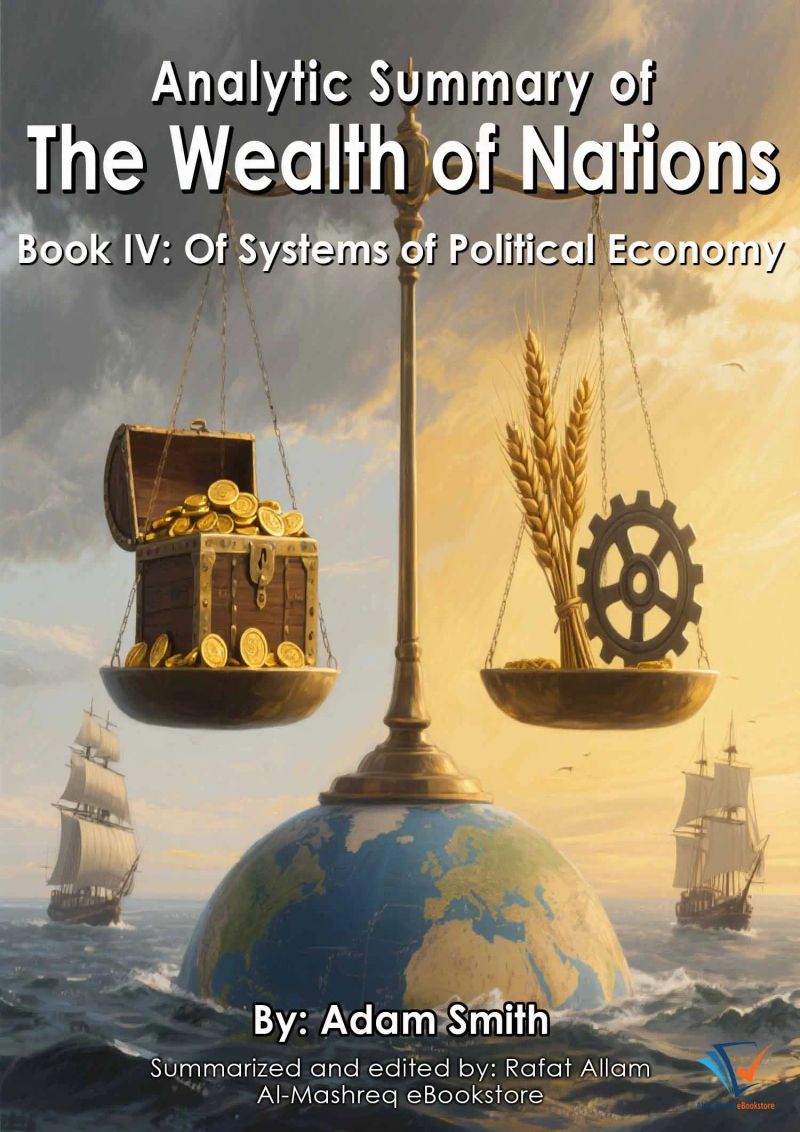
Analytic Summary of The Wealth of Nations
Book IV: Of Systems of Political EconomyDe Adam Smith


Duração57m
Sobre este audiolivro
In The Wealth of Nations, Book IV: Of Systems of Political Economy, Adam Smith takes aim at the reigning economic ideologies of his time—mercantilism and agricultural absolutism—and delivers one of the most powerful manifestos for economic freedom ever written. With sharp wit and relentless logic, he exposes how mercantilist policies—prohibitions, bounties, tariffs, monopolies, and colonial systems—served narrow merchant interests while burdening the public with higher prices, waste, and endless wars. He then turns to the agricultural systems, particularly the French Physiocrats, recognizing their insights but critiquing their narrow focus on land as the sole source of wealth. Against both doctrines, Smith advances his enduring principle of natural liberty, in which individuals, left free to pursue their own interests, direct labor and capital to their most productive uses, thereby enriching the entire nation. This book is not merely a critique; it is a bold vision of a world beyond restrictive systems, a call for free trade, competition, and prosperity that still resonates in every debate on globalization today.
Detalhes do audiolivro
GêneroBusiness and Economics
Duração57 min
Narrado porOuça com mais de 1.000 vozes
FormatoeBook com áudio
Data de publicação10 de dez. de 2025
IdiomaInglês
Sumário
1Book IV: Of Systems of Political Economy
2Chapter 1: Of the Principle of the Commercial or Mercantile System
3Chapter 2: Of Restraints upon the Importation from Foreign Countries of Such Goods as Can Be Produced at Home
4Chapter 3: Of the Extraordinary Restraints upon the Importation of Goods, and of the Bounties upon Exportation
5Chapter 4: Of Drawbacks
Mostrar todos os capítulosVer menos
6Chapter 5: Of Bounties upon the Importation of Some Particular Goods
7Chapter 6: Of Treaties of Commerce
8Chapter 7: Of Colonies
9Chapter 8: Conclusion of the Mercantile System
10Chapter 9: Of the Agricultural Systems, or of Those Systems of Political Economy Which Represent the Produce of Land as Either the Sole or the Principal Source of the Revenue and Wealth of Every Country
The Wealth of Nations & The Theory of Moral SentimentsAdam Smith59h 19min4.2 (4K)$1.99 · $0.00
The Wealth of NationsAdam Smith42h 50min4.1 (127.1K)$1.99 · $0.00
The Wealth of NationsAdam Smith30h 50min4.1 (130.7K)$20 · $0.00

The Wealth of Nations (Annotated)Adam Smith42h 48min4.2 (35.4K)$2 · $0.00
Analytic Summary of The Wealth of NationsAdam Smith31min$7 · $0.00
Analytic Summary of The Wealth of NationsAdam Smith22min$7 · $0.00

The Essays of Adam SmithAdam Smith20h 38min4.2 (24)$1 · $0.00
An Inquiry Into the Nature and Causes of the Wealth of NationsAdam Smith, M. Garnier35h 14min4.3 (124.3K)$2 · $0.00

An Inquiry into the Nature and Causes of the Wealth of NationsAdam Smith43h 7min4.1 (120.2K)$2 · $0.00
The Invisible Hand of the Market: The Theory of Moral Sentiments + The Wealth of NationsAdam Smith59h 8min4.2 (1.6K)$2 · $0.00

Der Wohlstand der Nationen (Zusammengefasste Ausgabe)Adam Smith9h 3min$2
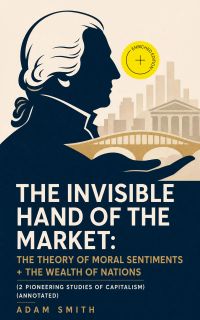
The Invisible Hand of the Market: The Theory of Moral Sentiments + The Wealth of Nations (2 Pioneering Studies of Capitalism) (Annotated)Adam Smith59h 21min4.0 (81)$1.99 · $0.00

Masterworks That Defined the Utilitarian Tradition – 4 Classic Moral Philosophy TextsAdam Smith, David Hume, Jeremy Bentham, Henry Sidgwick54h 31min$2

Der Wohlstand der NationenAdam Smith43h 37min4.1 (38.1K)$2 · $0.00

500 citações de grandes filósofos do século 18Adam Smith, Denis Diderot, Georg Christoph Lichtenberg, Nicolas de Chamfort, Pierre Augustin Caron de Beaumarchais2h 2min$8 · $0.00

600 citaten van de grote schrijvers uit de 18e eeuwAdam Smith, Charles de Montesquieu, Denis Diderot, Georg Christoph Lichtenberg, Jean-Jacques Rousseau, Pierre-Augustin Caron de Beaumarchais, Charles Montesquieu2h 55min$8 · $0.00

600 citat från 1700-talets stora författareAdam Smith, Charles de Montesquieu, Denis Diderot, Georg Christoph Lichtenberg, Jean-Jacques Rousseau, Pierre-Augustin Caron de Beaumarchais2h 35min$8 · $0.00

500 citazioni dei grandi filosofi del XVIII secoloAdam Smith, Denis Diderot, Georg Christoph Lichtenberg, Nicolas de Chamfort, Pierre Augustin Caron de Beaumarchais2h 17min$8 · $0.00

500 citat från 1700-talets stora filosoferAdam Smith, Denis Diderot, Georg Christoph Lichtenberg, Nicolas de Chamfort, Pierre Augustin Caron de Beaumarchais2h 12min$8 · $0.00

Never Split the DifferenceChris Voss, Tahl Raz8h 7min4.4 (277.7K)$26 · $0.00
The Intelligent Investor Rev Ed.Benjamin Graham17h 48min4.3 (191.5K)$40 · $0.00

The Hard Thing About Hard ThingsBen Horowitz7h 57min4.2 (134.3K)$26 · $0.00
Boundaries for LeadersHenry Cloud7h 36min4.3 (3.6K)$26 · $0.00
The Joys Of CompoundingGautam Baid17h 34min4.5 (2.5K)$18 · $0.00
Basic EconomicsThomas Sowell18h 32min4.5 (29.3K)$28 · $0.00

The Ambuja StoryNarotam Sekhsaria13h 59min4.5 (830)$33 · $0.00

The Secret Door to SuccessFlorence Scovel Shinn2h 25min4.5 (2.1K)$1.20 · $0.00

This Is Going to HurtAdam Kay5h 47min4.4 (444.7K)$24 · $0.00

Big TrustShadé Zahrai, Fayçal Sekkouah8h 36min4.6 (406)$26 · $0.00
The Intelligent Investor Third EditionBenjamin Graham, Jason Zweig20h4.4 (156.6K)$46 · $0.00

Bottle of LiesKatherine Eban14h 25min4.4 (12K)$33 · $0.00

The Antiracist Business BookTrudi Lebrón6h 10min4.6 (275)$17 · $0.00

The FormulaJoshua Robinson, Jonathan Clegg10h 41min4.4 (6.9K)$29 · $0.00

Let Them LeadJohn U. Bacon7h 10min4.5 (1.4K)$24 · $0.00

Secrets of the Millionaire MindT. Harv Eker5h 11min4.4 (301.4K)$24 · $0.00

The Person You Mean to BeDolly Chugh9h 6min4.4 (7.2K)$29 · $0.00
BoundlessNick Kostov, Sean McLain9h 17min4.5 (1.1K)$29 · $0.00

Everyday DharmaSuneel Gupta5h 2min4.5 (761)$20 · $0.00
Let's Talk Mutual FundsMonika Halan7h 5min4.4 (2.4K)$16 · $0.00
Você também pode gostar
The Wealth of NationsAdam Smith35h 14min4.1 (124.1K)$40
The Problem Of The RupeeBhimrao Ramji Ambedkar12h 8min4.3 (462)$2.30
The Founding Fathers’ Guide to the ConstitutionBrion McClanahan PhD6h 32min4.1 (897)$20
The Three Sources and Three Component Parts of MarxismVladimir Lenin17min4.2 (1.2K)$1 · $0.00

Free to ChooseMilton Friedman, Rose D. Friedman12h 16min4.2 (11.4K)$23
Thomas Paine: The Age of ReasonThomas Paine37h 38min4.3 (16K)$1.99 · $0.00

The Painted WordTom Wolfe2h 6min3.9 (9.1K)$10

The Forgotten ManAmity Shlaes14h 34min4.1 (8.2K)$33 · $0.00
The Golden PassportDuff McDonald21h 37min3.8 (1.4K)$46 · $0.00
The Constitution of the United States and The Declaration of IndependenceDelegates of The Constitutional Convention1h 7min4.6 (12.3K)Grátis
The Ruins; Or, Meditation on the Revolutions of Empires and the Law of Nature (Annotated)C.-F. Volney9h 58min4.1 (394)$1.99 · $0.00
The State and RevolutionVladimir lenin4h 10min4.3 (19.8K)$3 · $0.00
The Proletarian Revolution and the Renegade KautskyVladimir Lenin4h 34min4.3 (1K)$1.99 · $0.00

The Stones of ParisBenjamin Ellis Martin, Charlotte M. Martin14h 59min4.0 (12)$1.99 · $0.00
Perspectives on Capitalism: A Nine-Book CollectionGaret Garrett, Rosa Luxemburg, Trumbull White, R. H. Tawney, Upton Sinclair, Achille Loria, Henri Pirenne, Mack Reynolds, Henry Blake Fuller98h 20min$1.99 · $0.00
On Classical EconomicsThomas Sowell7h 27min3.9 (249)$23

Congressional GovernmentThomas Woodrow Wilson10h 30min3.7 (348)$2 · $0.00

The Newspaper (Annotated)George Binney Dibblee5h 45min$1.99 · $0.00

Saigon at the Turn of the MillenniumKlaus H. Carl1h 35min$8

THE NEW FREEDOMWoodrow Wilson7h 26min3.7 (151)$1.99 · $0.00