

An Old English Home and Its Dependencies
De S. Baring-Gould


Duração7h 9m
Sobre este audiolivro
In "An Old English Home and Its Dependencies," S. Baring-Gould offers an evocative exploration of the intricacies of English domestic life as it existed in the 19th century. Through meticulous descriptions and rich narrative detail, Baring-Gould captures the architecture and ambiance of traditional English homes, meticulously addressing their socio-cultural importance. His literary style merges romanticism with realism, utilizing vivid imagery and a reflective tone that creates a palpable sense of nostalgia, while also engaging with contemporary issues of social class and the evolution of domestic spaces in Victorian England. S. Baring-Gould (1834-1924) was a multifaceted figure—an author, antiquarian, and folklorist whose diverse interests undoubtedly shaped his literary pursuits. His deep appreciation for English history and culture is reflected throughout this work, as he draws on his extensive research and personal observations. Growing up in a family steeped in tradition, he was keenly aware of the shifting landscapes within English society, which propelled him to document and preserve the narratives tied to domesticity and familial structures during a time of rapid change. I highly recommend "An Old English Home and Its Dependencies" to readers interested in historical literature, architecture, and social history. Baring-Gould's rich prose and insightful observations provide not only a glimpse into the past but also prompt reflection on the values and complexities inherent in our own homes today.
Detalhes do audiolivro
Avaliação★★★★ 3,8 (12)
Inclui Goodreads
GêneroHistory
Duração7 h 9 min
Narrado porOuça com mais de 1.000 vozes
FormatoeBook com áudio
Data de publicação15 de set. de 2022
IdiomaInglês
Sumário
1CHAPTER III.
8CHAPTER X.
2CHAPTER IV.
9CHAPTER XI.
3CHAPTER V.
10CHAPTER XII.
4CHAPTER VI.
11CHAPTER XIII.
5CHAPTER VII.
12CHAPTER XIV. (pt. 1)
Mostrar todos os capítulosVer menos
6CHAPTER VIII.
13CHAPTER XIV. (pt. 2)
7CHAPTER IX.
Mais de S. Baring-Gould

Songs of the WestS. Baring-Gould7h 37min3.6 (64)$1.99 · $0.00

Discovering Wales: 7 Classic Books on the Charm of Welsh TerritoriesS. Baring-Gould, John Hicklin, G. J. Bennett, Aymer Vallance52h 22min$1.99 · $0.00

Cornish Characters and Strange EventsS. Baring-Gould23h 40min$1 · $0.00

MehalahS. Baring-Gould13h 13min3.6 (64)$1 · $0.00

A Book of DartmoorS. Baring-Gould4h 37min3.5 (12)$2 · $0.00
The Book of Were-WolvesS. Baring-Gould6h 49min3.7 (1.9K)$1 · $0.00
Conscience and Sin: Daily Meditations for Lent, Including Week-days and SundaysS. Baring-Gould4h 1min$2 · $0.00

In Troubadour-Land: A Ramble in Provence and LanguedocS. Baring-Gould9h 34min3.0 (15)$1 · $0.00
Devonshire Characters and Strange EventsS. Baring-Gould29h$2 · $0.00
In the Roar of the SeaS. Baring-Gould16h 14min3.7 (47)$1 · $0.00

A History of Sarawak under Its Two White Rajahs 1839-1908S. Baring-Gould, C. A. Bampfylde19h 24min$2 · $0.00
CornwallS. Baring-Gould2h 40min4.0 (23)$1 · $0.00

NoémiS. Baring-Gould$1 · $0.00

Cliff Castles and Cave Dwellings of Europe (Annotated)S. Baring-Gould7h 27min3.6 (26)$0.99 · $0.00
Perpetua. A Tale of Nimes in A.D. 213S. Baring-Gould7h 1min$2 · $0.00
DomitiaS. Baring-Gould11h 9min3.6 (51)$2 · $0.00

A Book of the CevennesS. Baring-Gould5h 30min$2 · $0.00
Legends of the Patriarchs and ProphetsS. Baring-Gould16h 59min3.7 (21)$2 · $0.00
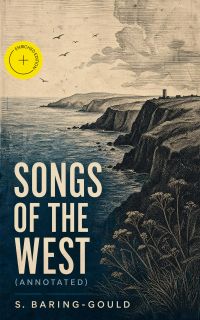
Songs of the West (Annotated)S. Baring-Gould7h 38min$1.99 · $0.00

A Brief History of IntelligenceMax S. Bennett12h 18min4.6 (6.6K)$29 · $0.00

Pearl of Great PriceJoseph Smith3h 8min4.7 (7.2K)$1.20 · $0.00

The Happiest Man on EarthEddie Jaku3h 48min4.6 (178K)$7 · $0.00

MotherlandJulia Ioffe17h 52min4.7 (2.5K)$40 · $0.00

Where Cowards Go to DieBenjamin Sledge8h 42min4.7 (351)$20 · $0.00

RevolutionariesSanjeev Sanyal11h 23min4.6 (2.6K)$29 · $0.00
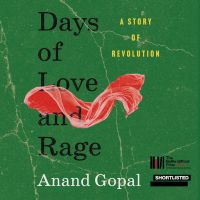
Days of Love and Rage: A Story of RevolutionAnand Gopal22h 36min4.7 (584)$34 · $0.00

We Crossed a Bridge and It TrembledWendy Pearlman6h4.6 (5.2K)$24 · $0.00

Unbroken Bonds of BattleJohnny Joey Jones8h 31min4.6 (2.6K)$8 · $0.00

The Daughter of AuschwitzTova Friedman, Malcolm Brabant7h 54min4.6 (16.7K)$26 · $0.00

Lily's PromiseLily Ebert, Dov Forman8h 54min4.6 (16.1K)$29 · $0.00

On Democracies and Death CultsDouglas Murray10h 38min4.6 (6.5K)$29 · $0.00

Across the RiverKent Babb11h 40min4.6 (927)$29 · $0.00

Balcony Over Jerusalem: A Middle East Memoir - Israel, Palestine and BeyondJohn Lyons12h 37min4.6 (1.4K)$33 · $0.00

BeyondStephen Walker15h 39min4.6 (3.2K)$33 · $0.00

Kings and PawnsHoward Bryant10h 9min4.6 (678)$29 · $0.00

No EscapeNury Turkel9h 30min4.6 (809)$28 · $0.00

Jubal Stone: U.S. Marshal: Blood Trail To Hell: A Western Adventure NovelCasey Nash3h 42min4.6 (3.2K)$18 · $0.00

Fall and RiseMitchell Zuckoff17h 23min4.6 (9.8K)$40 · $0.00

The SurvivorJosef Lewkowicz, Michael Calvin9h 22min4.6 (2.5K)$29 · $0.00
Você também pode gostar
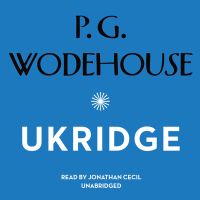
UkridgeP. G. Wodehouse7h 27min4.0 (2.5K)$22
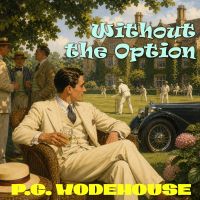
Without the OptionP. G. Wodehouse49min4.3 (574)$2 · $0.00
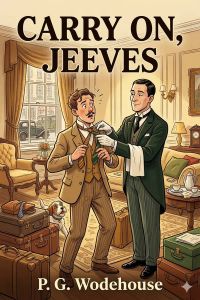
Carry On, JeevesP. G. Wodehouse5h 58min4.4 (35.6K)$2.30 · $0.00
The Life and Adventures of Martin ChuzzlewitCharles Dickens37h 29min3.9 (24.3K)$3.50 · $0.00
Jeeves and the Unbidden GuestP. G. Wodehouse45min4.1 (340)$2 · $0.00

Piccadilly JimP. G. Wodehouse9h 21min4.0 (5.5K)$2.30 · $0.00
Jeeves and the Chump CyrilP. G. Wodehouse46min4.2 (31K)$2 · $0.00
Nothing SeriousP. G. Wodehouse6h 23min4.1 (713)$17
A Man of MeansP. G. Wodehouse3h 8min3.8 (1.9K)$2.30 · $0.00

Martin ChuzzlewitCharles Dickens31h 21min3.9 (24.6K)$1 · $0.00
Tartuffe; Or, The HypocriteMolière, 1622-16731h 46min3.9 (47.1K)Grátis
UtopiaThomas More5h 59min3.7 (107.1K)$4 · $0.00

Nicholas NicklebyCharles Dickens36h 46min4.0 (60.4K)$2
Minding Miss MannersJudith Martin5h 30min4.1 (275)$17
Leave It to PsmithP. G. Wodehouse8h 55min4.3 (17.9K)$22
My Man JeevesP. G. Wodehouse4h 51min4.1 (52K)$15
A Modest ProposalJonathan Swift24min4.2 (83.9K)$6 · $0.00
The Wrong BoxRobert Louis Stevenson, Lloyd Osbourne6h 13min3.8 (2.2K)$10 · $0.00

The Jeeves & Wooster SeriesP. G. Wodehouse23h 31min4.4 (331.3K)$2 · $0.00
Jeeves in the OffingP. G. Wodehouse4h 48min4.3 (12.7K)$15