
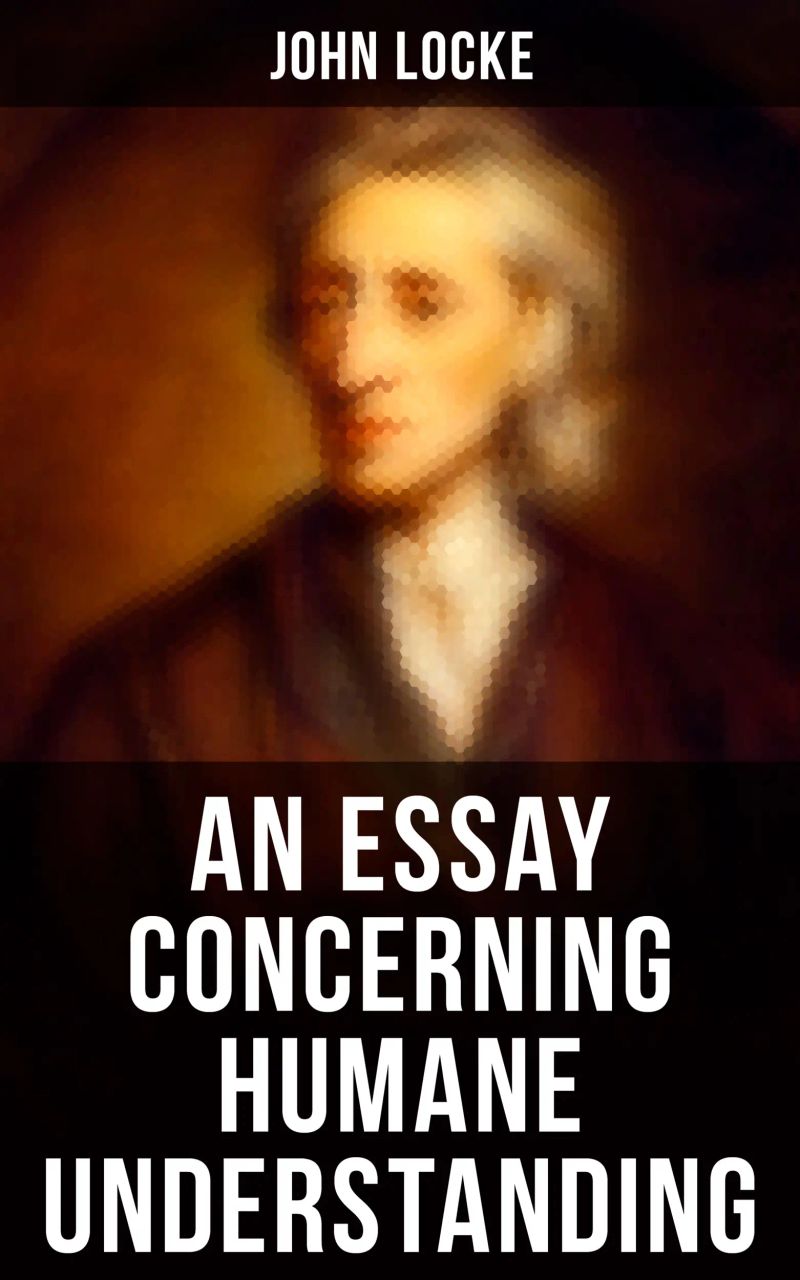
An Essay Concerning Humane Understanding
By John Locke


Length29h 26m
About this audiobook
John Locke's 'An Essay Concerning Humane Understanding' is a groundbreaking work in the field of philosophy, specifically focusing on the nature of human knowledge and understanding. Written in a clear and rational style, Locke explores the origins of ideas, the role of language in shaping thought, and the limits of human understanding. This work is considered a key text in the history of empiricism, as Locke argues that all knowledge comes from sensory experience and reflection. His emphasis on the importance of observation and experimentation laid the foundation for modern scientific inquiry. Locke's work is a must-read for anyone interested in the development of modern philosophical thought. John Locke, a prominent Enlightenment thinker, was influenced by his background in medicine, politics, and theology. His experiences living through political turmoil in England and interacting with prominent intellectuals of his time shaped his perspective on epistemology and politics. Locke's dedication to reason and empirical evidence in the pursuit of knowledge is evident in 'An Essay Concerning Humane Understanding'. I highly recommend 'An Essay Concerning Humane Understanding' to readers interested in philosophy, epistemology, and the history of ideas. Locke's thorough examination of the nature of human knowledge continues to be relevant and influential in contemporary philosophical discussions.
Audiobook details
Rating★★★★ 4.0 (13.6K)
Includes Goodreads, LibraryThing, Amazon, StoryGraph
GenrePhilosophy
Length29 hrs 26 mins
Narrated byListen with 1,000+ voices
FormateBook with Audio
Publish dateMay 7, 2021
LanguageEnglish
Table of contents
1Walden, Slavery in Massachusetts & Civil Disobedience
2VOLUME 1
3THE EPISTLE TO THE READER
4ESSAY CONCERNING HUMAN UNDERSTANDING.
5INTRODUCTION.
Mostrar todos os capítulosVer menos
6BOOK I—NEITHER PRINCIPLES NOR IDEAS ARE INNATE
7CHAPTER I.—NO INNATE SPECULATIVE PRINCIPLES.
8CHAPTER II.—NO INNATE PRACTICAL PRINCIPLES
9CHAPTER III.—OTHER CONSIDERATIONS CONCERNING INNATE PRINCIPLES, BOTH SPECULATIVE AND PRACTICAL.
10BOOK II—OF IDEAS
11CHAPTER I.—OF IDEAS IN GENERAL, AND THEIR ORIGINAL.
12CHAPTER II.—OF SIMPLE IDEAS.
13CHAPTER III.—OF SIMPLE IDEAS OF SENSE.
14CHAPTER IV.—IDEA OF SOLIDITY.
15CHAPTER V.—OF SIMPLE IDEAS OF DIVERS SENSES.
16CHAPTER VI.—OF SIMPLE IDEAS OF REFLECTION.
17CHAPTER VII.—OF SIMPLE IDEAS OF BOTH SENSATION AND REFLECTION.
18CHAPTER VIII.—SOME FURTHER CONSIDERATIONS CONCERNING OUR SIMPLE IDEAS OF SENSATION.
19CHAPTER IX.—OF PERCEPTION.
20CHAPTER X.—OF RETENTION.
21CHAPTER XI.—OF DISCERNING, AND OTHER OPERATIONS OF THE MIND.
22CHAPTER XII.—OF COMPLEX IDEAS.
23CHAPTER XIII.—COMPLEX IDEAS OF SIMPLE MODES:—AND FIRST, OF THE SIMPLE MODES OF IDEA OF SPACE.
24CHAPTER XIV.—IDEA OF DURATION AND ITS SIMPLE MODES.
25CHAPTER XV.—IDEAS OF DURATION AND EXPANSION, CONSIDERED TOGETHER.
26CHAPTER XVI.—IDEA OF NUMBER.
27CHAPTER XVII.—OF INFINITY.
28CHAPTER XVIII.—OTHER SIMPLE MODES.
29CHAPTER XIX.—OF THE MODES OF THINKING.
30CHAPTER XX.—OF MODES OF PLEASURE AND PAIN.
31CHAPTER XXI.—OF POWER.
32CHAPTER XXII.—OF MIXED MODES.
33CHAPTER XXIII.—OF OUR COMPLEX IDEAS OF SUBSTANCES.
34CHAPTER XXIV.—OF COLLECTIVE IDEAS OF SUBSTANCES.
35CHAPTER XXV.—OF RELATION.
36CHAPTER XXVI.—OF CAUSE AND EFFECT, AND OTHER RELATIONS.
37CHAPTER XXVII.—OF IDENTITY AND DIVERSITY.
38CHAPTER XXVIII.—OF OTHER RELATIONS.
39CHAPTER XXIX.—OF CLEAR AND OBSCURE, DISTINCT AND CONFUSED IDEAS.
40CHAPTER XXX.—OF REAL AND FANTASTICAL IDEAS.
41CHAPTER XXXI.—OF ADEQUATE AND INADEQUATE IDEAS.
42CHAPTER XXXII.—OF TRUE AND FALSE IDEAS.
43CHAPTER XXXIII.—OF THE ASSOCIATION OF IDEAS.
44VOLUME 2
45BOOK III OF WORDS
46CHAPTER I.
47CHAPTER II.
48CHAPTER III.
49CHAPTER IV.
50CHAPTER V.
More from John Locke
Philosophie der Erziehung (Kommentiert)John Locke, Jean-Jacques Rousseau, Voltaire48h 57m$1 · $0.00

Ein Versuch über den menschlichen Verstand (Kommentiert)John Locke33h 47m4.2 (280)$1 · $0.00

Pädagogische Grundsätze der größten Philosophen (Kommentiert)John Locke, Jean-Jacques Rousseau, Voltaire48h 56m$1 · $0.00

Brief über die Toleranz (Kommentiert)John Locke4h 52m4.1 (412)$1.50 · $0.00

Gesammelte Werke von John LockeJohn Locke44h 57m$1 · $0.00
Some Thoughts Concerning EducationJohn Locke9h 17m3.9 (5.3K)$1 · $0.00

Die Philosophie des GeistesJohn Locke41h 38m$2 · $0.00

Muutamia mietteitä kasvatuksestaJohn Locke13h$2 · $0.00

Gesammelte Werke von John LockeJohn Locke44h 59m4.3 (12)$1 · $0.00
Of the Conduct of the UnderstandingJohn Locke4h 38m4.0 (341)$1 · $0.00

Die Philosophie des GeistesJohn Locke41h 49m$2 · $0.00
Of the Conduct of the Understanding (Annotated)John Locke4h 52m4.4 (104)$1.99 · $0.00

Gedanken über Erziehung (Kommentiert)John Locke11h 21m3.6 (376)$1 · $0.00

Second Treatise of GovernmentJohn Locke5h 15m4.1 (32.6K)$12 · $0.00
50 citations de John LockeJohn Locke10m$3 · $0.00
That Bird Has My WingsJarvis Jay Masters9h 49m4.4 (13.7K)$29 · $0.00

Tâo Teh KingLaozi2h 34m4.4 (230.9K)$2 · $0.00
SymposiumPlato3h 26m4.4 (97.9K)$1.20 · $0.00

Buddhist Boot CampTimber Hawkeye2h 39m4.4 (8.4K)$18 · $0.00
Enchiridion & The Discourses of Epictetus (Annotated)Arrian Epictetus18h 9m4.4 (3.5K)$2 · $0.00

The Meditations of the Emperor Marcus Aurelius AntoninusEmperor of Rome Marcus Aurelius5h 41m4.4 (1.8M)$1 · $0.00

Crime and PunishmentFyodor Dostoevsky23h 11m4.4 (1.3M)$12 · $0.00

MeditationsMarcus Aurelius5h 52m4.4 (433.7K)$1 · $0.00

Everyday DharmaSuneel Gupta5h 2m4.5 (761)$20 · $0.00

The Joyful Wisdom ("La Gaya Scienza")Friedrich Wilhelm Nietzsche11h 37m4.4 (26.6K)$1 · $0.00
The Art of LivingEpictetus, Sharon Lebell3h 16m4.4 (50.1K)$18 · $0.00
MeditationsEmperor Of Rome Marcus Aurelius7h 23m4.3 (477.5K)$1.20 · $0.00

The Imitation of ChristThomas à Kempis6h 27m4.3 (84.6K)$21 · $0.00

Sadhana: the realisation of lifeRabindranath Tagore3h 49m4.4 (8.6K)$6 · $0.00
SapiensYuval Noah Harari15h 18m4.3 (1.4M) · 1193$33 · $0.00

You BelongSebene Selassie8h 35m4.4 (2.7K)$26 · $0.00
The Song Celestial; Or, Bhagavad-Gîtâ (from the Mahâbhârata)Anonymous2h 18m4.4 (3.2K)$2 · $0.00
The KybalionThe Three Initiates3h 47m4.3 (58.7K)$20 · $0.00

Chuang Tzu: Mystic, Moralist, and Social ReformerZhuangzi14h 42m4.4 (1.2K)$1 · $0.00

High-RisersBen Austen13h 33m4.4 (2.8K)$33 · $0.00
You may also like
An Essay Concerning Human UnderstandingJohn Locke30h 12m4.0 (18K)$1.20 · $0.00

UnthinkableHelen Thomson7h 19m4.1 (6.4K)$24 · $0.00
On the Improvement of the UnderstandingBenedictus de Spinoza1m4.0 (1.1K)$2.30

The Lives and Theories of Eminent PhilosophersDiogenes Laertius20h 31m4.2 (5.8K)$1.99 · $0.00
The Life of Reason: The Phases of Human ProgressGeorge Santayana23h 18m4.3 (340)$1 · $0.00
UltralearningScott H. Young7h 46m4.0 (29K)$26 · $0.00
The Problems of Philosophy (Annotated)Bertrand Russell6h 22m4.1 (58.2K)$2 · $0.00
Creative EvolutionHenri Bergson13h4.2 (2.4K)$20 · $0.00

An Area of DarknessV. S. Naipaul10h 1m3.9 (7.3K)$20 · $0.00

Greek in a NutshellJames Strong1h 56m3.3 (52)$2 · $0.00
A Philosophicall Essay for the Reunion of the LanguagesPierre Besnier1h 9m$2 · $0.00

Mega Mind PowerMade for Success10h 55m$20

Greek primer, colloquial and constructiveJohn Stuart Blackie2h 51m$2 · $0.00

A Commonplace Book of Thoughts, Memories, and FanciesMrs. Jameson8h 37m3.2 (11)$2 · $0.00

The Gentle ReaderSamuel McChord Crothers6h 50m4.0 (144)$2 · $0.00
Mind Mapping: Transform Your Thought Chaos Into Creative Solutions (How Elementary School Students Can Use Mind Maps to Improve Reading Comprehension)Aaron Vasquez3h 22m$3.50 · $0.00

Analysis of the Phenomena of the Human MindJames Mill24h 22m$1 · $0.00
Note-Book of Anton ChekhovAnton Pavlovich Chekhov2h 53m4.0 (126)$2.30

Philosophy in the Last Forty YearsRudolf Hermann Lotze1h 56m$2 · $0.00
Methods of AuthorsHugo Erichsen3h 47m3.8 (20)$2 · $0.00