
A Practical Enquiry into the Philosophy of Education
Exploring Educational Theory and Practice in Modern EducationDe James Gall


Duração9h 57m
Sobre este audiolivro
In "A Practical Enquiry into the Philosophy of Education," James Gall presents a comprehensive examination of educational principles through a philosophical lens. Drawing upon the intellectual currents of his time, Gall employs a methodical and accessible literary style to interrogate fundamental questions about knowledge, pedagogy, and the responsibilities of educators. The text is simultaneously a critique of existing educational theories and a proposal for more pragmatic approaches, highlighting the intersections between theoretical philosophy and applied education in the 19th century. James Gall, a prominent figure in the educational reform movement, was profoundly influenced by the rapid social changes of his era. His background as a teacher and commitment to improving educational practices shaped his views on the necessity of aligning philosophy with practical teaching. Gall's experiences in various educational settings allowed him to recognize the disconnect between theory and practice, motivating him to address these issues earnestly through his work. Readers who seek a deeper understanding of the philosophical underpinnings of contemporary education will find Gall's work indispensable. His articulate arguments challenge conventional wisdom while providing valuable insights for educators, philosophers, and policymakers alike. Gall'Äôs inquiry not only enriches the discourse on education but also remains relevant as we grapple with modern educational challenges.
Detalhes do audiolivro
GêneroEducation and Learning
Duração9 h 57 min
Narrado porOuça com mais de 1.000 vozes
FormatoeBook com áudio
Data de publicação4 de dez. de 2019
IdiomaInglês
Sumário
1ON THE GREAT DESIGN OF NATURE'S TEACHING, AND THE METHODS SHE EMPLOYS IN CARRYING IT ON.
2CHAP. I.
3A Comprehensive View of the several Educational Processes carried on by Nature.
4CHAP. II.
5On the Method employed by Nature for cultivating the Powers of the Mind.: FOOTNOTES:
Mostrar todos os capítulosVer menos
6CHAP. III.
7On the Means by which Nature enables her Pupils to acquire Knowledge.: FOOTNOTES:
8CHAP. IV.
9On Nature's Method of communicating Knowledge to the Young by the Principle of Reiteration.: FOOTNOTES:
10CHAP. V.
11On the Acquisition of Knowledge by the Principle of Individuation.
12CHAP. VI.
13On the Application of Knowledge by the Principle of Association, or Grouping.
14CHAP. VII.
15On the Acquisition of Knowledge by the Principle of Analysis, or Classification.: FOOTNOTES:
16CHAP. VIII.
17On Nature's Methods of Teaching her Pupils to make use of their Knowledge.
18CHAP. IX.
19On Nature's Methods of Applying Knowledge by the Principle of the Animal, or Common Sense.: FOOTNOTES:
20CHAP. X.
21On Nature's Method of applying Knowledge by means of the Moral Sense, or Conscience.
22CHAP. XI.
23On Nature's Method of Training her Pupils to Communicate their Knowledge.: FOOTNOTES:
24CHAP. XII.
25Recapitulation of the Philosophical Principles developed in the previous Chapters.
26PART III.
27ON THE METHODS BY WHICH THE EDUCATIONAL PROCESSES OF NATURE MAY BE SUCCESSFULLY IMITATED.
28CHAP. I.
29On the Exercises by which Nature may be imitated in cultivating the Powers of the Mind.: FOOTNOTES:
30CHAP. II.
31On the Methods by which Nature may be imitated in the Pupil's Acquisition of Knowledge; with a Review of the Analogy between the Mental and Physical Appetites of the Young.
32CHAP. III.
33How Nature may be imitated in Communicating Knowledge to the Pupil, by the Reiteration of Ideas.: FOOTNOTES:
34CHAP. IV.
35On the Means by which Nature may be imitated in Exercising the Principle of Individuation.: FOOTNOTES:
36CHAP. V.
37On the Means by which Nature may be imitated in Applying the Principle of Grouping, or Association.: FOOTNOTES:
38CHAP. VI.
39On the Methods by which Nature may be imitated in Communicating Knowledge by Classification, or Analysis.: FOOTNOTES:
40CHAP. VII.
41On the Imitation of Nature in Teaching the Practical Use of Knowledge.
42CHAP. VIII.
43On the Imitation of Nature in Teaching the Use of Knowledge by means of the Animal or Common Sense.: FOOTNOTES:
44CHAP. IX.
45On the Imitation of Nature in Teaching the Practical Use of Knowledge by means of the Moral Sense, or Conscience.: FOOTNOTES:
46CHAP. X.
47On the Application of our Knowledge to the Common Affairs of Life.: FOOTNOTES:
48CHAP. XI.
49On the Imitation of Nature, in training her Pupils fluently to communicate their Knowledge.: FOOTNOTES:
50PART IV.
Mais de James Gall

A Brief History of IntelligenceMax S. Bennett12h 18min4.6 (6.6K)$29 · $0.00

HomeschooledStefan Merrill Block7h 10min3.6 (18.5K)$28 · $0.00
WitnessAriel Burger8h 1min4.6 (1.3K)$20 · $0.00

EducationEllen G. White9h 41min4.6 (1.5K)$2 · $0.00

Parents and Children (Annotated)Charlotte Mason9h 23min4.6 (988)$2 · $0.00

Children Under FireJohn Woodrow Cox10h 17min4.5 (1.6K)$29 · $0.00

The Secret Door to SuccessFlorence Scovel Shinn2h 14min4.5 (3K)$3 · $0.00

The State Must ProvideAdam Harris7h 15min4.5 (775)$24 · $0.00

The Call of the Wild and FreeAinsley Arment9h 7min4.4 (21.2K)$29 · $0.00

The Freelance WayRobert Vlach19h 48min4.5 (528)$40 · $0.00

Race to the BottomLuke Rosiak9h 20min4.5 (600)$29 · $0.00

They Came for the SchoolsMike Hixenbaugh9h 5min4.5 (2.6K)$8 · $0.00

Find Me UnafraidKennedy Odede, Jessica Posner11h 11min4.5 (2.7K)$29 · $0.00
World's Best Inspirational Books to Change Your Life (3 Books)Napoleon Hill, Joseph Murphy, Dale Carnegie29h 38min4.5 (1.3K)$20 · $0.00

Asking for ItKate Harding8h 55min4.4 (5.3K)$20 · $0.00

MeditationsMarcus Aurelius4h 26min4.4 (456.8K)$1 · $0.00

Defining Moments in Black HistoryDick Gregory7h 37min4.4 (6K)$26 · $0.00

The Emerald Tablets of Thoth the AtlanteanMaurice Doreal3h 4min4.4 (6K)$6 · $0.00

Learning AmericaLuma Mufleh6h 37min4.4 (564)$24 · $0.00
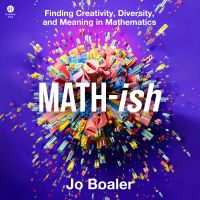
Math-ishJo Boaler7h 21min4.4 (588)$24 · $0.00
Você também pode gostar

The Mind-Gut ConnectionEmeran Mayer9h 58min4.0 (14.9K)$29 · $0.00

Supercharge Your BrainJames Goodwin14h 20min4.2 (441)$23 · $0.00

Game ChangersDave Asprey11h 12min4.1 (4.6K)$29 · $0.00
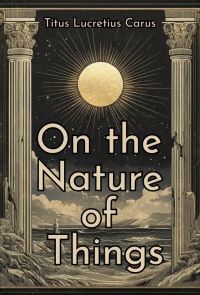
On the Nature of ThingsTitus Lucretius Carus6h 16min4.2 (21.2K)Grátis

Big Two-Hearted RiverErnest Hemingway1h 27min4.2 (2.9K)$16 · $0.00
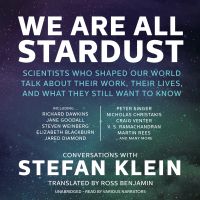
We Are All StardustStefan Klein8h 45min4.0 (1.2K)$20

EthicsBenedictus de Spinoza8h 59min4.3 (27.7K)Grátis
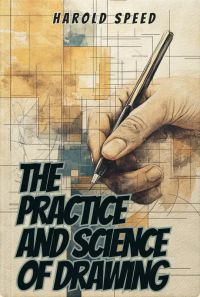
The Practice and Science of DrawingHarold Speed7h 48min4.2 (6.5K)Grátis

The Fly TrapFredrik Sjöberg5h 36min3.9 (3.2K)$17

Change Your MindRJ Spina7h 5min4.6 (288)$17

The PreludeWilliam Wordsworth7h 43min4.1 (6K)$1 · $0.00

The Enigma of ArrivalV. S. Naipaul13h 7min3.8 (3.4K)$23

The Complete Works of David HumeDavid Hume214h 17min4.5 (59)$2 · $0.00

Essences Of The SoulRachel Ward/ Virginia Santos6h 4min$9 · $0.00

Radiolab Greatest Hits, Vol. 2Lulu Miller, Latif Nasser3h 20min$20 · $0.00

Beneath the BoughsMia R. Wellington6h 15min$4.10 · $0.00

Awake in Small Sips: A Human Story of Caffeine and Its EffectsSherese Dozier47min5.0 (4) Só no Ultra

Lures of LifeJoseph Lucas3h 48min$2 · $0.00

The BeachLena Lenček, Gideon Bosker13h 8min3.3 (50)$23

The Teaching of EpictetusEpictetus5h 50min4.2 (100)$1 · $0.00