


Length2h 34m
About this audiobook
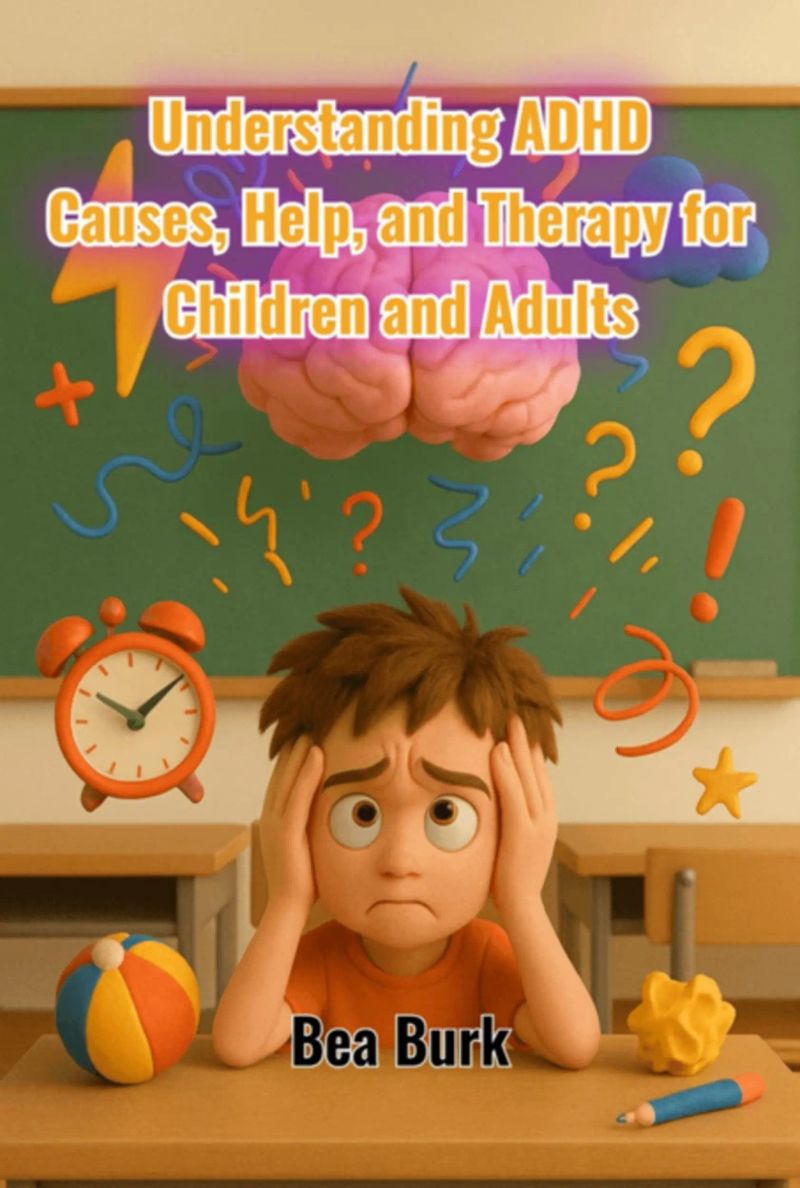
Understanding ADHD: Causes, Help, and Therapy for Children and Adults offers an in-depth examination of attention deficit hyperactivity disorder (ADHD), which is increasingly gaining public attention. This book is aimed at a broad audience, including parents, professionals, and those affected, who are seeking sound information to better understand the phenomenon of ADHD and find appropriate support. The text places particular emphasis on the latest scientific research and evidence-based treatment approaches, highlighting that ADHD affects not only children but also many adults, who are often diagnosed late. The work comprehensively analyzes the complex causes of ADHD, considering genetic predispositions, neurobiological factors, and social influences. The combination of theoretical findings with practical applications enables readers to develop a deeper understanding of the disorder. In addition to a detailed presentation of symptoms and diagnostic criteria, it also addresses the everyday challenges faced by those affected and their families.
Audiobook details
GenrePsychology
Length2 hrs 34 mins
Narrated byListen with 1,000+ voices
FormateBook with Audio
Publish dateApr 30, 2025
LanguageEnglish
Table of contents
1Understanding the basics of ADHD
21.1 Definition and characteristics of ADHD
31.2 Frequency and prevalence of ADHD
41.3 Historical perspectives on ADHD
5Researching the causes of ADHD
Show all chaptersShow less
62.1 Genetic factors and inheritance
72.2 Neurobiological aspects of the disorder
82.3 Social and environmental factors
9Symptoms and diagnosis of ADHD
103.1 Typical symptoms in children
113.2 Recognizing symptoms in adults
123.3 Diagnostic criteria and procedures
13Challenges in the everyday life of those affected
144.1 Effects on academic performance
154.2 Professional challenges and opportunities
164.3 Social relationships and interactions
17Psychosocial aspects of ADHD
185.1 Stigma and social perception
195.2 Emotional support for those affected
205.3 Role of the family and the environment
21Evidence based therapeutic approaches
226.1 Behavioral therapy and its effectiveness
236.2 Drug treatment options
246.3 Innovative therapies such as neurofeedback
25Individual therapy adaptation
267.1 Importance of personalizing therapies
277.2 Multidisciplinary approaches to treatment
287.3 Long term support and aftercare
29Self help and coping strategies
308.1 Developing strategies for self-organization
318.2 Stress management techniques
328.3 Support from self help groups
33ADHD and the education system
349.1 Adjustments in everyday school life
359.2 Support options for affected students
369.3 Cooperation between school and parents
37ADHD in professional life
3810.1 Strengths and talents of those affected
3910.2 Strategies for professional integration
4010.3 Employers and ADHD: Raising Awareness
41Societal perspectives on ADHD
4211.1 Current research trends and developments
4311.2 Political initiatives and support
4411.3 Future Outlook: ADHD in Society
45Conclusion and outlook
4612.1 Summary of key findings
4712.2 Recommendations for those affected and their relatives
4812.3 Perspectives for future research
More from Bea Burk


Bad Fat Black GirlSesali Bowen6h 32m4.7 (2.8K)$24 · $0.00

Invisible StormJason Kander6h 48m4.7 (3.2K)$24 · $0.00

I Am The StormJanice Dean9h4.6 (1.5K)$8 · $0.00

On Democracies and Death CultsDouglas Murray10h 38m4.6 (6.5K)$29 · $0.00

TerraformPropaganda5h 39m4.7 (594)$24 · $0.00

Southern Horrors: Lynch Law in All Its Phases (Annotated)Ida B. Wells-Barnett2h 44m4.6 (1.3K)$2 · $0.00

Hour of the HeartIrvin D. Yalom, Benjamin Yalom8h 19m4.6 (2.3K)$26 · $0.00

Braving the TruthRachel Held Evans11h 31m4.7 (359)$29 · $0.00
Level UpRob Dial7h 42m4.6 (3.3K)$26 · $0.00

As a JewSarah Hurwitz8h 36m4.6 (1.2K)$26 · $0.00

Saint Joan (Annotated)George Bernard Shaw6h 20m4.6 (1.2K)$1.20 · $0.00

Burn the HaystackJennie Young, PhD9h 30m4.6 (543)$29 · $0.00

Woman and the New Race (Annotated)Margaret Sanger6h 30m4.6 (1K)$1.99 · $0.00

Good InsideBecky Kennedy9h 55m4.5 (59.3K)$29 · $0.00

The Mis-Education of the NegroCarter Godwin Woodson5h 4m4.5 (29.4K)$1.20 · $0.00

Du Bois: EssaysW.E.B. Du Bois6h 22m4.6 (1.5K)$1 · $0.00

The North American Indian (Illustrated Edition)Edward S. Curtis, Frederick Webb Hodge5h 59m4.6 (1.4K)$2 · $0.00

Valley of the BirdtailAndrew Stobo Sniderman, Douglas Sanderson10h 1m4.6 (2.4K)$29 · $0.00

Lies My Therapist Told MeGreg E. Gifford9h 3m4.6 (503)$29 · $0.00
Disturbed in Their NestsAlephonsion Deng, Judy A. Bernstein11h 22m4.6 (595)$23 · $0.00
You may also like

Mommy BurnoutSheryl Gonzalez Ziegler8h 49m3.9 (1.6K)$29 · $0.00

Of Boys and MenRichard V. Reeves6h 55m4.1 (14.1K)$17

Raising Your Spirited Child, Third EditionMary Sheedy Kurcinka13h 17m4.3 (13K)$33 · $0.00

Dog Is LoveClive D. L. Wynne8h 26m4.1 (1.8K)$26 · $0.00

Secrets of the Millionaire MindT. Harv Eker3h 16m4.2 (89.5K)$18 · $0.00

Born for LoveBruce D. Perry, Maia Szalavitz11h 42m4.4 (4K)$29 · $0.00

Why Mars and Venus CollideJohn Gray6h 58m3.9 (2.2K)$24 · $0.00

Money and LoveMyra Strober, Abby Davisson8h 46m4.1 (368)$29 · $0.00

Hygge: Learn the Incredible Power of the Hygge Way of Life (The Ultimate Guide to Scandinavian Ways of Living a Balanced Life Filled With Coziness and Happiness)Martin g, Michael Thomas1h 7m$5.20 · $0.00

The Superdad Syndrome: The Pressure and Expectations on Working FathersAurora Brooks1h 15m$3.50 · $0.00

The Unspoken Challenges of Being a Working MomAurora Brooks1h 1m$3.50 · $0.00

Dot ComplicatedRandi Zuckerberg8h 7m3.3 (659)$26 · $0.00
Guide For Understanding Autistic Children Emotional And Behavioral Understanding Guide For Children With AutismIzanilda Pereira Da Silva Psychologist38m5.0 (1)$9 · $0.00

How to Protect Your Child from Online Hate and CyberbullyingMax Paradox7h 1m$5.10

Why It's Okay to Be a "Good Enough" ParentAurora Brooks1h 13m$3.50 · $0.00

Working Dads: The Unsung Heroes of the Corporate WorldAurora Brooks1h 16m$3.50 · $0.00

The Death Of MachismAlder D'pass3h 42m$7 · $0.00

The Unspoken Struggles of Working Dads: Mental Health MattersAurora Brooks1h 8m$3.50 · $0.00
Exploring Autism - A Conversation with Uta FrithHoward Burton1h 44m$3

Holly Berries From DickensCharles Dickens26m$2.40