
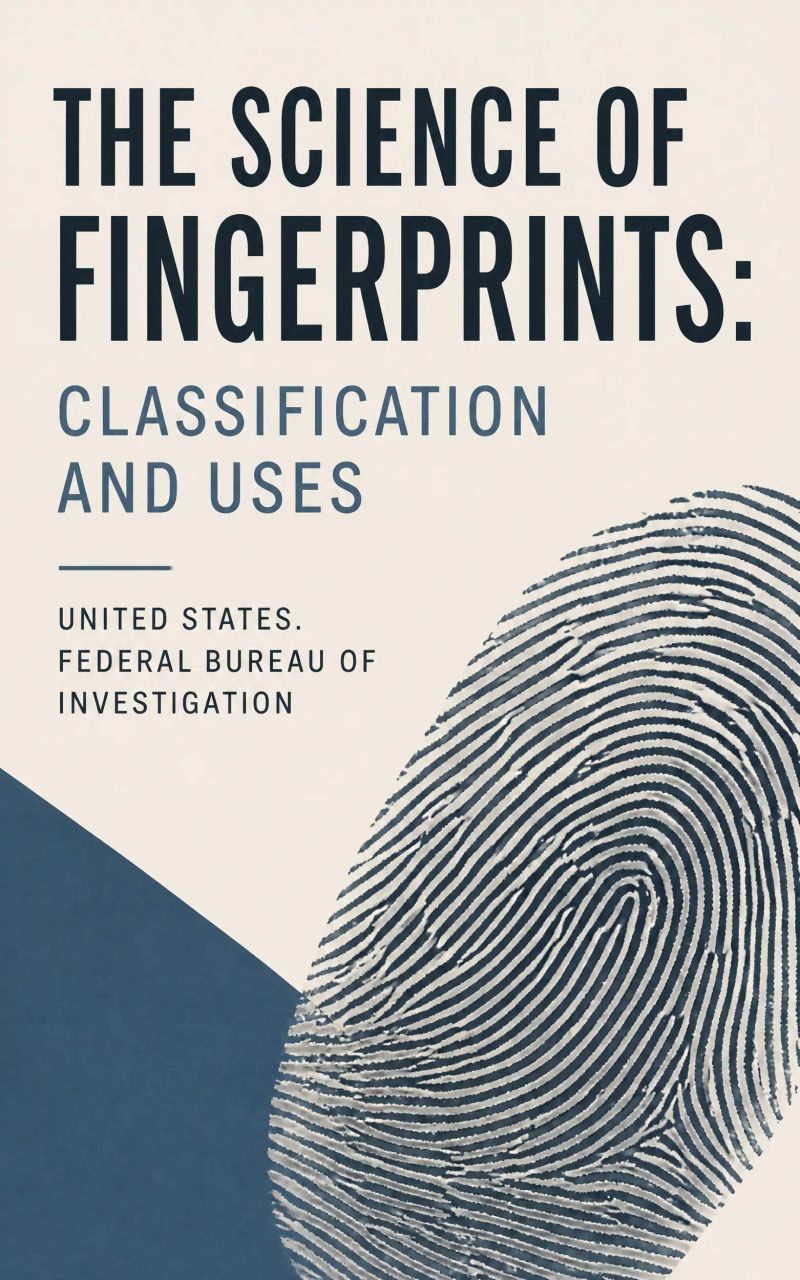
The Science of Fingerprints: Classification and Uses
A Forensic Identification Manual on Henry Classification, Ridge Patterns, and Latent PrintsBy United States. Federal Bureau of Investigation


Length5h 12m
About this audiobook
The Science of Fingerprints: Classification and Uses is a systematic manual of forensic identification, explaining how friction-ridge patterns are recorded, classified, preserved, searched, and interpreted. Its methodical treatment encompasses fingerprint anatomy, pattern types, filing systems, latent impressions, investigative comparison, and the evidentiary significance of identification. Written in a precise, instructional style rather than a narrative one, the book belongs to the tradition of twentieth-century scientific and administrative manuals that translated specialized laboratory knowledge into standardized professional practice. Its importance lies equally in its technical content and in its faith in reproducible procedures, careful observation, and documented evidence. The credited author, the United States Federal Bureau of Investigation, reflects the institutional setting in which modern American criminal identification was organized. The Bureau's responsibility for maintaining national investigative resources and fingerprint records created a practical need for common terminology, reliable classification, and uniform operating standards among law-enforcement agencies. This volume therefore emerges not as an individual theorist's argument, but as the product of an institution seeking to consolidate expertise and make forensic knowledge operational across jurisdictions. Readers interested in forensic science, criminology, policing, legal history, or the development of bureaucratic knowledge will find this book especially valuable. It offers both a foundational account of fingerprint practice and a revealing document of the period's confidence in scientific classification. Though technical in presentation, it rewards close reading as a history of evidence: a concise guide to how bodily traces were transformed into investigative information and courtroom claims.
Audiobook details
Rating★★★★ 3.6 (152)
Includes Amazon, Goodreads
GenreScience and Nature
Length5 hrs 12 mins
Narrated byListen with 1,000+ voices
FormateBook with Audio
Publish dateNov 21, 2023
LanguageEnglish
Table of contents
1The History of Ink, Including Its Etymology, Chemistry, and Bibliography (Annotated)
26CHAPTER V
2John Edgar Hoover, Director
27Classification of scarred patterns
3INTRODUCTION
28Classification of amputations and fingers missing at birth
4CHAPTER I
29Classification of bandaged or imprinted fingers
5The Identification Division of the FBI
30CHAPTER VI
Show all chaptersShow less
6CHAPTER II
31Filing Sequence
7Types of patterns
32CHAPTER VII
8Interpretation
33Searching
9The loop
34Referencing
10Essentials of a loop
35CHAPTER VIII
11Ridge counting
36How To Take Inked Fingerprints
12Radial and ulnar loops
37CHAPTER IX
13The plain arch
38Mechanical operation
14The tented arch
39Illegible inked prints
15The whorl
40Temporary disabilities
16The plain whorl
41Permanent disabilities
17Central pocket loop
42Deformities
18Double loop
43General
19Accidental
44CHAPTER X
20Whorl tracing
45Advanced decomposition
21CHAPTER III
46Desiccation and charring
22Questionable Patterns
47Water-soaked fingers
23CHAPTER IV
48Drying the fingers
24The classification formula
49X-ray photography
25Extensions
50General photography

A Brief History of IntelligenceMax S. Bennett12h 18m4.6 (6.6K)$29 · $0.00
The Story of BirdsSteve Brusatte11h 49m4.6 (401)$29 · $0.00
Black Earth WisdomLeah Penniman11h 54m4.6 (577)$8 · $0.00

Total Cat MojoJackson Galaxy10h 13m4.5 (8.4K)$23 · $0.00

My Life Among the UnderdogsTia Torres5h 51m4.5 (4K)$24 · $0.00

What It Takes to Save a LifeKwane Stewart6h4.6 (556)$24 · $0.00

Pastoral SongJames Rebanks8h 35m4.5 (12K)$26 · $0.00
How Stella Learned to TalkChristina Hunger7h4.5 (10.9K)$24 · $0.00

Craig & FredCraig Grossi8h 6m4.5 (9.6K)$26 · $0.00
Celebrating BirdsNatalia Rojas, Ana Maria Martinez6h 47m4.6 (330)$24 · $0.00

Saving JemimaJulie Zickefoose4h 59m4.5 (749)$20 · $0.00

Will's Red CoatTom Ryan8h 23m4.5 (2.3K)$26 · $0.00
Of Time and TurtlesSy Montgomery10h 34m4.5 (5K)$29 · $0.00
THE WOLF TRILOGY: Call of the Wild, White Fang & The Son of the WolfJack London17h 31m4.5 (2.4K)$1.99 · $0.00

Zen and the Art of Saving the PlanetThich Nhat Hanh9h 20m4.5 (3.9K)$29 · $0.00
BLACK BEAUTY (With Original Illustrations)Anna Sewell7h 31m4.5 (1.3K)$1.99 · $0.00

Bottle of LiesKatherine Eban14h 25m4.4 (12K)$33 · $0.00
IngrainedCallum Robinson8h 10m4.5 (1.1K)$26 · $0.00

The Lion Tracker's Guide To LifeBoyd Varty3h 1m4.4 (4.8K)$18 · $0.00

Born for LoveBruce D. Perry, Maia Szalavitz11h 42m4.4 (4K)$29 · $0.00
You may also like
A Study in ScarletArthur Conan Doyle4h 51m4.2 (585.4K)$6.99 · $0.00
The Roman Hat MysteryEllery Queen11h 5m3.8 (12.2K)$1.99 · $0.00
In the Company of Sherlock HolmesLaurie R. King, Leslie S. Klinger8h 35m3.8 (1.7K)$20

Inspector Alan Grant Mysteries - Complete SeriesJosephine Tey48h 49m4.3 (1.4K)$1.50 · $0.00
A Shilling for CandlesJosephine Tey8h 28m4.0 (13.7K)$1 · $0.00
Beyond the Body FarmBill Bass, Jon Jefferson6h 17m4.3 (10.2K)$24 · $0.00
The Tragedy of Pudd'nhead WilsonMark Twain5h 17m3.9 (25.5K)$1 · $0.00
The Man in the Queue (Musaicum Vintage Mysteries)Josephine Tey9h 36m3.9 (16.8K)$1.99 · $0.00
Speedy DeathGladys Mitchell8h 53m3.6 (1.7K)$23
The Wisdom of Father BrownG. K. Chesterton7h 51m3.9 (8.8K)$2.30 · $0.00

The Widow Lerouge (Annotated)Émile Gaboriau14h 53m3.9 (2K)$1.99 · $0.00
The Detection of ForgeryW. Waithman Caddell, Douglas Blackburn2h 30m$2 · $0.00
A Certain Dr. ThorndykeRichard Austin Freeman10h 50m3.9 (140)$2 · $0.00

The Experiences of Loveday Brooke, Lady DetectiveCatherine Louisa Pirkis7h 47m3.7 (487)$2 · $0.00
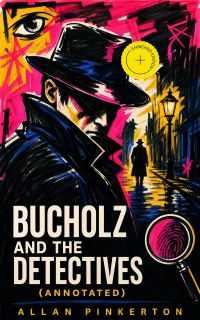
Bucholz and the Detectives (Annotated)Allan Pinkerton7h 49m3.7 (35)$1.99 · $0.00
The Atomic Fingerprint: Neutron Activation AnalysisBernard Keisch1m$1 · $0.00
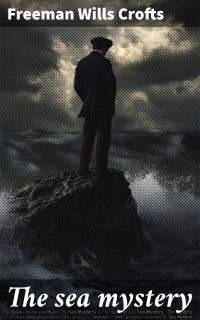
The sea mysteryFreeman Wills Crofts8h 28m3.9 (748)$1 · $0.00
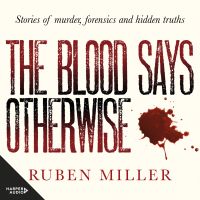
The Blood Says Otherwise: Stories of murder, forensics and hidden truthsRuben Miller8h 34m4.3 (70)$26 · $0.00
The Cyber Threat Intelligence Analyst's WorkbookMira Iqbal7h 44m$5 · $0.00

Legal ChemistryAlfred Naquet5h 53m$2 · $0.00