
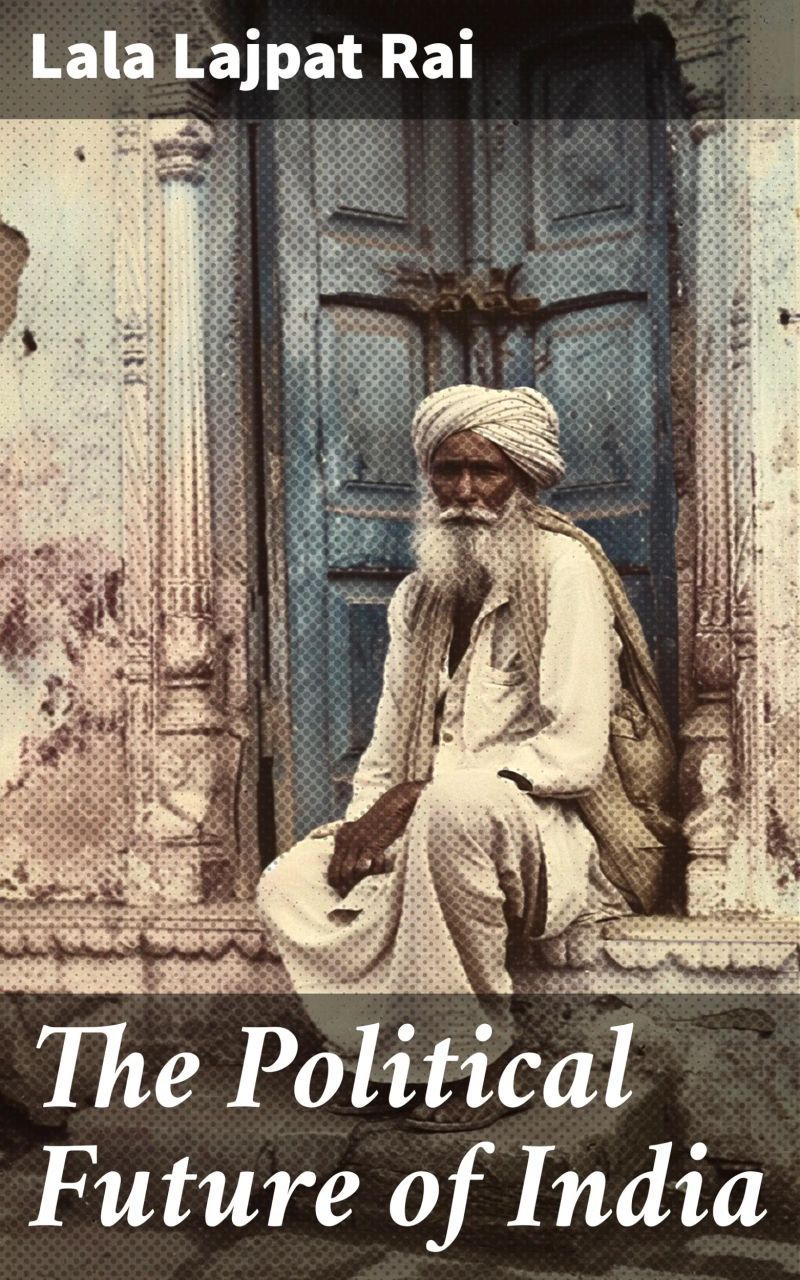
The Political Future of India
Insightful Analysis of India's Political Landscape and Independence MovementBy Lala Lajpat Rai


Length6h 2m
About this audiobook
In "The Political Future of India," Lala Lajpat Rai presents a prescient examination of India's socio-political landscape at the cusp of independence. The book is characterized by its incisive prose and passionate advocacy for self-governance, reflecting the volatile atmosphere of early 20th-century India. Rai deftly navigates complex themes of nationalism, colonialism, and social justice, employing a rhetorical style that captivates and inspires. His arguments are not merely theoretical; they resonate with the lived experiences of millions, capturing the aspirations and frustrations of a nation in upheaval as it grapples with colonial rule and burgeoning self-identity. Lala Lajpat Rai was a significant figure in the Indian independence movement, known for his steadfast commitment to improving the lives of Indians through political reform and social upliftment. His experiences as a political activist, journalist, and reformer deeply informed his vision for India's future. Rai's involvement in various nationalistic organizations and his writings on social issues underline his belief that political change must go hand in hand with social progress, thus providing a profound backdrop to the themes presented in this book. This book is essential for those interested in understanding the historical roots of contemporary Indian politics, as well as scholars of colonial studies and national identity. Rai's work serves not only as a historical document but also as a call to action, urging readers to reflect on the ongoing struggles for justice and equitable governance. Whether a student of history or a casual reader, one will find insights that are both relevant and invigorating.
Audiobook details
GenrePolitics and Government
Length6 hrs 2 mins
Narrated byListen with 1,000+ voices
FormateBook with Audio
Publish dateSep 18, 2023
LanguageEnglish
Table of contents
1Introduction
26FOOTNOTES:
2PROFITEERING AND TRICKERY.
27VIII THE EUROPEAN COMMUNITY IN INDIA
3REVOLUTIONARY INSPIRATION
28FOOTNOTES:
4No. 1
29II
5No. 2
30III
Show all chaptersShow less
6No. 3
31India Office in London
7No. 4
32A COMPARISON BETWEEN THE RESOLUTIONS RELATING TO THE REFORM PROPOSALS PASSED
8No. 5
33XI INDIA’S CLAIM TO FISCAL AUTONOMY “INDUSTRIES AND TARIFFS”
9No. 7
34FOOTNOTES:
10No. 8
35FOOTNOTES:
11No. 13
36FOOTNOTES:
12No. 14
37FOOTNOTES:
13No. 15
38FOOTNOTES:
14No. 16
39XVII THE PROBLEM
15No. 24
40XVIII THE INTERNATIONAL ASPECT
16FOOTNOTES:
41FOOTNOTES:
17FOOTNOTES:
42I. The Secretary of State in Council
18FOOTNOTES:
43II. The Government of India
19EDUCATIONAL BACKWARDNESS
44I. The Secretary of State in Council
20POVERTY
45II. The Government of India
21FOOTNOTES:
46I. The Secretary of State in Council
22COST OF ADMINISTRATION
47II. The Government of India
23EDUCATIONAL DEPARTMENT
48III. The Provincial Governments
24Indian Army
49Public Services
25Indian Medical Service.
50Local Self-Government
More from Lala Lajpat Rai


Balcony Over Jerusalem: A Middle East Memoir - Israel, Palestine and BeyondJohn Lyons12h 37m4.6 (1.4K)$33 · $0.00

RiggedMollie Hemingway12h 48m4.6 (4.2K)$23 · $0.00

SledgehammerDavid Friedman8h 21m4.7 (589)$26 · $0.00

Citizenship in a Republic (Annotated)Theodore Roosevelt2h 44m4.6 (1.4K)$2 · $0.00

No EscapeNury Turkel9h 30m4.6 (809)$28 · $0.00

Always FaithfulThomas Schueman, Zainullah Zaki12h 12m4.6 (977)$29 · $0.00

UnthinkableJamie Raskin15h 8m4.5 (9.3K)$8 · $0.00

My Fourth Time, We DrownedSally Hayden13h 59m4.6 (2.9K)$23 · $0.00

A Revolution of Common SenseScott Jennings9h 29m4.6 (528)$29 · $0.00

Statement From the Dock at the Rivonia TrialNelson Mandela2h 18m4.6 (1.3K)$1 · $0.00

Lessons from the EdgeMarie Yovanovitch17h 11m4.5 (5.9K)$40 · $0.00

To Rescue the American SpiritBret Baier10h 12m4.5 (2.7K)$8 · $0.00

StonewalledSharyl Attkisson15h 19m4.5 (4.3K)$33 · $0.00
The World According to Orwell: 1984 & Animal FarmGeorge Orwell15h 42m4.6 (1.1K)$1 · $0.00
Basic EconomicsThomas Sowell18h 32m4.5 (29.3K)$28 · $0.00

To Rescue the RepublicBret Baier, Catherine Whitney11h 42m4.5 (8.6K)$29 · $0.00

Modern WarriorsPete Hegseth7h 10m4.5 (4.7K)$24 · $0.00

Philosophy and Opinions of Marcus Garvey (Annotated)Marcus Mosiah Garvey4h 42m4.5 (1.7K)$1.99 · $0.00

A Plague Upon Our HouseScott W. Atlas MD10h 37m4.5 (3.4K)$20 · $0.00

One Bright MoonAndrew Kwong12h 21m4.5 (813)$29 · $0.00
You may also like

The Constitution of Japan, 1946Japan2h 12m4.2 (287)$2 · $0.00

The Origins of TotalitarianismHannah Arendt23h 24m4.3 (23.3K)$32

Debunking Howard ZinnMary Grabar11h 45m3.9 (2K)$23

The HistoriansCecilia Ekbäck11h 3m3.8 (4.1K)$29 · $0.00
NehruAdeel Hussain, Tripurdaman Singh9h 54m4.1 (336)$29 · $0.00

On The Duty of Civil DisobedienceDavid Thoreau1h 6m4.0 (115K)$1 · $0.00

Thinking the Twentieth CenturyTony Judt15h 4m4.3 (3.1K)$25

Washington and the Riddle of PeaceH. G. Wells7h 9m$2 · $0.00

Alsace-LorraineDaniel Blumenthal1h 14m$1 · $0.00

Progressivism, the Great Depression, and the New DealChristopher Collier, James Lincoln Collier2h 4m$15

Woodrow Wilson: Speeches, Inaugural Addresses, State of the Union Addresses, Executive Decisions & Messages to CongressWoodrow Wilson, Josephus Daniels15h 2m$1 · $0.00

The ArmeniansC. F. Dixon-Johnson2h 3m$2 · $0.00

Mao ZedongLifeInk Press1h 49m$4 · $0.00

How to Lose Friends and Antagonize PresidentsThom Tillis7h 36m$26 · $0.00

The treatment of Armenians in the Ottoman EmpireVarious Authors34h 22m4.4 (157)$1 · $0.00

A Practical International ProgramJay William Hudson1h 2m$2 · $0.00

The Meat of The MatterDr Sylvia Karpagam8h 5m$18 · $0.00

The Truth about Church ExtensionAnonymous1h 21m$2 · $0.00

The Roots and Fallouts of Haile Selassie's Educational PolicyMessay Kebede1h 32m$2 · $0.00

The History of Yugoslavia (Annotated)Henry Baerlein29h 3m$2 · $0.00