
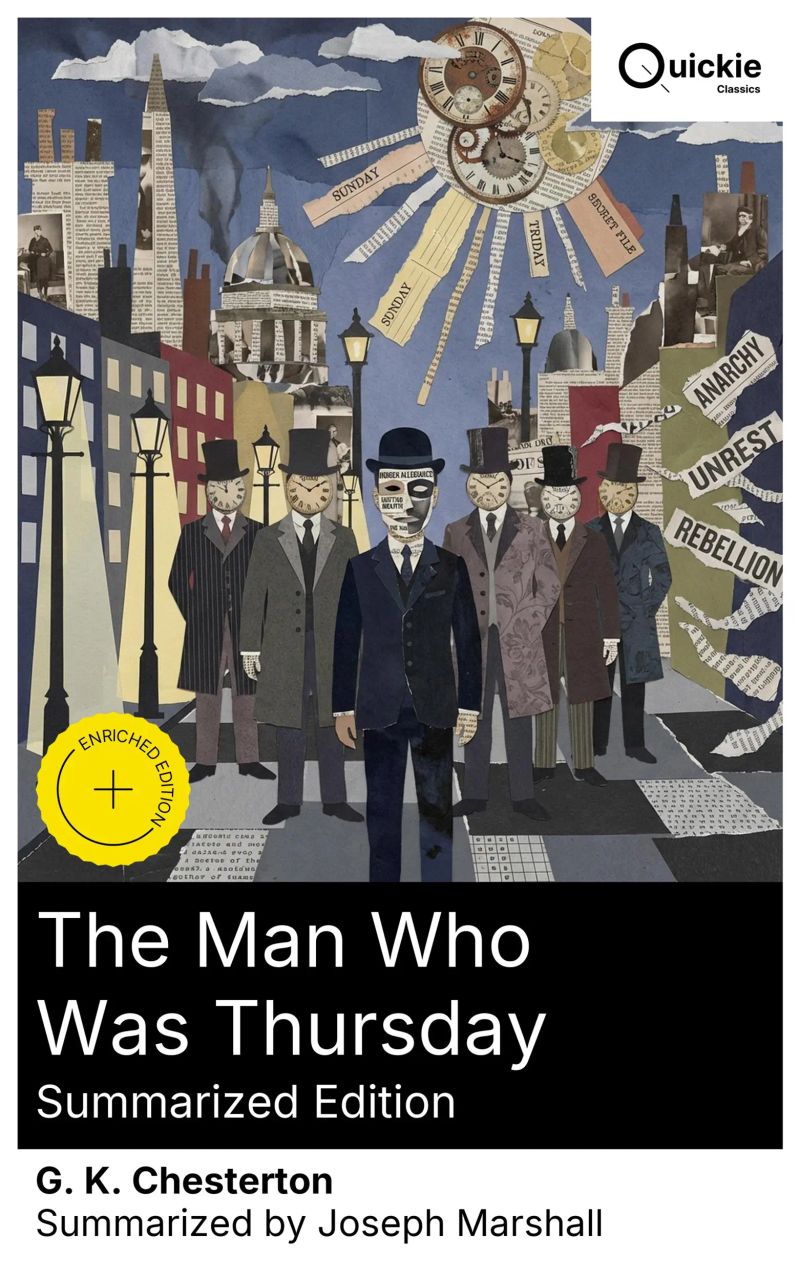
The Man Who Was Thursday (Summarized Edition)
Enriched edition. An Existential Mystery of Anarchy, Secret Police, and Deception in Edwardian LondonBy G. K. Chesterton


Length2h 52m
About this audiobook
First published in 1908 and subtitled 'A Nightmare', The Man Who Was Thursday is Chesterton's metaphysical thriller in which poet-detective Gabriel Syme infiltrates an anarchist council whose members bear the days of the week, pursuing the enigmatic Sunday through chases and maskings. Chesterton splices detective conventions, spy caper, and allegory, using paradox, epigram, and dream-logic to test order and chaos, authority and freedom. Set against Edwardian London and fin-de-siècle fears of anarchism, the narrative slides from satire into visionary pageant, culminating in a masquerade. A journalist, illustrator, and controversialist, Chesterton honed his taste for paradox in polemics and in Orthodoxy (also 1908), where he cast Christian belief as romantic adventure. Though not yet a Catholic, his intuition of providence and his critiques of nihilism shape the novel's riddling police-versus-anarchist premise. His theatrical sense, love of masquerade, and comic largesse animate the book's pageantry while his metaphysical seriousness ensures its aftertaste. Readers of Kafka, Borges, or Wolfe will relish this slim, inexhaustible puzzle—at once page-turner and parable—that rewards rereading and discussion. Recommended for those interested in genre-bending fiction, modernist preoccupations with identity and authority, or the metaphysical detective story; it offers a bracing, humane antidote to despair without sacrificing ambiguity.
Quickie Classics summarizes timeless works with precision, preserving the author's voice and keeping the prose clear, fast, and readable—distilled, never diluted. Enriched Edition extras: Introduction · Synopsis · Historical Context · Author Biography · Brief Analysis · 4 Reflection Q&As · Editorial Footnotes.
Audiobook details
GenreMystery and Thriller, General Fiction
Length2 hrs 52 mins
Narrated byListen with 1,000+ voices
FormateBook with Audio
Publish dateJan 10, 2026
LanguageEnglish
Table of contents
1Introduction
5Author Biography
2Introduction
6The Man Who Was Thursday
3Synopsis
7Analysis
4Historical Context
8Reflection

Die Beste Father Brown-KriminalfälleG. K. Chesterton10h 10m4.3 (1.1K)$1.50 · $0.00
Father Brown: Complete Series (All 53 Stories in One Volume)G. K. Chesterton40h 36m4.3 (19.3K)$2.99 · $0.00
Father Brown - KrimisG. K. Chesterton11h 13m4.2 (595)$1 · $0.00

Verteidigung des Unsinns, der Demut, des Schundromans und anderer mißachteter DingeG. K. Chesterton4h 7m$1 · $0.00
G. K. Chesterton: Krimis, Aufsätze, Romane und mehrG. K. Chesterton30h 20m4.4 (16)$1 · $0.00

Der Mann, der Donnerstag war (Politthriller)G. K. Chesterton7h 57m4.0 (63.8K)$1.50 · $0.00
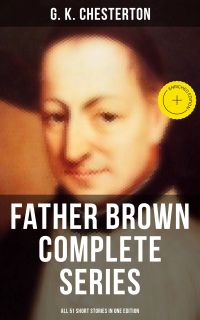
FATHER BROWN Complete Series - All 51 Short Stories in One EditionG. K. Chesterton39h 23m4.4 (3.6K)$1.99 · $0.00
The Sign of the Broken Sword (Unabridged)G. K. Chesterton48m3.4 (229)$10 · $0.00
OrthodoxyG. K. Chesterton6h 57m4.3 (56K)$10 · $0.00
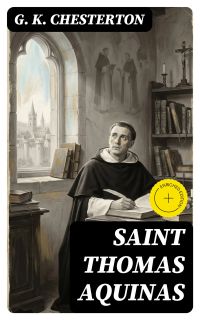
Saint Thomas Aquinas (Annotated)G. K. Chesterton6h 59m4.2 (14.6K)$1.99 · $0.00
The Life of St. Francis of Assisi (Annotated)G. K. Chesterton5h 58m4.3 (18K)$1.99 · $0.00

Die Methoden des Meisterdetektivs - 250 Krimis in einem SammelbandG. K. Chesterton, Arthur Conan Doyle, Edgar Allan Poe, Émile Gaboriau, Anna Katharine Green, Edgar Wallace, Balduin Groller, Matthias McDonnell Bodkin, Hugo Bettauer, Sven Elvestad, Eufemia von Adlersfeld-Ballestrem, Walther Kabel, David Christie Murray, Robert Kraft, Joseph Smith Fletcher, Louis Weinert-Wilton, Paul Rosenhayn, Frank Heller841h 6m4.2 (112)$1 · $0.00

Das fliegende WirtshausG. K. Chesterton8h 46m3.9 (2.9K)$1 · $0.00
The Everlasting Man (Annotated)G. K. Chesterton12h 46m4.3 (14.3K)$2 · $0.00
Gesammelte Werke: Romane + Kriminalgeschichten + Essay (Kommentiert)G. K. Chesterton30h 58m4.4 (13)$1.50 · $0.00
The Napoleon of Notting Hill (Annotated)G. K. Chesterton7h 52m$2 · $0.00
The Ball and the Cross (Annotated)G. K. Chesterton10h 25m4.1 (2.8K)$2 · $0.00

Verteidigung des Unsinns, der Demut, des Schundromans und anderer mißachteter Dinge (Kommentiert)G. K. Chesterton4h 24m$1 · $0.00

Menschenskind - Ein Sonderling der anderen Art (Kommentiert)G. K. Chesterton9h 22m4.3 (13)$1 · $0.00
FATHER BROWN Complete Series - All 51 Short Stories in One Edition (Annotated)G. K. Chesterton39h 30m$2 · $0.00
The Adventures of Sherlock Holmes (Complete Edition)Arthur Conan Doyle12h 41m4.6 (286.7K)$1.99 · $0.00
Farewell My Lovely (Annotated)Raymond Chandler10h 37m4.6 (1.2K)$2 · $0.00

The Labyrinth of the SpiritsCarlos Ruiz Zafon27h 55m4.5 (77.2K)$53 · $0.00

Olympic Mountain PursuitJodie Bailey5h 55m4.6 (638)$12 · $0.00

Glen AffricKarine Giebel22h 51m4.5 (3.2K)$46 · $0.00

Deadly Badlands PursuitSharee Stover5h 53m4.6 (361)$12 · $0.00
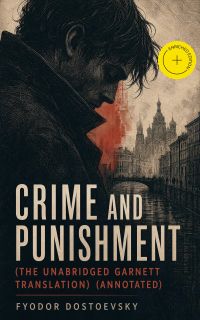
Crime and Punishment (The Unabridged Garnett Translation) (Annotated)Fyodor Dostoevsky24h 25m4.5 (15.4K)$1.99 · $0.00
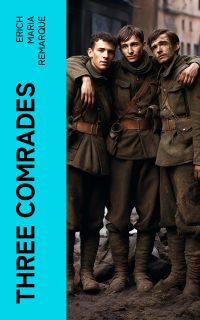
Three ComradesErich Maria Remarque15h 50m4.5 (47.3K)$2 · $0.00

AngelAnita Waller10h 30m4.6 (672)$30 · $0.00

The BorderDon Winslow29h 8m4.5 (35.7K)$53 · $0.00
FlashpointCatherine Coulter11h 38m4.5 (11.6K)$29 · $0.00
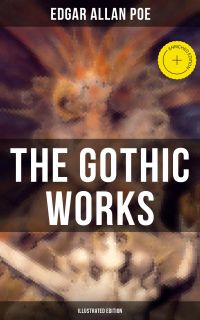
The Gothic Works of Edgar Allan Poe (Illustrated Edition)Edgar Allan Poe21h 5m4.5 (2.9K)$1.99 · $0.00
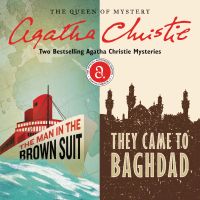
The Man in the Brown Suit & They Came to BaghdadAgatha Christie15h 43m4.6 (495)$33 · $0.00

Fang Si-Chi's First Love ParadiseYi-Han Lin8h 25m4.5 (4K)$26 · $0.00
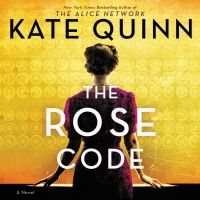
The Rose CodeKate Quinn16h 2m4.4 (493.7K)$33 · $0.00
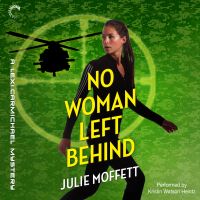
No Woman Left BehindJulie Moffett8h 49m4.5 (3K)$25 · $0.00

CovertJanie Crouch6h 15m4.5 (2K)$12 · $0.00
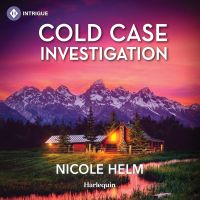
Cold Case InvestigationNicole Helm5h 30m4.6 (321)$5 · $0.00

The ReunionJana DeLeon6h 31m4.5 (1.6K)$12 · $0.00

Courage Under FireSharon Dunn5h 50m4.5 (730)$24 · $0.00

WhistlerAnn Patchett10h 45m4.6 (4.6K)$29 · $0.00
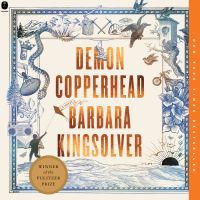
Demon CopperheadBarbara Kingsolver21h 3m4.5 (949.4K)$46 · $0.00
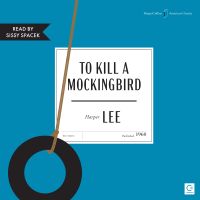
To Kill a MockingbirdHarper Lee12h 18m4.5 (7.4M)$29 · $0.00

Remarkably Bright CreaturesShelby Van Pelt11h 17m4.4 (1.7M)$29 · $0.00
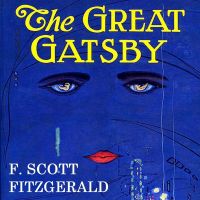
The Great Gatsby: Original 1925 Edition (An F. Scott Fitzgerald Classic NovelFrancis Scott Fitzgerald4h 45m4.6 (9.3K)$18 · $0.00
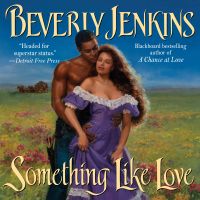
Something Like LoveBeverly Jenkins10h 21m4.6 (2.7K)$29 · $0.00
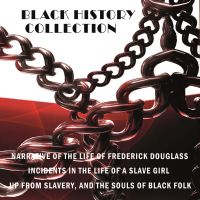
Black History CollectionFrederick Douglass, Harriet Ann Jacobs, Booker T. Washington, W.E.B. Du Bois27h 9m4.6 (2.6K)$18 · $0.00

The Old Man and the Sea (Annotated)Ernest Hemingway4h 27m4.6 (1.4K)$2 · $0.00

White HotIlona Andrews13h 18m4.5 (136.9K)$5 · $0.00

The Ghost by the Billabong (The Matilda Saga, #5)Jackie French14h 58m4.6 (773)$33 · $0.00
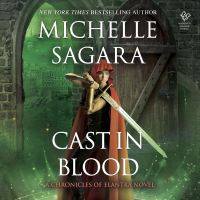
Cast in BloodMichelle Sagara16h 35m4.6 (607)$33 · $0.00
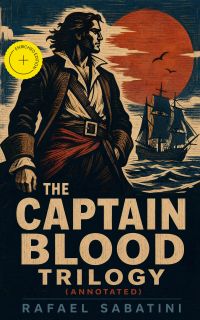
The Captain Blood Trilogy (Annotated)Rafael Sabatini29h 20m4.6 (1K)$3 · $0.00
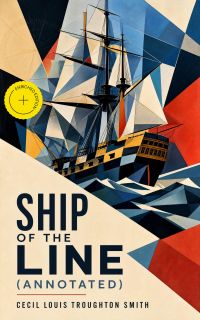
Ship of the Line (Annotated)Cecil Louis Troughton Smith11h 13m4.6 (1K)$2 · $0.00
The George Orwell CollectionGeorge Orwell24h 46m4.5 (14.4K)$12 · $0.00
Time RegainedMarcel Proust15h 38m4.5 (9.2K)$2 · $0.00

Driving ForceElle James4h 58m4.6 (407)$20 · $0.00

When God Calls the HeartBrian Bird, Michelle Cox3h 24m4.6 (439)$10 · $0.00

Five Little IndiansMichelle Good10h 34m4.5 (64.5K)$29 · $0.00
Lolth's WarriorR. A. Salvatore13h 20m4.6 (2.4K)$33 · $0.00

The Things We Cannot SayKelly Rimmer13h 48m4.5 (359.1K)$33 · $0.00
You may also like
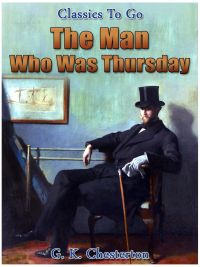
The Man Who Was ThursdayG.K.Chesterton6h 24m3.9 (62.8K)$2.30
The Man Who Was Thursday: A Nightmare (Annotated)G. K. Chesterton6h 31m4.3 (2.6K)$1.20 · $0.00
The Man Who Was Thursday a NightmareG. K. Chesterton6h 21m4.0 (49K)$2.30 · $0.00
The Big FourAgatha Christie6h 19m3.7 (104.7K)$17
Looking for the EnemyBette Dam10h 31m4.2 (267)$18 · $0.00
The Black WidowDaniel Silva13h 44m4.3 (55K)$5 · $0.00

A Feigned MadnessTonya Mitchell16h 11m4.2 (1K)$25 · $0.00

The Man Who Was Thursday: A NightmareG. K. Chesterton6h 1m4.0 (125K)Free
The Submarine PlansAgatha Christie29m3.6 (1.2K)$2 · $0.00
The Kidnapped Prime MinisterAgatha Christie40m3.9 (2.7K)$2 · $0.00
The Big FourAgatha Christie5h 45m3.7 (104.7K)Free

The Valley of FearArthur Conan Doyle7h 40m4.1 (81K)$1 · $0.00

The Elusive PimpernelBaroness Emmuska ORCZY9h 39m4.1 (4.9K)$7 · $0.00
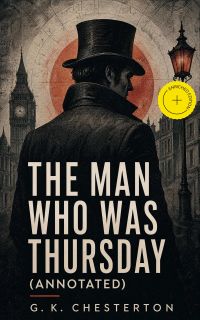
The Man Who Was Thursday (Annotated)G. K. Chesterton8h 10m4.0 (57.3K)$2 · $0.00
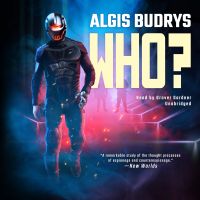
Who?Algis Budrys6h 4m3.8 (1.7K)$17

Hitler in Los AngelesSteven J. Ross13h 59m4.2 (1.7K)$23

Studies In Classic American LiteratureD. H. Lawrence6h 51m4.1 (1.5K)$2.30
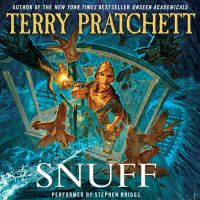
SnuffTerry Pratchett11h 29m4.3 (79.3K)$29 · $0.00
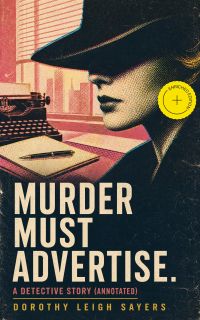
Murder Must Advertise. A Detective Story (Annotated)Dorothy Leigh Sayers14h 24m4.4 (1.3K)$2 · $0.00
On Death's TrailNick Carter3h 58m$2.30