
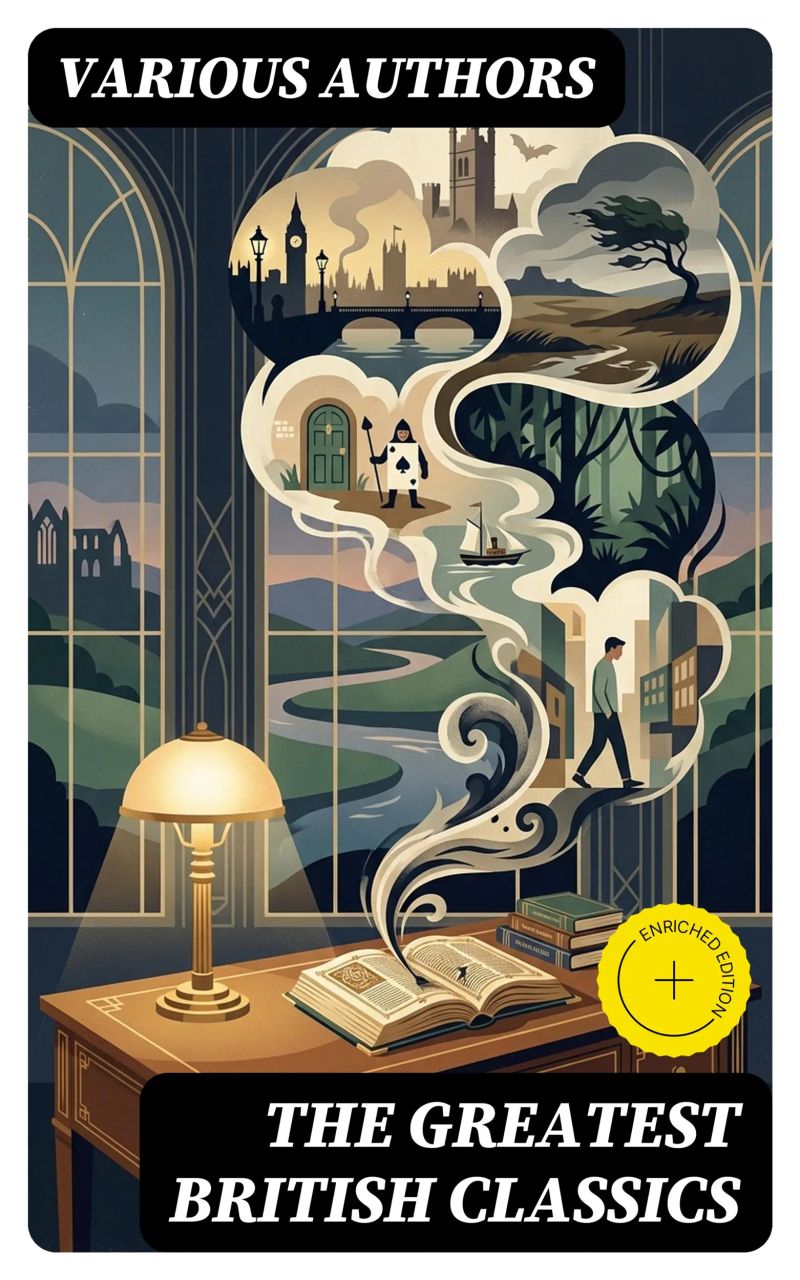
The Greatest British Classics (Annotated)
Enriched Edition. Sons and Lovers, Wuthering Heights, Alice in Wonderland, Heart of Darkness, Ulysses, Hamlet…By Lewis Carroll, Charles Dickens, Oscar Wilde, Robert Louis Stevenson, William Shakespeare, George MacDonald, Bram Stoker, Charlotte Brontë, Emily Brontë, George Grossmith, Weedon Grossmith, Arthur Conan Doyle, Frances Hodgson Burnett, Joseph Conrad, Jane Austen, George Eliot, Laurence Sterne, Thomas Hardy, Jonathan Swift, Daniel Defoe, Henry Fielding, Kenneth Grahame, Wilkie Collins, William Makepeace Thackeray, John Milton, John Keats, James Joyce, Ann Ward Radcliffe, H. G. Wells, W. B. Yeats, J. M. Barrie, G. K. Chesterton, T. S. Eliot, D. H. Lawrence, E. M. Forster, Sir Walter Scott, George Bernard Shaw, Mary Shelley, P. B. Shelley, Elizabeth von Arnim

Length578h 58m
About this audiobook
The Greatest British Classics surveys the extraordinary formal and imaginative range of the British canon, bringing together romance, satire, realism, Gothic fiction, children's fantasy, detective narrative, adventure, drama, lyric poetry, and modernist experiment. Across its pages, courtly and comic traditions meet haunted houses, social panoramas, speculative futures, and psychologically charged interior worlds. The collection's significance lies in its capacity to place foundational works of English-language literature in productive proximity, revealing recurring concerns with class, empire, gender, morality, imagination, and national identity. Its contributors span several centuries and include novelists, playwrights, poets, essayists, and popular storytellers whose careers shaped Romanticism, Victorian realism, the Gothic revival, Aestheticism, Edwardian fantasy, and literary modernism. These voices emerge from differing social positions and historical moments—from the eighteenth-century rise of the novel through industrial modernity and imperial crisis—yet collectively demonstrate how British literature repeatedly revised its inherited forms. Their juxtaposition illuminates both continuity and contestation within the tradition. Ideal for students, general readers, and established admirers alike, this volume offers an unusually rich route through major literary movements and genres. It invites readers to compare styles, ethical questions, and narrative experiments within one capacious anthology, fostering a sustained dialogue between canonical works and the changing worlds that produced them.
This enriched edition has been carefully crafted to add value to your reading experience.
- An Introduction draws the threads together, discussing why these diverse authors and texts belong in one collection.
- Historical Context explores the cultural and intellectual currents that shaped these works, offering insight into the shared (or contrasting) eras that influenced each writer.
- A combined Synopsis (Selection) briefly outlines the key plots or arguments of the included pieces, helping readers grasp the anthology's overall scope without giving away essential twists.
- A collective Analysis highlights common themes, stylistic variations, and significant crossovers in tone and technique, tying together writers from different backgrounds.
- Reflection questions encourage readers to compare the different voices and perspectives within the collection, fostering a richer understanding of the overarching conversation.
Audiobook details
Rating★★★★ 4.4 (11)
Includes Amazon
GenreLiterary Classics
Length578 hrs 58 mins
Narrated byListen with 1,000+ voices
FormateBook with Audio
Publish dateDec 27, 2023
LanguageEnglish
Table of contents
1The Greatest British Classics (Annotated)
2Introduction
3Historical Context
4Synopsis (Selection)
5Hamlet (Shakespeare)
Show all chaptersShow less
6PERSONS REPRESENTED.
7ACT I.
8ACT II.
9ACT III.
10ACT IV.
11ACT V.
12Romeo and Juliet (Shakespeare)
13Characters of the Play
14Act I
15Prologue
16Scene I. Verona. A public place.
17Scene II. A street.
18Scene III. A room in Capulet’s house.
19Scene IV. A street.
20Scene V. A hall in Capulet’s house.
21Act II
22Prologue
23Scene I. A lane by the wall of Capulet’s orchard.
24Scene II. Capulet’s orchard.
25Scene III. Friar Laurence’s cell.
26Scene IV. A street.
27Scene V. Capulet’s orchard.
28Scene VI. Friar Laurence’s cell.
29Act III
30Scene I. A public place.
31Scene II. Capulet’s orchard.
32Scene III. Friar Laurence’s cell.
33Scene IV. A room in Capulet’s house.
34Scene V. Capulet’s orchard.
35Act IV
36Scene I. Friar Laurence’s cell.
37Scene II. Hall in Capulet’s house.
38Scene III. Juliet’s chamber.
39Scene IV. Hall in Capulet’s house.
40Scene V. Juliet’s chamber.
41Act V
42Scene I. Mantua. A street.
43Scene II. Friar Laurence’s cell.
44Scene III. A churchyard; in it a tomb belonging to the Capulets.
45Macbeth (Shakespeare)
46Persons Represented
47ACT I.
48ACT II.
49ACT III.
50ACT IV.
Alices Abenteuer im WunderlandLewis Carroll2h 46m4.2 (779.3K)$6 · $0.00
Through the Looking-GlassLewis Carroll3h 46m4.2 (331.6K)$9 · $0.00
The Greatest Bed-Time StoriesLewis Carroll, Oscar Wilde, George MacDonald, Jack London, Louisa May Alcott, Laura Lee Hope, Andrew Lang, Maurice Maeterlinck, Johnny Gruelle, Aesop, Hugh Lofting, Anna Sewell, Rudyard Kipling, Beatrix Potter, John Ruskin, Arthur Ransome, Nathaniel Hawthorne, Georgette Leblanc, Carl Sandburg, Evelyn Sharp, Marion St. John Webb, L. Frank Baum, J. M. Barrie, R. Nisbet Bain, E. T. A. Hoffmann, Hans Christian Andersen, Vishnu Sharma, Margery Williams, Mary Louisa Molesworth, Howard R. Garis, Brothers Grimm, Thornton Burgess, Valery Carrick, W. R. S. Ralston537h 14m4.3 (12)$0.99 · $0.00
Sylvie & Bruno (Vol.1&2)Lewis Carroll16h 43m3.6 (3.7K)$1.99 · $0.00
Lewis CarrollLewis Carroll6h 27m4.2 (3K)$1.99 · $0.00
Alice in WonderlandLewis Carroll1h 38m4.0 (487.6K)$6 · $0.00

Alicia en el País de las MaravillasLewis Carroll3h 30m4.2 (522.6K)$3 · $0.00
Complete WorksLewis Carroll44h 55m4.5 (1.4K)$1.99 · $0.00
Die phantastische Welt der Literatur: 90+ Romane, Märchen & Zauberhafte GeschichtenLewis Carroll, Selma Lagerlöf, Oscar Wilde, Charles Dickens, Hans Christian Andersen, Gustav Weil, Jacob Grimm, Wilhelm Grimm, E.T.A. Hoffmann, Carlo Collodi, Friedrich de la Motte Fouqué, Gerdt von Bassewitz, Dorothea Schlegel, Gottfried Keller, Heinrich Seidel, Lothar Meggendorfer, Rosalie Koch107h 39m$1 · $0.00
Alice in WonderlandLewis Carroll, Alice Gerstenberg1h 38m3.8 (129)$6 · $0.00
Alice au pays des merveillesLewis Carroll3h 15m4.2 (779K)$15 · $0.00
Alice's Adventures in WonderlandLewis Carroll1h 7m4.2 (570K)$10 · $0.00
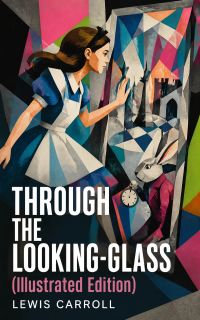
THROUGH THE LOOKING-GLASS (Illustrated Edition)Lewis Carroll3h 46m4.2 (316.8K)$1.99 · $0.00
Fantastische Reisen: Abenteuerromane für KinderLewis Carroll, Selma Lagerlöf, Jules Verne, Carlo Collodi, Wilhelm Hauff, Gerdt von Bassewitz, Gertrud Prellwitz, E.T.A. Hoffmann, Heinrich Seidel, Dorothea Schlegel, Kurd Laßwitz, Jonathan Swift, Christoph Martin Wieland, Jacob Grimm, Wilhelm Grimm, Hans Christian Andersen169h 34m$1 · $0.00

Zauberhafte Geschichten: Fantasy-Romane + Märchen + Magische Abenteuer (Über 90 Klassiker in einem Buch - Illustrierte Ausgabe)Lewis Carroll, Selma Lagerlöf, Oscar Wilde, Charles Dickens, Hans Christian Andersen, Gustav Weil, Jacob Grimm, Wilhelm Grimm, E.T.A. Hoffmann, Carlo Collodi, Friedrich de la Motte Fouqué, Gerdt von Bassewitz, Dorothea Schlegel, Gottfried Keller, Heinrich Seidel, Lothar Meggendorfer, Rosalie Koch108h 1m4.3 (13)$2 · $0.00
The Big Book of Fairytales & Fantasy ClassicsLewis Carroll, Oscar Wilde, George MacDonald, Andrew Lang, Maurice Maeterlinck, Johnny Gruelle, John Ruskin, Arthur Ransome, Nathaniel Hawthorne, Georgette Leblanc, Carl Sandburg, Evelyn Sharp, Marion St. John Webb, J. M. Barrie, R. Nisbet Bain, Hans Christian Andersen, Mary Louisa Molesworth, Brothers Grimm, W. R. S. Ralston395h 12m4.4 (18)$1.99 · $0.00
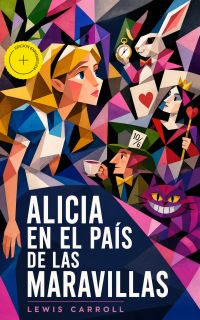
Alicia en el País de las Maravillas (Anotado)Lewis Carroll4h 44m$1.99 · $0.00
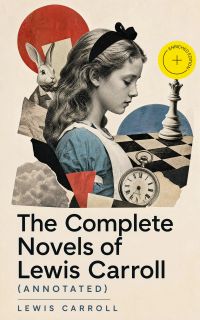
The Complete Novels of Lewis Carroll (Annotated)Lewis Carroll31h 39m$2 · $0.00
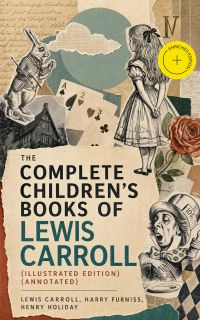
The Complete Children's Books of Lewis Carroll (Illustrated Edition) (Annotated)Lewis Carroll, Harry Furniss, Henry Holiday25h 34m$2 · $0.00
To Kill a MockingbirdHarper Lee12h 18m4.5 (7.4M)$29 · $0.00
These Precious DaysAnn Patchett11h 14m4.5 (45.2K)$29 · $0.00
Henry V (The Play, Historical Background and Analysis of the Character in the Play)William Shakespeare, William Hazlitt8h 50m4.6 (1.3K)$1.99 · $0.00
H. P. LOVECRAFT Ultimate Collection: Novellas, Short Stories, Poetry & Essays (Annotated)H. P. Lovecraft12h 28m4.6 (2.3K)$2 · $0.00
Time RegainedMarcel Proust16h 8m4.5 (10.6K)$1.99 · $0.00
The Mis-Education of the NegroCarter Goodwin Woodson4h 32m4.5 (28.4K)$10 · $0.00
Lessons in TruthH. Emilie3h 50m4.6 (1.4K)$4.70 · $0.00
TORAH - Bilingual Edition: English/Hebrew (Annotated)Max Margolis, JPS28h 26m4.6 (1K)$2 · $0.00
Betty Crocker picture cooky bookBetty Crocker, Inc. General Mills2h 13m4.5 (6.5K)$1 · $0.00
The Complete Tales of Beatrix PotterBeatrix Potter3h 36m4.5 (75K)$3 · $0.00
Anne of Green GablesL. M. Montgomery11h 1m4.5 (1.2M)$2.30 · $0.00
Crime and Punishment (The Unabridged Garnett Translation) (Annotated)Fyodor Dostoevsky24h 25m4.5 (15.4K)$1.99 · $0.00

The North American IndianEdward S. Curtis, Frederick Webb Hodge6h4.5 (1.2K)$2 · $0.00
The Picture of Dorian Gray: The Uncensored 13 Chapter Version + The Revised 20 Chapter Version (Annotated)Oscar Wilde16h 12m4.5 (2.8K)$1.99 · $0.00
Grimoire Of The Everyday WitchIsadora Lys / Virginia Santos5h 35m4.5 (3.9K)$9 · $0.00
Winnie-the-PoohAlan Alexander Milne2h 52m4.5 (401.1K)$3 · $0.00
Sitting PrettyRebekah Taussig7h 33m4.5 (18.9K)$26 · $0.00
The Poetic Edda & The Prose EddaSnorri Sturluson, Saemund Sigfusson9h 34m4.5 (4K)$1 · $0.00
The Complete Satires & Essays of Mark Twain (Annotated)Mark Twain23h 21m4.5 (1.1K)$2 · $0.00
Anne of Green GablesLucy Maud Montgomery11h 10m4.4 (1.3M)$8 · $0.00
You may also like
IonPlato40m3.8 (5.6K)Free
THE MARRIAGE OF HEAVEN AND HELL (Illustrated Edition)William Blake2h 5m4.3 (41.3K)$1.99 · $0.00
The Essential Works of TagoreRabindranath Tagore66h 54m4.5 (346)$1.99 · $0.00
The Marriage of Heaven and Hell (Annotated)William Blake2h 11m4.2 (12K)$2 · $0.00
Japan: An Attempt at InterpretationLafcadio Hearn12h 38m4.1 (1.6K)$2.30
Appreciations and Criticisms of the Works of Charles DickensGilbert Keith Chesterton9h 7m4.2 (287)$1 · $0.00
EUROPE A PROPHECYWilliam Blake1h 47m4.1 (482)$1.99 · $0.00
The Greek WayEdith Hamilton10h 45m4.1 (3.1K)$1 · $0.00
The Holy Quran (Annotated)Abdullah Yusuf Ali22h 47m4.6 (81.4K)$2 · $0.00
The Color of ChristEdward J. Blum, Paul Harvey12h 24m4.1 (699)$20 · $0.00
India: What can it teach us? (Annotated)F. Max Müller7h 40m4.0 (1.7K)$1.99 · $0.00
The Complete Works of Gustave Flaubert: Novels, Short Stories, Plays, Memoirs and Letters (Annotated)Gustave Flaubert192h 51m4.2 (78)$2 · $0.00
The Bible and Polygamy: Does the Bible Sanction Polygamy?John Philip Newman, Orson Pratt, George Albert Smith, George Q. Cannon4h 20m4.5 (11)$1.99 · $0.00
The Poetical Works of Alexander Pope (Vol. 1&2) (Annotated)Alexander Pope20h 38m$2 · $0.00
A History of Ancient Greek Literature (Annotated)Gilbert Murray14h 14m3.8 (21)$2 · $0.00
OSCAR WILDE Premium CollectionOscar Wilde126h 20m4.6 (123)$2 · $0.00

Japan: An Attempt at Interpretation (Annotated)Lafcadio Hearn13h 41m4.5 (122)$2 · $0.00
The History of Ancient Greek LiteratureGilbert Murray14h 17m3.8 (22)$1.99 · $0.00
Verses of VemanaC. P.4h 48m$3.50 · $0.00
L'Aiglon (Annotated)Edmond Rostand4h 44m4.0 (146)$1.99 · $0.00