
Religious Classics - Boxed Set
A Literary Treasury of Faith, Doubt, Redemption, and the Religious ImaginationBy Johann Wolfgang von Goethe, Gustave Flaubert, Mark Twain, Henryk Sienkiewicz, Dante Alighieri, George MacDonald, Anatole France, Henry Van Dyke, Robert Hugh Benson, Arthur Christopher Benson, Leonid Andreyev, John Bunyan, Eden Phillpotts, Grace Livingston Hill, Voltaire, Paul Laurence Dunbar, Elizabeth Miller, Lew Wallace, John Milton, Charles M. Sheldon, Marie Corelli, John Henry Newman, G. K. Chesterton, C. S. Lewis, Friedrich Nietzsche, Anton Chekhov, Leo Tolstoy, Fyodor Dostoevsky, Prentice Mulford

Length336h 30m
About this audiobook
Religious Classics—Boxed Set gathers an unusually capacious canon of spiritual, philosophical, and literary inquiry, ranging from allegory, sermon, devotional reflection, and apologetics to parable, satire, realist fiction, and metaphysical poetry. Medieval vision, Reformation-era moral imagination, Enlightenment critique, and modern psychological drama meet in a volume that treats religion not as a single doctrine but as a continuing argument about conscience, suffering, grace, doubt, and social obligation. Landmark imaginative journeys and searching examinations of faith stand beside works that test inherited belief through irony and dissent. Its contributors span European, Russian, American, and British traditions, bringing Catholic, Protestant, Orthodox, humanist, mystical, and skeptical perspectives into productive tension. Poets, novelists, theologians, public moralists, and philosophical provocateurs collectively trace the transformation of religious expression from classical Christian epic and Puritan allegory to nineteenth-century realism and twentieth-century apologetics. Their varied cultural settings illuminate the enduring relation between private conviction and public life, particularly amid modernity's challenges to authority and certainty. This boxed set is recommended for readers seeking both an introduction to religious literature and a sustained comparative encounter with its major forms. It offers exceptional educational breadth: each selection clarifies, complicates, or contests the others. Reading across these voices reveals how literary art can preserve belief, interrogate it, and make its deepest questions newly legible.
Audiobook details
Rating★★★★ 4.2 (12)
Includes Amazon
GenreSpirituality and Religion, Christian & Inspirational
Length336 hrs 30 mins
Narrated byListen with 1,000+ voices
FormateBook with Audio
Publish dateDec 11, 2023
LanguageEnglish
Table of contents
1Christian Collection: Scripture, History, Theology, Spirituality and Fiction (Annotated)
2Innocence Once Lost - Religious Classics Collection
3Divine Comedy (Dante Alighieri)
4Inferno
5Canto I. The Dark Forest. The Hill of Difficulty. The Panther, the Lion, and the Wolf. Virgil.
Show all chaptersShow less
6Canto II. The Descent. Dante's Protest and Virgil's Appeal. The Intercession of the Three Ladies Benedight.
7Canto III. The Gate of Hell. The Inefficient or Indifferent. Pope Celestine V. The Shores of Acheron.
8Canto IV. The First Circle, Limbo: Virtuous Pagans and the Unbaptized. The Four Poets, Homer, Horace, Ovid, and Lucan. The Noble Castle of Philosophy.
9Canto V. The Second Circle: The Wanton. Minos. The Infernal Hurricane. Francesca da Rimini.
10Canto VI. The Third Circle: The Gluttonous. Cerberus. The Eternal Rain. Ciacco. Florence.
11Canto VII. The Fourth Circle: The Avaricious and the Prodigal. Plutus. Fortune and her Wheel. The Fifth Circle: The Irascible and the Sullen. Styx.
12Canto VIII. Phlegyas. Philippo Argenti. The Gate of the City of Dis.
13Canto IX. The Furies and Medusa. The Angel. The City of Dis. The Sixth Circle: Heresiarchs.
14Canto X. Farinata and Cavalcante de' Cavalcanti. Discourse on the Knowledge of the Damned.
15Canto XI. The Broken Rocks. Pope Anastasius. General Description of the Inferno and its Divisions.
16Canto XII. The Minotaur. The Seventh Circle: The Violent. The River Phlegethon. The Violent against their Neighbours. The Centaurs. Tyrants.
17Canto XIII. The Wood of Thorns. The Harpies. The Violent against themselves. Suicides. Pier della Vigna. Lano and Jacopo da Sant' Andrea.
18Canto XIV. The Sand Waste and the Rain of Fire. The Violent against God. Capaneus. The Statue of Time, and the Four Infernal Rivers.
19Canto XV. The Violent against Nature. Brunetto Latini.
20Canto XVI. Guidoguerra, Aldobrandi, and Rusticucci. Cataract of the River of Blood.
21Canto XVII. Geryon. The Violent against Art. Usurers. Descent into the Abyss of Malebolge.
22Canto XVIII. The Eighth Circle, Malebolge: The Fraudulent and the Malicious. The First Bolgia: Seducers
23Canto XIX. The Third Bolgia: Simoniacs. Pope Nicholas III. Dante's Reproof of corrupt Prelates.
24Canto XX. The Fourth Bolgia: Soothsayers. Amphiaraus, Tiresias, Aruns, Manto, Eryphylus, Michael Scott, Guido Bonatti, and Asdente. Virgil reproaches Dante's Pity. Mantua's Foundation.
25Canto XXI. The Fifth Bolgia: Peculators. The Elder of Santa Zita. Malacoda and other Devils.
26Canto XXII. Ciampolo, Friar Gomita, and Michael Zanche. The Malabranche quarrel.
27Canto XXIII. Escape from the Malabranche. The Sixth Bolgia: Hypocrites. Catalano and Loderingo. Caiaphas.
28Canto XXIV. The Seventh Bolgia: Thieves. Vanni Fucci. Serpents.
29Canto XXV. Vanni Fucci's Punishment. Agnello Brunelleschi, Buoso degli Abati, Puccio Sciancato, Cianfa de' Donati, and Guercio Cavalcanti.
30Canto XXVI. The Eighth Bolgia: Evil Counsellors. Ulysses and Diomed. Ulysses' Last Voyage.
31Canto XXVII. Guido da Montefeltro. His deception by Pope Boniface VIII.
32Canto XXVIII. The Ninth Bolgia: Schismatics. Mahomet and Ali. Pier da Medicina, Curio, Mosca, and Bertrand de Born.
33Canto XXIX. Geri del Bello. The Tenth Bolgia: Alchemists. Griffolino d' Arezzo and Capocchino.
34Canto XXX. Other Falsifiers or Forgers. Gianni Schicchi, Myrrha, Adam of Brescia, Potiphar's Wife, and Sinon of Troy.
35Canto XXXI. The Giants, Nimrod, Ephialtes, and Antaeus. Descent to Cocytus.
36Canto XXXII. The Ninth Circle: Traitors. The Frozen Lake of Cocytus. First Division, Caina: Traitors to their Kindred. Camicion de' Pazzi. Second Division, Antenora: Traitors to their Country. Dante questions Bocca degli Abati. Buoso da Duera.
37Canto XXXIII. Count Ugolino and the Archbishop Ruggieri. The Death of Count Ugolino's Sons. Third Division of the Ninth Circle, Ptolomaea: Traitors to their Friends. Friar Alberigo, Branco d' Oria.
38Canto XXXIV. Fourth Division of the Ninth Circle, the Judecca: Traitors to their Lords and Benefactors. Lucifer, Judas Iscariot, Brutus, and Cassius. The Chasm of Lethe. The Ascent.
39Purgatorio
40I. The Shores of Purgatory. The Four Stars. Cato of Utica. The Rush.
41II. The Celestial Pilot. Casella. The Departure.
42III. Discourse on the Limits of Reason. The Foot of the Mountain. Those who died in Contumacy of Holy Church. Manfredi.
43IV. Farther Ascent. Nature of the Mountain. The Negligent, who postponed Repentance till the last Hour. Belacqua.
44V. Those who died by Violence, but repentant. Buonconte di Monfeltro. La Pia.
45VI. Dante's Inquiry on Prayers for the Dead. Sordello. Italy.
46VII. The Valley of Flowers. Negligent Princes.
47VIII. The Guardian Angels and the Serpent. Nino di Gallura. The Three Stars. Currado Malaspina.
48IX. Dante's Dream of the Eagle. The Gate of Purgatory and the Angel. Seven P's. The Keys.
49X. The Needle's Eye. The First Circle: The Proud. The Sculptures on the Wall.
50XI. The Humble Prayer. Omberto di Santafiore. Oderisi d' Agobbio. Provenzan Salvani.

Hermann und DorotheaJohann Wolfgang von Goethe2h 34m3.9 (2.1K)$10 · $0.00

Faust. Der Tragödie erster TeilJohann Wolfgang von Goethe3h 42m4.1 (108.2K)$9 · $0.00

Die WahlverwandtschaftenJohann Wolfgang von Goethe9h 51m3.9 (16.7K)$12 · $0.00

Iphigenie auf Tauris: Ein SchauspielJohann Wolfgang von Goethe3h 32m3.7 (12.2K)$2.50 · $0.00
Die wichtigsten Werke von GoetheJohann Wolfgang von Goethe414h 13m4.4 (10)$1 · $0.00

Die Leiden des jungen WertherJohann Wolfgang von Goethe4h 50m4.0 (208K)$12 · $0.00

Götz von Berlichingen mit der eisernen HandJohann Wolfgang von Goethe5h 37m3.8 (5.5K)$1 · $0.00

Briefwechsel zwischen Schiller und GoetheJohann Wolfgang von Goethe, Friedrich Schiller36h 17m4.5 (522)$1.50 · $0.00

Aus meinem Leben: Dichtung und WahrheitJohann Wolfgang von Goethe30h 4m3.8 (336)$1 · $0.00
Faust; a Tragedy, Translated from the German of Goethe (Annotated)Johann Wolfgang von Goethe5h 59m4.1 (236.7K)$1.99 · $0.00

Die Meisterwerke der Weltliterature (Kommentiert)Johann Wolfgang von Goethe, Jules Verne, Gustave Flaubert, Franz Kafka, Lewis Carroll, Selma Lagerlöf, Sigmund Freud, Johanna Spyri, Theodor Storm, Rainer Maria Rilke, Charles Dickens, Stefan Zweig, Heinrich Heine, Honoré de Balzac, Theodor Fontane, Karl May, Gottfried Keller, Mark Twain, Heinrich Mann, Else Lasker-Schüler, Robert Musil, Walt Whitman, Oscar Wilde, Annette von Droste-Hülshoff, Arthur Schopenhauer, Robert Louis Stevenson, Gustav Freytag, James Fenimore Cooper, Edgar Allan Poe, Heinrich von Kleist, William Shakespeare, Dante Alighieri, Charlotte Brontë, Emily Brontë, Jack London, Arthur Conan Doyle, Joseph Conrad, Jane Austen, Herman Melville, Guy de Maupassant, Walter Scott, Jonathan Swift, Jacob Grimm, Wilhelm Grimm, Alexandre Dumas, Rudyard Kipling, Nathaniel Hawthorne, Homer, O. Henry, Voltaire, Lew Wallace, John Galsworthy, E. T. A. Hoffmann, Marcus Aurelius, Hans Christian Andersen, Anton Pawlowitsch Tschechow, Platon, Friedrich Nietzsche, Iwan Sergejewitsch Turgenew, Tacitus, Nikolai Gogol, Miguel de Cervantes, Mary Shelley, Thomas Wolfe, Emile Zola, Fjodor Michailowitsch Dostojewski, Leo Tolstoi, Joseph Roth, Joseph von Eichendorff, Kurt Tucholsky, Iwan Alexandrowitsch Gontscharow, Oswald Spengler, Moliere, Alfred Adler, Sophie von La Roche, Klaus Mann, Rumi1256h 15m$3 · $0.00

Die großen Liebes-Klassiker der WeltliteraturJohann Wolfgang von Goethe, Stendhal, Charlotte Brontë, Emily Brontë, Victor Hugo, Jane Austen, Alexandre Dumas, Rudyard Kipling, George Sand, Nathaniel Hawthorne, Gabriele D'Annunzio, Eugenie Marlitt, Leo Tolstoi, Elisabeth Bürstenbinder, Pierre Choderlos de Laclos261h 10m4.5 (13)$1 · $0.00

The Harvard Classics: Complete 51-Volume CollectionJohann Wolfgang von Goethe, Gotthold Ephraim Lessing, Thomas Carlyle, Plato, René Descartes, Immanuel Kant, Charles Darwin, Martin Luther, Robert Louis Stevenson, William Shakespeare, Dante Alighieri, Euripides, Percy Bysshe Shelley, Charles Lamb, Henry David Thoreau, Samuel Johnson, John Stuart Mill, David Hume, Joseph Addison, John Locke, John Fletcher, Francis Beaumont, Leigh Hunt, Epictetus, Thomas De Quincey, Samuel Taylor Coleridge, Jonathan Swift, Christopher Marlowe, Jacob Grimm, Wilhelm Grimm, William Hazlitt, Marcus Tullius Cicero, Daniel Defoe, Aesop, Richard Henry Dana, John Dryden, Philip Massinger, Pedro Calderón de la Barca, John Ruskin, Oliver Wendell Holmes, Ernest Renan, Robert Burns, David Garrick, Ralph Waldo Emerson, John Webster, Izaak Walton, John Bunyan, James Russell Lowell, Charles Augustin Sainte-Beuve, Homer, Edmund Burke, Plutarch, Molière, Aeschylus, Michael Faraday, Sophocles, William Makepeace Thackeray, Benjamin Franklin, Pierre Corneille, Jean Racine, Voltaire, Robert Browning, Oliver Goldsmith, Thomas Dekker, John Milton, Aristophanes, Blaise Pascal, Virgil, Simon Newcomb, William Penn, Walter Bigges, Philip Sidney, Herodotus, Walter Raleigh, Francis Bacon, Giuseppe Mazzini, Francis Pretty, George Berkeley, Thomas Hobbes, Adam Smith, Alessandro Manzoni, Abraham Cowley, Michel de Montaigne, Ben Jonson, John Woolman, Benvenuto Cellini, Sydney Smith, Jean Froissart, William Henry Harrison, William Harvey, Marcus Aurelius, Hans Christian Andersen, Thomas Malory, George Gordon Byron, Thomas à Kempis, Richard Steele, Thomas Browne, Archibald Geikie, Thomas Babington Macaulay, Tacitus, William Roper, Hippocrates, Miguel de Cervantes, Thomas More, Friedrich von Schiller, Philip Nichols, Louis Pasteur, Joseph Lister, Jean Jacques Rousseau, Pliny the Younger, Edgar Alan Poe, Saint Augustine, Brinsley Sheridan, Hermann Ludwig Ferdinand von Helmholtz, Francis Drake, Edward Haies, Niccolo Machiavelli, Ambroise Paré, William A. Neilson987h 1m4.5 (4.5K)$0.99 · $0.00
Harvard Classics Anthology - Complete 51 VolumesJohann Wolfgang von Goethe, Gotthold Ephraim Lessing, Thomas Carlyle, Plato, René Descartes, Immanuel Kant, Charles Darwin, Martin Luther, Robert Louis Stevenson, William Shakespeare, Dante Alighieri, Euripides, Percy Bysshe Shelley, Charles Lamb, Henry David Thoreau, Samuel Johnson, John Stuart Mill, David Hume, Joseph Addison, John Locke, John Fletcher, Francis Beaumont, Leigh Hunt, Epictetus, Thomas De Quincey, Samuel Taylor Coleridge, Jonathan Swift, Christopher Marlowe, Jacob Grimm, Wilhelm Grimm, William Hazlitt, Marcus Tullius Cicero, Daniel Defoe, Aesop, Richard Henry Dana, John Dryden, Philip Massinger, Pedro Calderón de la Barca, John Ruskin, Oliver Wendell Holmes, Ernest Renan, Robert Burns, David Garrick, Ralph Waldo Emerson, John Webster, Izaak Walton, John Bunyan, James Russell Lowell, Charles Augustin Sainte-Beuve, Homer, Edmund Burke, Plutarch, Molière, Aeschylus, Michael Faraday, Sophocles, William Makepeace Thackeray, Benjamin Franklin, Pierre Corneille, Jean Racine, Voltaire, Robert Browning, Oliver Goldsmith, Thomas Dekker, John Milton, Aristophanes, Blaise Pascal, Virgil, Richard Brinsley Sheridan, Simon Newcomb, William Penn, Walter Bigges, Philip Sidney, Herodotus, Walter Raleigh, Francis Bacon, Giuseppe Mazzini, Francis Pretty, George Berkeley, Thomas Hobbes, Adam Smith, Alessandro Manzoni, Abraham Cowley, Michel de Montaigne, Ben Jonson, John Woolman, Benvenuto Cellini, Sydney Smith, Jean Froissart, William Henry Harrison, William Harvey, Marcus Aurelius, Hans Christian Andersen, Thomas Malory, George Gordon Byron, Thomas à Kempis, Richard Steele, Thomas Browne, Archibald Geikie, Thomas Babington Macaulay, Tacitus, William Roper, Hippocrates, Miguel de Cervantes, Thomas More, Friedrich von Schiller, Philip Nichols, Louis Pasteur, Joseph Lister, Jean Jacques Rousseau, Pliny the Younger, Edgar Alan Poe, Saint Augustine, Hermann Ludwig Ferdinand von Helmholtz, Francis Drake, Edward Haies, Niccolo Machiavelli, Ambroise Paré, William A. Neilson987h4.5 (3.4K)$0.99 · $0.00

Die größten Meister der deutschen LyrikJohann Wolfgang von Goethe, Friedrich Schiller, Annette von Droste-Hülshoff, Rainer Maria Rilke, Joachim Ringelnatz, Christian Morgenstern, Georg Herwegh, Gotthold Ephraim Lessing, Achim von Arnim, Theodor Fontane, Frank Wedekind, Wilhelm Hauff, lhelm Hauff, Karl May, Bettina von Arnim, Clemens Brentano, Eduard Mörike, Joseph von Eichendorff, Gustav Freytag, Franz Werfel, Willibald Alexis, Leopold Schefer, Gottfried Keller, Wilhelm Busch, Theodor Storm, Hermann Löns, Peter Rosegger, Louise Otto, Erich Mühsam224h 48m$2 · $0.00
Gesammelte Gedichte: Elegien, Epigramme, Sonette, Kantaten, Xenien und viel mehr (Kommentiert)Johann Wolfgang von Goethe23h4.5 (12)$1 · $0.00
Harvard Classics (All 51 Volumes)Johann Wolfgang von Goethe, Gotthold Ephraim Lessing, Thomas Carlyle, Plato, René Descartes, Immanuel Kant, Charles Darwin, Martin Luther, Robert Louis Stevenson, William Shakespeare, Dante Alighieri, Euripides, Percy Bysshe Shelley, Charles Lamb, Henry David Thoreau, Samuel Johnson, John Stuart Mill, David Hume, Joseph Addison, John Locke, John Fletcher, Francis Beaumont, Leigh Hunt, Epictetus, Thomas De Quincey, Samuel Taylor Coleridge, Jonathan Swift, Christopher Marlowe, Jacob Grimm, Wilhelm Grimm, William Hazlitt, Marcus Tullius Cicero, Daniel Defoe, Aesop, Richard Henry Dana, John Dryden, Philip Massinger, Pedro Calderón de la Barca, John Ruskin, Oliver Wendell Holmes, Ernest Renan, Robert Burns, David Garrick, Ralph Waldo Emerson, John Webster, Izaak Walton, John Bunyan, James Russell Lowell, Charles Augustin Sainte-Beuve, Homer, Edmund Burke, Plutarch, Molière, Aeschylus, Michael Faraday, Sophocles, William Makepeace Thackeray, Benjamin Franklin, Pierre Corneille, Jean Racine, Voltaire, Robert Browning, Oliver Goldsmith, Thomas Dekker, John Milton, Aristophanes, Blaise Pascal, Virgil, Simon Newcomb, William Penn, Walter Bigges, Philip Sidney, Herodotus, Walter Raleigh, Francis Bacon, Giuseppe Mazzini, Francis Pretty, George Berkeley, Thomas Hobbes, Adam Smith, Alessandro Manzoni, Abraham Cowley, Michel de Montaigne, Ben Jonson, John Woolman, Benvenuto Cellini, Sydney Smith, Jean Froissart, William Henry Harrison, William Harvey, Marcus Aurelius, Hans Christian Andersen, Thomas Malory, George Gordon Byron, Thomas à Kempis, Richard Steele, Thomas Browne, Archibald Geikie, Thomas Babington Macaulay, Tacitus, William Roper, Hippocrates, Miguel de Cervantes, Thomas More, Friedrich von Schiller, Philip Nichols, Louis Pasteur, Joseph Lister, Jean Jacques Rousseau, Pliny the Younger, Edgar Alan Poe, Saint Augustine, Brinsley Sheridan, Hermann Ludwig Ferdinand von Helmholtz, Francis Drake, Edward Haies, Niccolo Machiavelli, Ambroise Paré, William A. Neilson986h 15m4.5 (2.6K)$0.99 · $0.00

Die wichtigsten Werke von Goethe (Kommentiert)Johann Wolfgang von Goethe420h 50m4.3 (12)$1 · $0.00
Harvard Classics - Complete Collection of the Greatest Works of World Literature (Annotated)Johann Wolfgang von Goethe, Gotthold Ephraim Lessing, Thomas Carlyle, Plato, Charles Darwin, Dante Alighieri, Euripides, Percy Bysshe Shelley, Charles Lamb, Samuel Johnson, John Stuart Mill, David Hume, Joseph Addison, Leigh Hunt, Epictetus, Thomas De Quincey, Samuel Taylor Coleridge, Jonathan Swift, Christopher Marlowe, Jacob Grimm, Wilhelm Grimm, William Hazlitt, Marcus Tullius Cicero, Daniel Defoe, Aesop, Richard Henry Dana, John Dryden, Pedro Calderón de la Barca, John Ruskin, Robert Burns, David Garrick, Ralph Waldo Emerson, Izaak Walton, John Bunyan, Homer, Edmund Burke, Plutarch, Molière, Aeschylus, Sophocles, William Makepeace Thackeray, Benjamin Franklin, Pierre Corneille, Jean Racine, Robert Browning, Oliver Goldsmith, John Milton, Aristophanes, Virgil, Richard Brinsley Sheridan, William Penn, Philip Sidney, Francis Bacon, Adam Smith, Alessandro Manzoni, Abraham Cowley, Ben Jonson, John Woolman, Sydney Smith, Marcus Aurelius, Hans Christian Andersen, George Gordon Byron, Thomas à Kempis, Richard Steele, Thomas Browne, Thomas Babington Macaulay, Miguel de Cervantes, Friedrich von Schiller, Pliny the Younger, Saint Augustine1376h 45m4.5 (2.4K)$2 · $0.00
The Holy Qur-an: Text, Translation and CommentaryAbdullah Yusuf Ali22h 16m4.7 (133K)$1 · $0.00
All of Grace (Annotated)Charles Spurgeon5h 1m4.7 (1.3K)$0.99 · $0.00
Steps to ChristEllen G. White3h 12m4.7 (13.8K)$2 · $0.00
The Doctrine and Selected CovenantsJoseph Smith13h 53m4.7 (10.4K)$1.99 · $0.00
Sinners in the Hands of an Angry God & Other Sermons (Annotated)Jonathan Edwards7h 51m4.7 (1.5K)$2 · $0.00
Swayam Ki AwaazPrem Rawat8h 34m4.7 (1.1K)$26 · $0.00

Behind the BadgeAdam Davis10h 18m4.7 (2.7K)$10 · $0.00
The New Human Revolution, vol. 1Daisaku Ikeda7h 46m4.7 (669)$12 · $0.00

You Are Worth ItKyle Carpenter, Don Yaeger8h 53m4.7 (4.8K)$29 · $0.00
Praying GraceDavid A. Holland3h 2m4.7 (658)$10 · $0.00

Evidence Not SeenDarlene Deibler Rose11h 11m4.6 (11.9K)$29 · $0.00
The Christ KeyChad Bird, Chad Bird7h 33m4.7 (592)$17.40 · $0.00
He and IGabrielle Bossis10h 12m4.7 (554)$17 · $0.00
Your Body Already KnowsNidhi Pandya Bhanshali9h 7m4.7 (360)$16 · $0.00
The Complete WorksFlorence Scovel Shinn7h 59m4.6 (6.6K)$2 · $0.00
Driven by EternityJohn Bevere3h 50m4.6 (3.2K)$10 · $0.00
Spiritual AnatomyDaaji Kamlesh D. Patel9h 47m4.7 (319)$29 · $0.00

The Mahabharata of Krishna-Dwaipayana Vyasa Translated into English ProseAnonymous8h 1m4.7 (1.9K)$2 · $0.00
The Chosen Book OneAmanda Jenkins, Kristen Hendricks, Dallas Jenkins3h 8m4.6 (4.9K)$10 · $0.00
The Grace MessageAndrew Farley8h 49m4.7 (433)$20 · $0.00

The Rogue WarriorCindy Roland Anderson5h 44m4.6 (410)$17 · $0.00

Her Duty Bound DefenderSharee Stover6h 30m4.6 (1.1K)$24 · $0.00

Trail Of ThreatsJessica R. Patch5h 47m4.6 (425)$24 · $0.00

Ready to ProtectValerie Hansen5h 38m4.6 (981)$24 · $0.00

Searching For EvidenceCarol J. Post6h 21m4.6 (552)$24 · $0.00

Hiding in MontanaLaura Scott6h 18m4.6 (1K)$12 · $0.00

Christmas K-9 Unit HeroesLenora Worth, Katy Lee5h 51m4.6 (507)$24 · $0.00
The Rose CodeKate Quinn16h 2m4.4 (493.7K)$33 · $0.00

Tracking a KillerElizabeth Goddard6h 2m4.5 (1.4K)$24 · $0.00

Tracking The MissingSami A. Abrams5h 17m4.6 (376)$24 · $0.00
An Inside JobDaniel Silva9h 28m4.4 (26.3K)$29 · $0.00

Courage Under FireSharon Dunn5h 50m4.5 (730)$24 · $0.00

The Great Divorce (Annotated)C. S. Lewis4h 49m4.4 (195.6K)$2 · $0.00

The First and Second Books of Adam and EveChristopher Glyn4h 47m4.5 (1.2K)$12 · $0.00

Deep UndercoverLenora Worth6h 50m4.5 (1.6K)$24 · $0.00

Stepping HeavenwardE. Prentiss10h 40m4.4 (13.5K)$1 · $0.00

Exit FeeBrad Taylor3h 16m4.5 (1.9K)$18 · $0.00

A Courtship For The Amish SpinsterVannetta Chapman6h 4m4.5 (290)$24 · $0.00
God-ManGeorge W. Carey, Inez Eudora Perry5h 14m4.5 (583)$1.99 · $0.00
The Magic Strings of Frankie PrestoMitch Albom9h 43m4.4 (81.2K)$29 · $0.00
You may also like
The Story of a Soul: The Autobiography of St. Thérèse of Lisieux (Annotated)Thérèse Martinof Lisieux, Francis Alphonsus Bourne11h 22m4.4 (5.2K)$2 · $0.00

Second SpaceCzeslaw Milosz2h 6m4.1 (461)$16 · $0.00
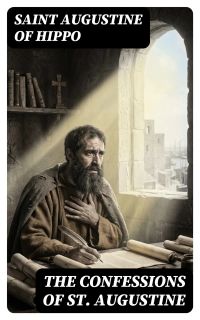
The Confessions of St. AugustineSaint Augustine of Hippo12h 48m4.2 (98.7K)$1 · $0.00
Little Flower of Jesus (Annotated)Thérèse of Lisieux5h 4m4.5 (1.4K)$0.99 · $0.00
Book of MercyLeonard Cohen1h 9m4.2 (2.6K)$10
Ode to a Nightingale (Complete Edition) (Annotated)John Keats22h 40m4.2 (1.6K)$2 · $0.00
The Confessions of St. AugustineBishop of Hippo Saint Augustine9h 58m4.1 (222.6K)Free
The ConfessionsSaint Augustin11h 43m4.2 (102.7K)$4 · $0.00
The Confessions of Saint AugustineSaint Aurelius Augustinus13h 2m4.1 (223K)$23
Answering GodEugene H. Peterson4h 55m4.4 (1.7K)$20 · $0.00
Sinners in the Hands of an Angry God and Other SermonsJonathan Edwards7h 29m4.0 (2.7K)$1 · $0.00
Pascal's PenséesBlaise Pascal12h 15m4.2 (19.2K)$2 · $0.00
Dhammapada: The Sayings of the BuddhaAnonymous1h 31m4.5 (37.9K)$1.99 · $0.00
The Spiritual Exercises of St. Ignatius of Loyola (Annotated)Ignatius of Loyola4h 52m4.3 (6.6K)$2 · $0.00
Sinners in the Hands of an Angry GodJonathan Edwards8h 34m3.9 (6.3K)$1 · $0.00
Visions of GerardJack Kerouac3h 28m3.9 (4.4K)$20
DawsBetty Lee Skinner14h 29m4.3 (327)$25 · $0.00
The Confessions of Saint AugustineAugustine10h 16m4.1 (228.4K)$12 · $0.00
A Moveable FeastErnest Hemingway6h 20m4.2 (204.4K)$2 · $0.00

Meister Eckhart’s Book of SecretsJon M. Sweeney, Mark S. Burrows2h 6m4.2 (530)$15