
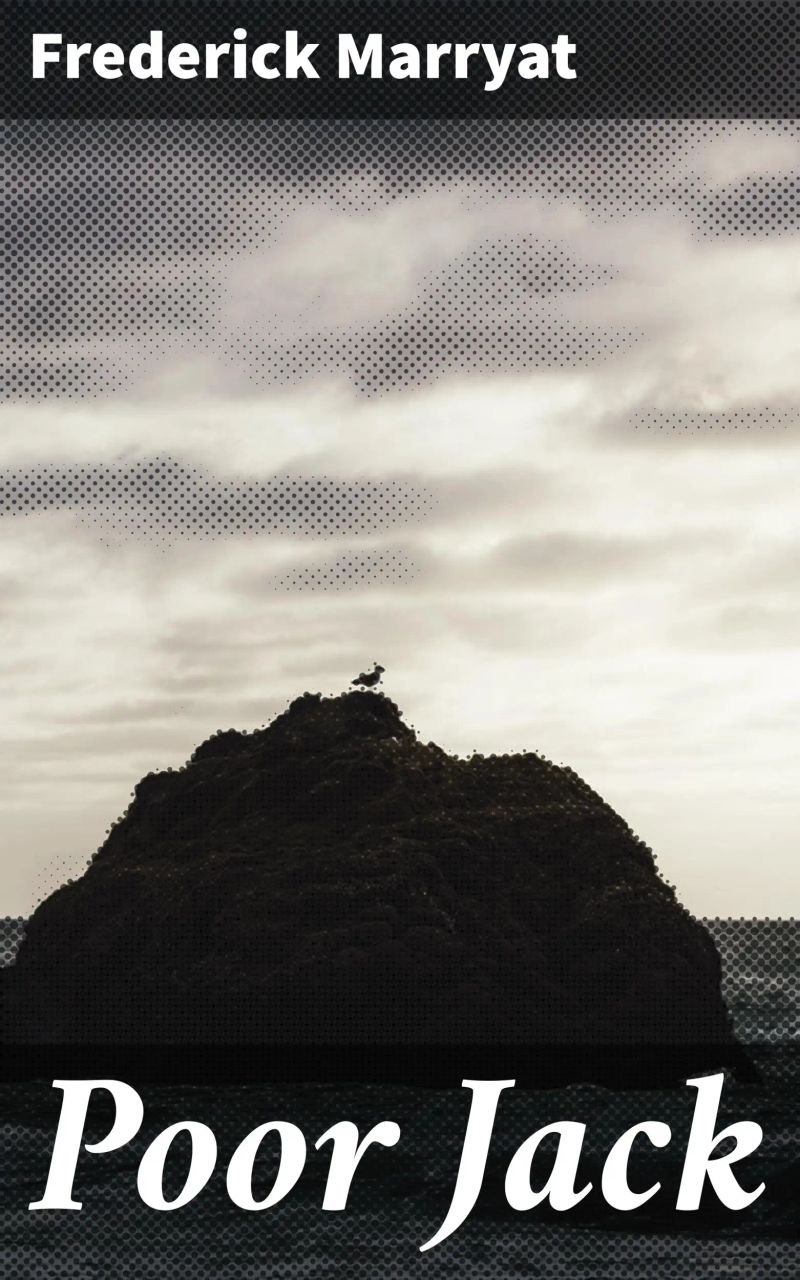
Poor Jack
A Sailor's Struggle: Social Class, Friendship, and Perseverance at SeaBy Frederick Marryat


Length15h 1m
About this audiobook
In "Poor Jack," Frederick Marryat crafts a vivid nautical adventure that intricately weaves themes of bravery, loyalty, and the harsh realities of life at sea. Written in the early 19th century, this compelling narrative captures the essence of maritime exploration and the spirit of the British Empire during an era rife with seafaring tales. Marryat employs a rich, descriptive style, combining elements of humor and drama, while his firsthand experiences as a naval officer lend authenticity to the portrayal of naval life, making the work both engaging and instructive for readers of all ages. Frederick Marryat, a pioneering figure in nautical fiction, drew inspiration from his own tumultuous experiences within the Royal Navy, which undoubtedly informed his portrayal of maritime adventures. His deep understanding of the sea and the camaraderie formed among sailors shines through in his characters, particularly in Jack's journey from hardship to heroism. Marryat, an early champion of the genre, laid the groundwork for future writers, blending personal encounters with imaginative storytelling to reflect the complexities of human nature. "Poor Jack" is a must-read for enthusiasts of adventure literature and those curious about life on the high seas. It not only entertains but also offers profound insights into human resilience and the bonds forged in adversity. Whether viewed as an emblem of its time or as an enduring classic, this novel remains a quintessential narrative for anyone seeking to understand the allure of maritime adventures.
Audiobook details
Rating★★★★ 4.0 (37)
Includes Goodreads
GenreGeneral Fiction, Historical Fiction
Length15 hrs 1 min
Narrated byListen with 1,000+ voices
FormateBook with Audio
Publish dateNov 27, 2019
LanguageEnglish
Table of contents
1Introduction
2"Poor Jack"
3Chapter One.: In which, like most people who tell their own stories, I begin with the histories of other people.
4Chapter Two.: My father does what most sailors do—He makes a foolish marriage, one of the consequences of which is brought to light at the end of the chapter.
5Chapter Three.: In which my mother proves herself a tender wife, and at the same time shows her patriotism and devotion to her country.
Show all chaptersShow less
6Chapter Four.: In which I tell the reader all I can recollect about myself, and moreover prove the truth of the old adage “that it is a wise child who knows its own father.”
7Chapter Five.: My father and mother meet after an absence of six years. She discovers that he is no longer a Coxswain but a Boatswain’s Mate.
8Chapter Six.: A bright pleasant evening after a squall, in which the art of angling is introduced in a way which would have added to the knowledge of Izaac Walton himself.
9Chapter Seven.: In which my mother gives my father a scriptural lesson. My father’s grief at parting with an old friend—He expostulates with my mother and quits the house.
10Chapter Eight.: In which the doctor pays a visit and receives no fee; and I am obliged to work very hard to procure myself a livelihood.
11Chapter Nine.: In which I take a cruise contrary to the received rules of navigation—On my return from a cold expedition, I meet with a cold reception.
12Chapter Ten.: In which I narrate what I consider the most fortunate incident in my life; and Ben the Whaler confides to me a very strange history.
13Chapter Eleven.: In which the doctor lets out some very novel modes of medical treatment, which are attended with the greatest success.
14Chapter Twelve.: I prefer a suit to Old Nanny, and procure a new suit of clothes—The advantage of being well dressed—You may walk out with the ladies.
15Chapter Thirteen.
16I am so unfashionable as to pay my debts—Ben’s opinion as to my father’s return—the chances exemplified in the list of killed and wounded—the L’Orient blowing up, and the Royal George going down.
17The Loss of the Royal George.
18Chapter Fourteen.: My father makes his appearance, having left his leg, but not his tail, behind him—My father is pensioned off by my mother as well as by his country.
19Chapter Fifteen.: In which is proved the truth of the proverb “When your own house is made of glass, you never should be the first to throw stones.”
20Chapter Sixteen.: Showing how Old Nanny fell sick and got well again.
21Chapter Seventeen.: A morning concert, in which the opposition is as great as black to white.
22Chapter Eighteen.: I get into very doubtful company—I am tempted, and, like a true son of Adam, I fall.
23Chapter Nineteen.: I am tempted again—My pride is roused, and my course of life is changed in consequence.
24Chapter Twenty.: Much ado about nothing; or, a specimen of modern patronage.
25Chapter Twenty One.: A most important present is made to me; and, as it will eventually appear, the generosity of the giver is rewarded.
26Chapter Twenty Two.: In which a story is begun and not finished, which I think the reader will regret as much as, at the time, I did.
27Chapter Twenty Three.: “Recollect,” says the fellow, “you have thrown overboard a black tom cat!”
28Chapter Twenty Four.: Bramble’s method of education proves very effective—he also points out a position in which you may prefer your enemies to your friends.
29Chapter Twenty Five.: In which Bramble points out to me that singing is part of the profession of a pilot.
30Chapter Twenty Six.: In which I go afloat, and obtain some knowledge of the English Channel.
31Chapter Twenty Seven.: Showing the importance on board ship of a rope’s end well applied.
32Chapter Twenty Eight.: Some little difference in the proceeds of this chapter, and my former “copper for Poor Jack, your Honour.”
33Chapter Twenty Nine.: In which I learn the history of Old Nanny.
34Chapter Thirty.: Strong symptoms of mutiny, which is fortunately quelled by granting a supply.
35Chapter Thirty One.: In which my father proves he can give good advice as well as Peter Anderson.
36Chapter Thirty Two.: In which there is a hop, skip, and a jump.
37Chapter Thirty Three.: In which the sine qua non of all novels is, for the first time, introduced.
38Chapter Thirty Four.: More cry than wool—Bramble would dig a pit for another and tumbles in along with him.
39Chapter Thirty Five.: We have great hopes of not seeing the inside of a French prison, but we are disappointed.
40Chapter Thirty Six.: With those powerful agents, fire and water, we contrive to escape from a French prison.
41Chapter Thirty Seven.: Another escape, more fortunate than the one recorded in the preceding chapter.
42Chapter Thirty Eight.: Which is all about love—Bramble confides to me all his acquaintance with the tender passion.
43Chapter Thirty Nine.: In which I receive a very severe blow from a party or parties unknown.
44Chapter Forty.: Showing the great advantages to be derived from patronage.
45Chapter Forty One.: In which it is proved that sailors have very correct ideas as to metempsychosis.
46Chapter Forty Two.: A heavy gale, a wreck and a rescue.
47Chapter Forty Three.: A scene in the hospital, and a strange discovery.
48Chapter Forty Four.: Spicer discloses strange matters.
49Chapter Forty Five.: Spicer’s death.
50Chapter Forty Six.: In which Mrs St. Felix refuses a splendid offer which I am duly empowered to make to her.

Der Pascha (Abenteuerroman)Frederick Marryat17h 31m3.6 (137)$1 · $0.00
Mr. Midshipman Easy (Historical Novel)Frederick Marryat16h 4m3.9 (1.9K)$1.99 · $0.00

Mr. Midshipman Easy (Annotated)Frederick Marryat16h 4m$2 · $0.00

Joseph Rushbrook, der Wilddieb (Kommentiert)Frederick Marryat16h 20m$2 · $0.00

Der Neue Robinson (Kommentiert)Frederick Marryat18h 31m4.3 (12)$1 · $0.00

Der Pascha (Abenteuerroman) (Kommentiert)Frederick Marryat18h 47m$1 · $0.00

Rattlin, der Reffer (Kommentiert)Frederick Marryat22h 23m$1 · $0.00
Masterman Ready (Kommentiert)Frederick Marryat6h 25m$1 · $0.00

Diary in America, Series OneFrederick Marryat17h 49m$1 · $0.00

Japhet, in Search of a FatherFrederick Marryat16h 24m4.3 (19)$1 · $0.00

ValerieFrederick Marryat11h 19m$2 · $0.00

The MissionFrederick Marryat11h 32m3.4 (39)$2 · $0.00

The Settlers in CanadaFrederick Marryat12h 47m3.7 (175)$2 · $0.00

Lentävä hollantilainenFrederick Marryat11h 49m3.5 (628)$1 · $0.00

MerirosvoFrederick Marryat6h 46m$2 · $0.00

The Pacha of Many TalesFrederick Marryat12h 30m4.1 (16)$2 · $0.00

Frank Mildmay; Or, the Naval OfficerFrederick Marryat16h 27m3.7 (230)$2 · $0.00

The King's OwnFrederick Marryat17h 40m3.5 (188)$1 · $0.00

Peter SimpelFrederick Marryat25h 7m4.0 (442)$1 · $0.00

WhistlerAnn Patchett10h 45m4.6 (4.6K)$29 · $0.00
Demon CopperheadBarbara Kingsolver21h 3m4.5 (949.4K)$46 · $0.00

To Kill a MockingbirdHarper Lee12h 18m4.5 (7.4M)$29 · $0.00

Remarkably Bright CreaturesShelby Van Pelt11h 17m4.4 (1.7M)$29 · $0.00
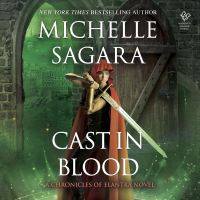
Cast in BloodMichelle Sagara16h 35m4.6 (607)$33 · $0.00
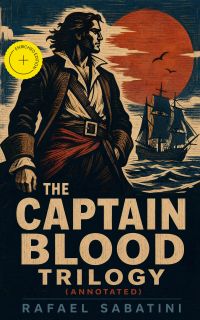
The Captain Blood Trilogy (Annotated)Rafael Sabatini29h 20m4.6 (1K)$3 · $0.00
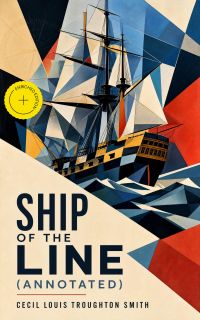
Ship of the Line (Annotated)Cecil Louis Troughton Smith11h 13m4.6 (1K)$2 · $0.00

The George Orwell CollectionGeorge Orwell24h 46m4.5 (14.4K)$12 · $0.00
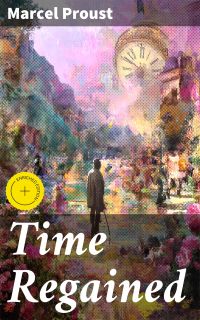
Time RegainedMarcel Proust15h 38m4.5 (9.2K)$2 · $0.00

Driving ForceElle James4h 58m4.6 (407)$20 · $0.00

When God Calls the HeartBrian Bird, Michelle Cox3h 24m4.6 (439)$10 · $0.00

Five Little IndiansMichelle Good10h 34m4.5 (64.5K)$29 · $0.00

Lolth's WarriorR. A. Salvatore13h 20m4.6 (2.4K)$33 · $0.00

The Things We Cannot SayKelly Rimmer13h 48m4.5 (359.1K)$33 · $0.00

The Love Songs of W.E.B. Du BoisHonoree Fanonne Jeffers29h 49m4.5 (58K)$8 · $0.00
Going PostalTerry Pratchett11h 23m4.5 (189.9K)$29 · $0.00

Glen AffricKarine Giebel22h 51m4.5 (3.2K)$46 · $0.00

The Book Of NegroesLawrence Hill15h 45m4.5 (107.3K)$33 · $0.00

Anne of Green GablesL. M. Montgomery11h 1m4.5 (1.2M)$2.30 · $0.00

Lieutenant Hornblower (Annotated)C. S. Forester11h 41m4.5 (2.9K)$2 · $0.00

Under the Light of the Italian MoonJennifer Anton12h 28m4.5 (5.3K)$23 · $0.00

Jubilee, 50th Anniversary EditionMargaret Walker15h 43m4.5 (9.5K)$25 · $0.00

Pride and PrejudiceJane Austen14h 44m4.4 (4.7M)$2 · $0.00

Flying Colours (Annotated)Cecil Louis Troughton Smith9h 26m4.4 (10.1K)$2 · $0.00

With Love from HarlemReShonda Tate13h 48m4.5 (2K)$6 · $0.00

Sweet Home Highland ChristmasMay McGoldrick, Jan Coffey2h 54m4.5 (1.4K)$7 · $0.00

Rilla of InglesideL. M. Montgomery12h 25m4.4 (67.5K)$2 · $0.00

Death Comes for the Archbishop (Annotated)Willa Cather9h 13m4.4 (4.7K)$2 · $0.00

The Alice NetworkKate Quinn15h 7m4.4 (887.1K)$33 · $0.00

The Goddess of WarsawLisa Barr13h 4m4.4 (36.4K)$33 · $0.00

The Ohio River Trilogy: Betty Zane, The Spirit of the Border & The Last TrailZane Grey29h 8m4.4 (1.8K)$1 · $0.00

The Attic ChildLola Jaye14h 46m4.4 (21K)$33 · $0.00

Martyr of the CatacombsJames De Mille3h 41m4.5 (744)$1 · $0.00

Quo VadisHenryk Sienkiewicz22h 52m4.4 (62K)$21 · $0.00

Bring Up The BodiesHilary Mantel14h 35m4.4 (150K)$33 · $0.00

By the Shores of Silver LakeLaura Ingalls Wilder7h 38m4.4 (103.7K)$1 · $0.00

Sexy/DangerousBeverly Jenkins10h 19m4.4 (2.3K)$29 · $0.00

Trustee from the ToolroomNevil Shute Norway11h 42m4.4 (10.5K)$1 · $0.00
Chasing CassandraLisa Kleypas8h 59m4.3 (108.3K)$29 · $0.00

Deeper than the OceanMirta Ojito12h 29m4.4 (927)$29 · $0.00
You may also like

What Maisie Knew (The Unabridged Edition) (Annotated)Henry James12h 10m4.3 (1.1K)$2 · $0.00
Agnes GreyAnne Brontë6h 23m3.9 (116K)$12 · $0.00
A Yellow Raft in Blue WaterMichael Dorris14h 29m4.0 (22.2K)$30
David CopperfieldCharles Dickens38h 22m4.2 (581.1K)$1.20 · $0.00
A ConfessionLeo Tolstoy2h 48m4.2 (25.1K)$4.70 · $0.00

Fahrenheit-182Mark Hoppus, Dan Ozzi7h 13m4.5 (24.5K)$5 · $0.00

The Story of a DonkeySophie comtesse de Ségur1h 59m3.5 (2.5K)$2 · $0.00

The Adventures of Augie MarchSaul Bellow22h 13m3.9 (24.8K)$30
An AutobiographyMohandas K. (Mahatma) Gandhi18h 43m4.2 (131.3K)$28

Charming as a VerbBen Philippe8h 6m4.0 (10.6K)$26 · $0.00

The Epic Adventures of Lydia BennetKate Rorick, Rachel Kiley9h 17m4.1 (2.1K)$20

The Complete Little Women Series (Little Women, Good Wives, Little Men, Jo's Boys)Louisa May Alcott43h 5m4.4 (9.4K)$1 · $0.00

The Dressmakers of Prospect HeightsKitty Zeldis10h 33m4.0 (9.4K)$29 · $0.00
The Patch of BlueGrace Livingston Hill5h 52m4.4 (444)$1.20 · $0.00
What Maisie KnewHenry James9h 6m3.7 (7.3K)$8 · $0.00

First Term at Malory TowersEnid Blyton6h 20m4.2 (26K)$1 · $0.00

Whiteoaks of JalnaMazo de la Roche14h 46m4.1 (997)$3.50 · $0.00

RockstarJ.M. Snyder6h 17m3.7 (1.2K)$4 · $0.00

Far from the A-ListStephanie Burns10h 54m4.0 (298)$29 · $0.00
Howards EndE. M. Forster11h 4m4.0 (117.8K)$21