
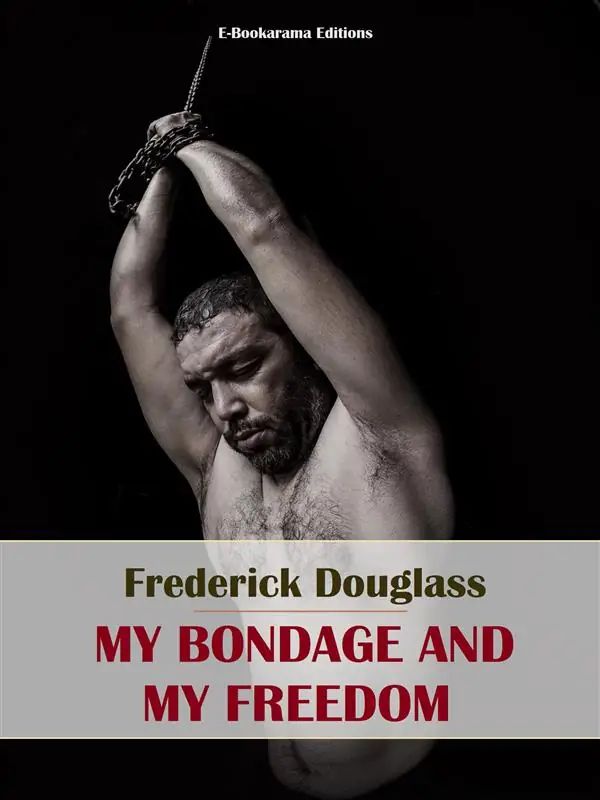
Audio only


Length14h 11m
About this audiobook
Born into slavery in 1818, Frederick Douglass would escape and gain his freedom by his 20th birthday. But rather than be content with his own liberty, he worked to gain attention for the cause of abolition, or the end of slavery. He was particularly gifted in his use of both the written and spoken word, making many doubt that he was ever a slave.
"My Bondage and My Freedom", published in 1855, is an example of a genre of literature known as the slave narrative. This genre flourished from around 1760 and though the first few decades after the abolition of slavery. One of the most famous examples is the interesting "Narrative of the Life of Olaudah Equiano", but the most famous writer of a slave a narrative almost certainly has to be Frederick Douglas. So much did the iconoclastic Douglass have to share about the reality of slavery that "My Bondage and My Freedom" is actually his second publication. The first—and more famous—is his groundbreaking "Narrative of the Life of Frederick Douglass, an American Slave: Written by Himself".
Technically, "My Bondage and My Freedom" is considered a revised and expanded version of that original publication in that it serves to update readers on what has occurred in the decade since the earlier narrative was published. These additions are primarily focused on his encounter with racism in the northern states, his activism in the name of abolition, most significantly, his decision to break away from William Lloyd Garrison and the white abolitionist leaders to establish the primacy of the black voice in the call to end slavery.
Central to this slave narrative if Douglass’ fervent expression of his contention that the institutions of slavery corrupts and dehumanises not just the slave, but the slaveowner and non-slaveholder who condones the practice.
Audiobook details
Rating★★★★ 4.5 (17.7K)
Includes Goodreads, Amazon, StoryGraph, LibraryThing
GenreBiography and Memoir, History, Psychology
Length14 hrs 11 mins
Narrated byListen with 1,000+ voices
FormateBook with Audio
Publish dateMar 16, 2020
LanguageEnglish
Table of contents
1MY BONDAGE AND MY FREEDOM
2Editor's Preface
3Introduction
4Chapter 1. Childhood
5Chapter 2. Removed From My First Home
Show all chaptersShow less
6Chapter 3. Parentage
7Chapter 4. A General Survey Of The Slave Plantation
8Chapter 5. Gradual Initiation To The Mysteries Of Slavery
9Chapter 6. Treatment Of Slaves On Lloyd's Plantation
10Chapter 7. Life In The Great House
11Chapter 8. A Chapter Of Horrors
12Chapter 9. Personal Treatment
13Chapter 10. Life In Baltimore
14Chapter 11. "A Change Came O'er The Spirit Of My Dream"
15Chapter 12. Religious Nature Awakened
16Chapter 13. The Vicissitudes Of Slave Life
17Chapter 14. Experience In St. Michael's
18Chapter 15. Covey, The Negro Breaker
19Chapter 16. Another Pressure Of The Tyrant's Vice
20Chapter 17. The Last Flogging
21Chapter 18. New Relations And Duties
22Chapter 19. The Run-Away Plot
23Chapter 20. Apprenticeship Life
24Chapter 21. My Escape From Slavery
25Chapter 22. Liberty Attained
26Chapter 23. Introduced To The Abolitionists
27Chapter 24. Twenty-One Months In Great Britain
28Chapter 25. Various Incidents
29Reception Speech. At Finsbury Chapel, Moorfields, England, May 12, 1846
30Dr. Campbell's Reply
31Letter To His Old Master. To My Old Master, Thomas Auld
32The Nature Of Slavery. Extract From A Lecture On Slavery, At Rochester, December 1, 1850
33Inhumanity Of Slavery. Extract From A Lecture On Slavery, At Rochester, December 8, 1850
34What To The Slave Is The Fourth Of July?. Extract From An Oration, At Rochester, July 5, 1852
35The Internal Slave Trade. Extract From An Oration, At Rochester, July 5, 1852
36The Slavery Party. Extract From A Speech Delivered Before The A. A. S. Society, In New York, May, 1853
37The Anti-Slavery Movement. Extracts From A Lecture Before Various Anti-Slavery Bodies, In The Winter Of 1855
More from Frederick Douglass
You Are Worth ItKyle Carpenter, Don Yaeger8h 53m4.7 (4.8K)$29 · $0.00

The Happiest Man on EarthEddie Jaku3h 48m4.6 (178K)$7 · $0.00
MotherlandJulia Ioffe17h 52m4.7 (2.5K)$40 · $0.00
Evidence Not SeenDarlene Deibler Rose11h 11m4.6 (11.9K)$29 · $0.00

Where Cowards Go to DieBenjamin Sledge8h 42m4.7 (351)$20 · $0.00

Will You Love Me?Cathy Glass9h 5m4.6 (9.3K)$29 · $0.00
Designing Terry Pratchett’s DiscworldPaul Kidby3h 52m4.7 (343)$20 · $0.00
HostageEli Sharabi5h 25m4.6 (10.8K)$24 · $0.00
Finding MeViola Davis9h 15m4.6 (256.4K)$29 · $0.00

The Dangerous Truth about Today’s MarijuanaLaura Stack CSP, MBA9h 57m4.7 (385)$20 · $0.00

Birdie & HarlowTaylor Wolfe7h 50m4.6 (6.5K)$26 · $0.00
The Lives of BrianBrian Johnson9h 45m4.6 (3.5K)$29 · $0.00

I Am The StormJanice Dean9h4.6 (1.5K)$8 · $0.00
Black History CollectionFrederick Douglass, Harriet Ann Jacobs, Booker T. Washington, W.E.B. Du Bois27h 9m4.6 (2.6K)$18 · $0.00
Just as I AmCicely Tyson16h 8m4.6 (99K)$33 · $0.00

Unbroken Bonds of BattleJohnny Joey Jones8h 31m4.6 (2.6K)$8 · $0.00

The Daughter of AuschwitzTova Friedman, Malcolm Brabant7h 54m4.6 (16.7K)$26 · $0.00
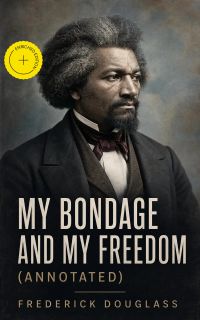
My Bondage and My Freedom (Annotated)Frederick Douglass15h 30m4.6 (2.4K)$2 · $0.00
Lily's PromiseLily Ebert, Dov Forman8h 54m4.6 (16.1K)$29 · $0.00
CrossroadsKaleb Dahlgren7h 56m4.6 (4.9K)$26 · $0.00

A Brief History of IntelligenceMax S. Bennett12h 18m4.6 (6.6K)$29 · $0.00
The Daughter of AuschwitzTova Friedman, Malcolm Brabant7h 54m4.6 (16.7K)$26 · $0.00
Lily's PromiseLily Ebert, Dov Forman8h 54m4.6 (16.1K)$29 · $0.00
On Democracies and Death CultsDouglas Murray10h 38m4.6 (6.5K)$29 · $0.00

Across the RiverKent Babb11h 40m4.6 (927)$29 · $0.00

Balcony Over Jerusalem: A Middle East Memoir - Israel, Palestine and BeyondJohn Lyons12h 37m4.6 (1.4K)$33 · $0.00
BeyondStephen Walker15h 39m4.6 (3.2K)$33 · $0.00
Kings and PawnsHoward Bryant10h 9m4.6 (678)$29 · $0.00

No EscapeNury Turkel9h 30m4.6 (809)$28 · $0.00
Jubal Stone: U.S. Marshal: Blood Trail To Hell: A Western Adventure NovelCasey Nash3h 42m4.6 (3.2K)$18 · $0.00
Fall and RiseMitchell Zuckoff17h 23m4.6 (9.8K)$40 · $0.00
The SurvivorJosef Lewkowicz, Michael Calvin9h 22m4.6 (2.5K)$29 · $0.00

Always FaithfulThomas Schueman, Zainullah Zaki12h 12m4.6 (977)$29 · $0.00

The State of Society in France Before the Revolution of 1789 (Annotated)Alexis de Tocqueville17h 25m4.6 (1.2K)$2 · $0.00

All the Gallant MenDonald Stratton, Ken Gire5h 55m4.6 (11.8K)$24 · $0.00
Saint Joan (Annotated)George Bernard Shaw6h 20m4.6 (1.2K)$1.20 · $0.00
Medgar and MyrlieJoy-Ann Reid10h 52m4.5 (27.8K)$29 · $0.00

The History of the Peloponnesian War (Annotated)Thucydides24h 3m4.6 (1.1K)$2 · $0.00
Where the Birds Never SingJack Sacco10h 31m4.6 (3.8K)$29 · $0.00

Serviceman J: The Untold Story of an NZSAS SoldierJamie Pennell5h 51m4.6 (452)$24 · $0.00
What to Make of a LifeJim Collins13h 31m4.4 (794)$33 · $0.00
Braving the TruthRachel Held Evans11h 31m4.7 (359)$29 · $0.00
Level UpRob Dial7h 42m4.6 (3.3K)$26 · $0.00
As a JewSarah Hurwitz8h 36m4.6 (1.2K)$26 · $0.00
Saint Joan (Annotated)George Bernard Shaw6h 20m4.6 (1.2K)$1.20 · $0.00

Burn the HaystackJennie Young, PhD9h 30m4.6 (543)$29 · $0.00

Woman and the New Race (Annotated)Margaret Sanger6h 30m4.6 (1K)$1.99 · $0.00

Good InsideBecky Kennedy9h 55m4.5 (59.3K)$29 · $0.00
The Mis-Education of the NegroCarter Godwin Woodson5h 4m4.5 (29.4K)$1.20 · $0.00
Du Bois: EssaysW.E.B. Du Bois6h 22m4.6 (1.5K)$1 · $0.00

The North American Indian (Illustrated Edition)Edward S. Curtis, Frederick Webb Hodge5h 59m4.6 (1.4K)$2 · $0.00
Valley of the BirdtailAndrew Stobo Sniderman, Douglas Sanderson10h 1m4.6 (2.4K)$29 · $0.00
Lies My Therapist Told MeGreg E. Gifford9h 3m4.6 (503)$29 · $0.00
Disturbed in Their NestsAlephonsion Deng, Judy A. Bernstein11h 22m4.6 (595)$23 · $0.00
No Name in the StreetJames Baldwin5h4.5 (8.5K)$20 · $0.00
Narrative of the Life of Frederick DouglassFrederick Douglass4h 13m4.5 (309.9K)$1.20 · $0.00
Magic SeasonWade Rouse6h 41m4.6 (855)$24 · $0.00

Consent Laid BareChanel Contos7h 11m4.5 (1.7K)$24 · $0.00

The Big RevealSasha Velour6h 15m4.5 (2.1K)$24 · $0.00
EssaysGeorge Orwell26h 38m4.5 (8.4K)$4 · $0.00
You may also like
Somewhere We Are HumanReyna Grande, Sonia Guiñansaca8h 16m4.4 (789)$26 · $0.00
My Bondage and My FreedomFrederick Douglass14h 9m4.5 (21.3K)$2 · $0.00
Life And Times Of Frederick Douglass, His early Life As A Slave, His Escape From Bondage, And His Complete HistoryFrederick Douglass20h 31m4.4 (2.9K)$2.30
Kaffir BoyMark Mathabane18h 34m4.3 (17.1K)$34 · $0.00

RebelRahaf Mohammed7h 13m4.3 (9.9K)$24 · $0.00
Narrative of the Life of Frederick DouglassFrederick Douglass4h 13m4.5 (309.9K)$1.20 · $0.00
The Life Story of Frederick Douglass, an American SlaveFrederick Douglass4h 26m4.3 (183.9K)$1.99 · $0.00
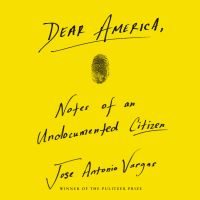
Dear AmericaJose Antonio Vargas6h 9m4.4 (21K)$24 · $0.00

My Life as a TraitorZarah Ghahramani7h 52m4.0 (1.2K)$22 · $0.00
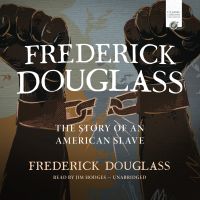
Frederick DouglassFrederick Douglass4h 6m4.3 (187.5K)$15
Black History CollectionFrederick Douglass, Harriet Ann Jacobs, Booker T. Washington, W.E.B. Du Bois27h 9m4.6 (2.6K)$18 · $0.00
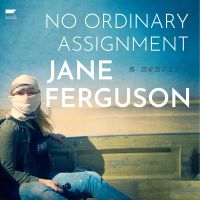
No Ordinary AssignmentJane Ferguson10h 50m4.4 (2.3K)$29 · $0.00

Black BoyRichard Wright15h 29m4.2 (67.3K)$4 · $0.00

FeverJonathan Bazzi11h 23m3.9 (7.3K)$20
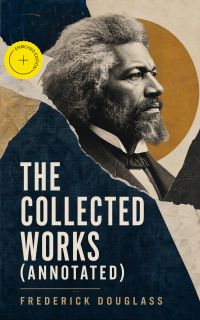
The Collected Works (Annotated)Frederick Douglass51h 36m4.6 (290)$1.99 · $0.00
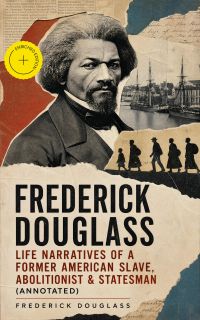
FREDERICK DOUGLASS - Life Narratives of a Former American Slave, Abolitionist & Statesman (Annotated)Frederick Douglass19h 35m4.6 (1.4K)$1.99 · $0.00
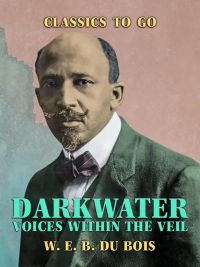
Darkwater Voices Within the VeilW. E. B. Du Bois7h 28m4.5 (1.4K)$2.30

Father Henson's Story of His Own LifeJosiah Henson4h 3m4.4 (775)$1 · $0.00
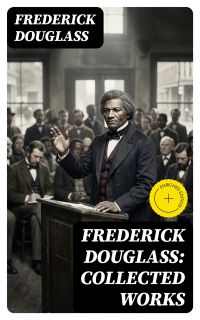
Frederick Douglass: Collected WorksFrederick Douglass63h 42m4.5 (226)$2 · $0.00
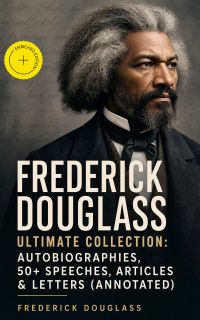
FREDERICK DOUGLASS Ultimate Collection: Autobiographies, 50+ Speeches, Articles & Letters (Annotated)Frederick Douglass63h 41m$2 · $0.00