
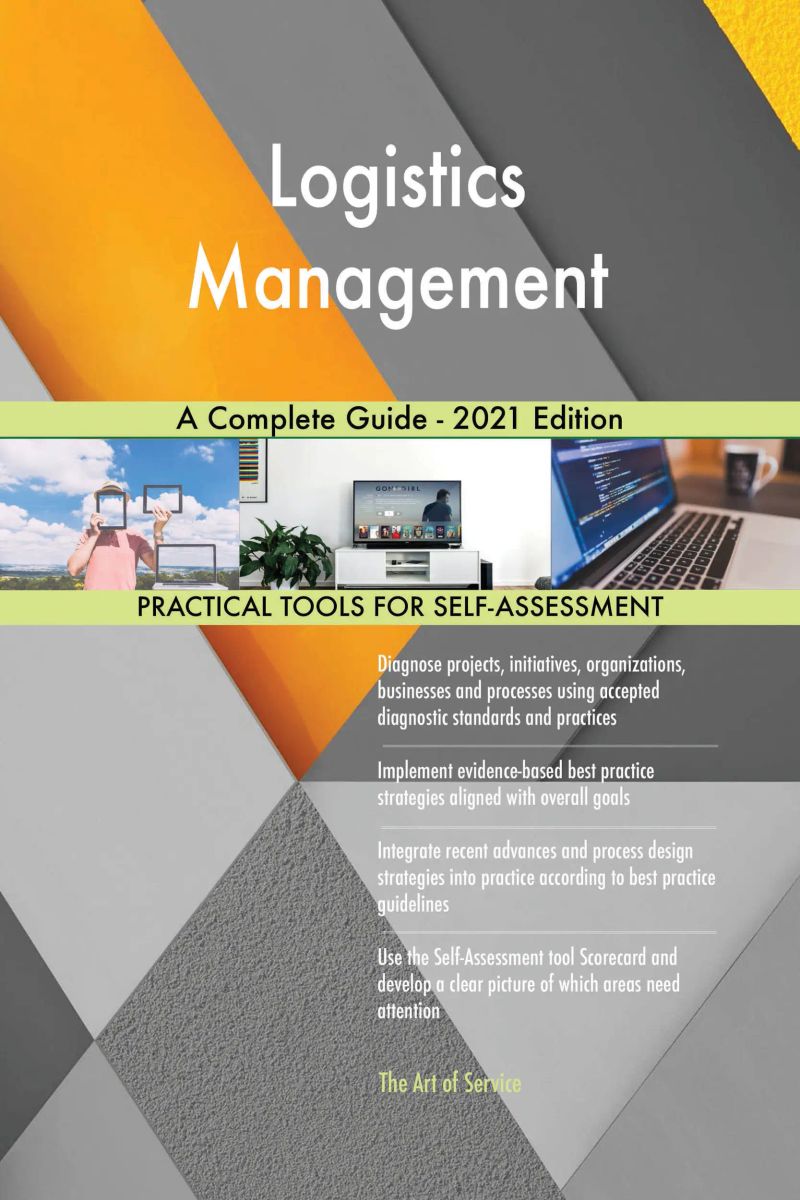
Logistics Management A Complete Guide - 2021 Edition
By Gerardus Blokdyk


Length4h 38m
About this audiobook
Do you have a way to handle expedited shipping differently than slower moving shipments?
Does your supply chain strategy call for the advantages of forming strategic alliances?
How is the management of reverse logistics activities organized within your organization?
How will blockchain technology affect the future of supply chain and logistics management?
Should you invest in training staff in logistics management techniques?
What about logistics management, or value chain management, or demand chain management?
What do other organizations have when it comes to logistics management?
What is the difference between logistics management and supply chain management?
What other regulations or operational policies affect delivery of supplies and services?
What will you suggest to the customer to undertake, clarify or try for your next visit?
This Logistics Management Guide is unlike books you're used to. If you're looking for a textbook, this might not be for you. This book and its included digital components is for you who understands the importance of asking great questions. This gives you the questions to uncover the Logistics Management challenges you're facing and generate better solutions to solve those problems.
Defining, designing, creating, and implementing a process to solve a challenge or meet an objective is the most valuable role… In EVERY group, company, organization and department.
Unless you're talking a one-time, single-use project, there should be a process. That process needs to be designed by someone with a complex enough perspective to ask the right questions. Someone capable of asking the right questions and step back and say, 'What are we really trying to accomplish here? And is there a different way to look at it?'
This Self-Assessment empowers people to do just that - whether their title is entrepreneur, manager, consultant, (Vice-)President, CxO etc... - they are the people who rule the future. They are the person who asks the right questions to make Logistics Management investments work better.
This Logistics Management All-Inclusive Self-Assessment enables You to be that person.
INCLUDES all the tools you need to an in-depth Logistics Management Self-Assessment. Featuring new and updated case-based questions, organized into seven core levels of Logistics Management maturity, this Self-Assessment will help you identify areas in which Logistics Management improvements can be made.
In using the questions you will be better able to:
Diagnose Logistics Management projects, initiatives, organizations, businesses and processes using accepted diagnostic standards and practices.
Implement evidence-based best practice strategies aligned with overall goals.
Integrate recent advances in Logistics Management and process design strategies into practice according to best practice guidelines.
Using the Self-Assessment tool gives you the Logistics Management Scorecard, enabling you to develop a clear picture of which Logistics Management areas need attention.
Your purchase includes access to the Logistics Management self-assessment digital components which gives you your dynamically prioritized projects-ready tool that enables you to define, show and lead your organization exactly with what's important.
Audiobook details
GenreBusiness and Economics
Length4 hrs 38 mins
Narrated byListen with 1,000+ voices
FormateBook with Audio
Publish dateDec 10, 2020
LanguageEnglish
Table of contents
1About The Art of Service
2Included Resources - how to access
3Purpose of this Self-Assessment
4How to use the Self-Assessment
5Logistics ManagementScorecard Example
Show all chaptersShow less
6Logistics ManagementScorecard
7BEGINNING OF THE SELF-ASSESSMENT:
8CRITERION #1: RECOGNIZE
9CRITERION #2: DEFINE:
10CRITERION #3: MEASURE:
11CRITERION #4: ANALYZE:
12CRITERION #5: IMPROVE:
13CRITERION #6: CONTROL:
14CRITERION #7: SUSTAIN:
15Logistics Management and Managing Projects, Criteria for Project Managers:
161.0 Initiating Process Group: Logistics Management
171.1 Project Charter: Logistics Management
181.2 Stakeholder Register: Logistics Management
191.3 Stakeholder Analysis Matrix: Logistics Management
202.0 Planning Process Group: Logistics Management
212.1 Project Management Plan: Logistics Management
222.2 Scope Management Plan: Logistics Management
232.3 Requirements Management Plan: Logistics Management
242.4 Requirements Documentation: Logistics Management
252.5 Requirements Traceability Matrix: Logistics Management
262.6 Project Scope Statement: Logistics Management
272.7 Assumption and Constraint Log: Logistics Management
282.8 Work Breakdown Structure: Logistics Management
292.9 WBS Dictionary: Logistics Management
302.10 Schedule Management Plan: Logistics Management
312.11 Activity List: Logistics Management
322.12 Activity Attributes: Logistics Management
332.13 Milestone List: Logistics Management
342.14 Network Diagram: Logistics Management
352.15 Activity Resource Requirements: Logistics Management
362.16 Resource Breakdown Structure: Logistics Management
372.17 Activity Duration Estimates: Logistics Management
382.18 Duration Estimating Worksheet: Logistics Management
392.19 Project Schedule: Logistics Management
402.20 Cost Management Plan: Logistics Management
412.21 Activity Cost Estimates: Logistics Management
422.22 Cost Estimating Worksheet: Logistics Management
432.23 Cost Baseline: Logistics Management
442.24 Quality Management Plan: Logistics Management
452.25 Quality Metrics: Logistics Management
462.26 Process Improvement Plan: Logistics Management
472.27 Responsibility Assignment Matrix: Logistics Management
482.28 Roles and Responsibilities: Logistics Management
492.29 Human Resource Management Plan: Logistics Management
502.30 Communications Management Plan: Logistics Management
Dynamical System A Complete Guide - 2020 EditionGerardus Blokdyk4h 30m$78
Operational Database Management A Complete Guide - 2019 EditionGerardus Blokdyk4h 45m$71
Load User Interface Complete Self-Assessment GuideGerardus Blokdyk4h 7m$71
Technology Review A Complete Guide - 2020 EditionGerardus Blokdyk4h 34m$78
Aluminum-Air Batteries The Ultimate Step-By-Step GuideGerardus Blokdyk4h 11m$71
Retail Store Operations A Complete Guide - 2021 EditionGerardus Blokdyk4h 37m$78
Cloud Threats A Complete Guide - 2019 EditionGerardus Blokdyk4h 31m$71

Organizational Justice A Complete Guide - 2020 EditionGerardus Blokdyk4h 34m$78
Data on the Move The Ultimate Step-By-Step GuideGerardus Blokdyk4h 4m$71
Capacity Management A Complete Guide - 2020 EditionGerardus Blokdyk4h 49m$78
Enterprise Clients A Complete Guide - 2019 EditionGerardus Blokdyk4h 32m$71
CDP A Complete Guide - 2021 EditionGerardus Blokdyk4h 23m$78
Risk Factors A Complete Guide - 2020 EditionGerardus Blokdyk4h 20m$78
Enterprise Technology Architecture ETA Second EditionGerardus Blokdyk4h 22m$71
Media development A Complete GuideGerardus Blokdyk4h 7m$42
Water Taxi Service A Complete Guide - 2020 EditionGerardus Blokdyk4h 31m$71
Functional Capacity Evaluation A Complete Guide - 2019 EditionGerardus Blokdyk4h 47m$71
Power Systems A Complete Guide - 2020 EditionGerardus Blokdyk4h 26m$78
Supportive Management A Complete Guide - 2020 EditionGerardus Blokdyk4h 35m$78
Mobile App Test Automation Tools The Ultimate Step-By-Step GuideGerardus Blokdyk4h 17m$71

Never Split the DifferenceChris Voss, Tahl Raz8h 7m4.4 (277.7K)$26 · $0.00
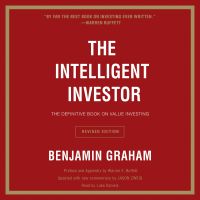
The Intelligent Investor Rev Ed.Benjamin Graham17h 48m4.3 (191.5K)$40 · $0.00
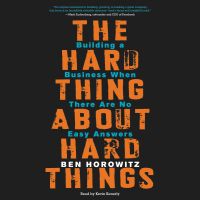
The Hard Thing About Hard ThingsBen Horowitz7h 57m4.2 (134.3K)$26 · $0.00
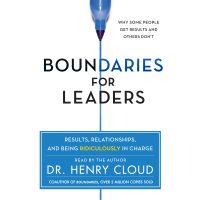
Boundaries for LeadersHenry Cloud7h 36m4.3 (3.6K)$26 · $0.00
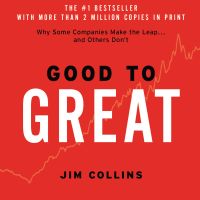
Good to GreatJim Collins9h 59m4.1 (325.2K)$29 · $0.00
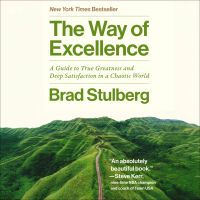
The Way of ExcellenceBrad Stulberg6h 46m4.2 (1.1K)$24 · $0.00

Trillion Dollar CoachEric Schmidt, Jonathan Rosenberg, Alan Eagle5h 40m4.1 (22.2K)$24 · $0.00
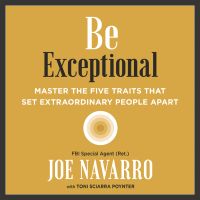
Be ExceptionalJoe Navarro, Toni Sciarra Poynter9h 11m4.0 (1.3K)$29 · $0.00

The Power of the OtherHenry Cloud5h 52m4.2 (3.5K)$24 · $0.00

Progress and Poverty, Volumes I and II (Annotated)Henry George19h 21m4.6 (574)$1.99 · $0.00

Not Everything Counts but Everything Matters: The powerful and inspirational new book about leadership and achieving success from the visionary multi-premiership winning Panthers coachIvan Cleary6h 1m4.6 (680)$24 · $0.00

BuildTony Fadell11h 5m4.5 (14.3K)$8 · $0.00
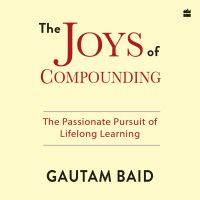
The Joys Of CompoundingGautam Baid17h 34m4.5 (2.5K)$18 · $0.00
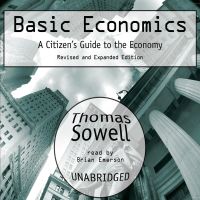
Basic EconomicsThomas Sowell18h 32m4.5 (29.3K)$28 · $0.00

The Ambuja StoryNarotam Sekhsaria13h 59m4.5 (830)$33 · $0.00

The Secret Door to SuccessFlorence Scovel Shinn2h 25m4.5 (2.1K)$1.20 · $0.00

This Is Going to HurtAdam Kay5h 47m4.4 (444.7K)$24 · $0.00

Big TrustShadé Zahrai, Fayçal Sekkouah8h 36m4.6 (406)$26 · $0.00
The Intelligent Investor Third EditionBenjamin Graham, Jason Zweig20h4.4 (156.6K)$46 · $0.00

Bottle of LiesKatherine Eban14h 25m4.4 (12K)$33 · $0.00
You may also like
Pay for performance advertising Second EditionGerardus Blokdyk4h 18m$71
Enterprise Coworking A Complete Guide - 2021 EditionGerardus Blokdyk4h 40m$78

DigitalBradley J Sugars5h 11m4.8 (10)Free

ScaleBradley J Sugars3h 27m4.6 (52)Free
Driving Digital A Complete Guide - 2019 EditionGerardus Blokdyk4h 30m$71
Eclipse TPTP Complete Self-Assessment GuideGerardus Blokdyk4h 2m$42
Self-service software Complete Self-Assessment GuideGerardus Blokdyk1h 56m$42
Internal Training Complete Self-Assessment GuideGerardus Blokdyk4h 8m$71
3D Printing in Aerospace and Defense Standard RequirementsGerardus Blokdyk4h 20m$71
Python For BeginnersCélio Azevedo35m$8 · $0.00
Semantic Knowledge Graphing Third EditionGerardus Blokdyk4h 14m$42
Python For BeginnersCélio Azevedo35m$8 · $0.00
Digital Banking Transformation A Complete Guide - 2020 EditionGerardus Blokdyk7h 4m$21
Startup company Standard RequirementsGerardus Blokdyk1h 55m$42
Cloud Service Brokerage A Complete Guide - 2019 EditionGerardus Blokdyk4h 35m$71
cycle time Standard RequirementsGerardus Blokdyk1h 53m$42
Data Governance A Complete Guide - 2021 EditionGerardus Blokdyk4h 37m$78
FitNesse A Clear and Concise ReferenceGerardus Blokdyk1h 52m$42
Ubiquitous Independent Carrier Network Standard RequirementsGerardus Blokdyk4h 23m$71
Business Writing Complete Self-Assessment GuideGerardus Blokdyk1h 58m$42