


Length1h 46m
About this audiobook
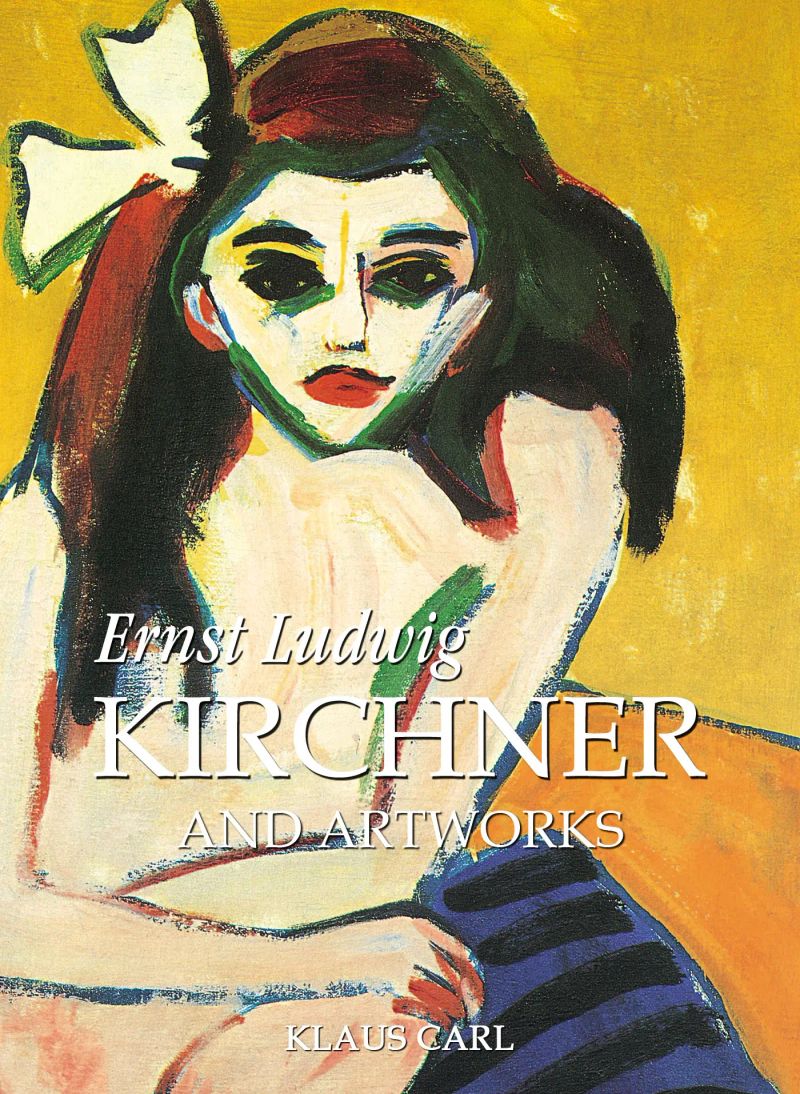
The self-appointed “leader” of the artists’ group Die Brücke (Bridge), founded in Dresden in 1905, Ernst Ludwig Kirchner was a key figure in the early development of German Expressionism. His first works show the influence of Impressionism, Post-impressionism and Jugendstil, but by about 1909, Kirchner was painting in a distinctive, expressive manner with bold, loose brushwork, vibrant and non-naturalistic colours and heightened gestures. He worked in the studio from sketches made very rapidly from life, often from moving figures, from scenes of life out in the city or from the Die Brücke group’s trips to the countryside. A little later he began making roughly-hewn sculptures from single blocks of wood. Around the time of his move to Berlin, in 1912, Kirchner’s style in both painting and his prolific graphic works became more angular, characterized by jagged lines, slender, attenuated forms and often, a greater sense of nervousness. These features can be seen to most powerful effect in his Berlin street scenes. With the outbreak of the First World War, Kirchner became physically weak and prone to anxiety. Conscripted, he was deeply traumatised by his brief experience of military training during the First World War. From 1917 until his death by suicide in 1938, he lived a reclusive, though artistically productive life in the tranquillity of the Swiss Alps, near Davos.
Audiobook details
GenreOther
Length1 hr 46 mins
Narrated byListen with 1,000+ voices
FormateBook with Audio
LanguageEnglish
Table of contents
1Introduction
4“German” Art? Expressionism’s Origins and Sources
2Biography
5The Body and Nature
3What is Expressionism?
6The Artist
Series

Virgin PortraitsKlaus Carl1h 16m$15 · $0.00
DürerKlaus Carl1h 23m4.6 (17)$8 · $0.00
DürerKlaus Carl1h 23m4.6 (32)$3.50 · $0.00

Pieter BruegelKlaus Carl1h 26m4.4 (14)$8 · $0.00

ChaussuresKlaus Carl1h 9m$15 · $0.00

HerbariumKlaus Carl1h 14m$15 · $0.00

La Photographie érotique 120 illustrationsKlaus Carl1h 22m$15 · $0.00

Madonna ábrázolások a festészetbenKlaus Carl1h 30m$5 · $0.00
LingerieKlaus Carl1h 15m4.0 (35)$15 · $0.00

VelázquezKlaus Carl1h 25m4.3 (18)$3.50 · $0.00
Lenjerie 120 ilustraţiiKlaus Carl1h 20m$15 · $0.00
Portrete ale Fecioarei 120 ilustraţiiKlaus Carl1h 14m$15 · $0.00

VelázquezKlaus Carl1h 26m$8 · $0.00

DürerKlaus Carl1h 16m$8 · $0.00
Hans HolbeinKlaus Carl1h 33m4.4 (13)$8 · $0.00

Ernst Ludwig Kirchner et œuvres d'artKlaus Carl2h 11m$15 · $0.00

RembrandtKlaus Carl1h 1m$8 · $0.00

RodinKlaus Carl1h 9m4.2 (19)$15 · $0.00

StilllebenKlaus Carl1h 27m$15 · $0.00

Mere ChristianityC. S. Lewis7h 7m4.4 (519.7K)$24 · $0.00

Her Daily BreadKate Wood12h 57m4.6 (153)$33 · $0.00
The Holy Bible - 1 SamuelKing James2h 13m4.8 (1.6K)$3 · $0.00

The American Standard Bible — The Gospel of MatthewMatthew3h 56m4.7 (3K)$2 · $0.00

Bad Fat Black GirlSesali Bowen6h 32m4.7 (2.8K)$24 · $0.00

The King James Audio Bible New Testament CompleteChristopher Glyn20h 2m4.7 (2.6K)$12 · $0.00

Faiths CheckbookCharles Spurgeon12h 44m4.7 (3.2K)$11 · $0.00

Ten Things I Wish You Knew About Your Child's Mental HealthDr. Billy Garvey4h 53m4.7 (2.4K)$20 · $0.00

Designing Terry Pratchett’s DiscworldPaul Kidby3h 52m4.7 (343)$20 · $0.00
The Chosen Book OneAmanda Jenkins, Kristen Hendricks, Dallas Jenkins3h 8m4.6 (4.9K)$10 · $0.00
The Lives of BrianBrian Johnson9h 45m4.6 (3.5K)$29 · $0.00
Expository Thoughts on the Gospel of LukeJ.C. Ryle27h 13m4.7 (536)$18 · $0.00

CrossroadsKaleb Dahlgren7h 56m4.6 (4.9K)$26 · $0.00

Across the RiverKent Babb11h 40m4.6 (927)$29 · $0.00

Brain Training for RidersAndrea Monsarrat Waldo5h 56m4.7 (550)$19 · $0.00

My Effin' LifeGeddy Lee17h 11m4.6 (13.1K)$40 · $0.00

Kings and PawnsHoward Bryant10h 9m4.6 (678)$29 · $0.00

The Elementia Chronicles #2: The New OrderSean Fay Wolfe11h 17m4.6 (841)$29 · $0.00

The ActsLuke2h 55m4.6 (19.7K)$12 · $0.00

New Testament - Easy NavigationWorld English Bible19h 35m4.6 (1.3K)$1.30 · $0.00
You may also like
Emile & The Social ContractJean-Jacques Rousseau33h 55m4.1 (1.6K)$1.99 · $0.00

The Origins of TotalitarianismHannah Arendt23h 24m4.3 (23.3K)$32

A WRITER'S DIARYVirginia Woolf14h 41m4.3 (8.1K)$1.99 · $0.00

Inverse CowgirlAlicia Roth Weigel6h 31m4.1 (1.7K)$24 · $0.00

Y2KColette Shade7h 47m3.9 (1.7K)$26 · $0.00

Always a SoldierRob Smith8h 51m4.3 (298)$20

The Christian MindHarry Blamires5h 58m4.1 (418)$14 · $0.00

A Discourse Upon the Origin and the Foundation of the Inequality Among Mankind Jean-Jacques Rousseau2h 51m4.0 (21.8K)Free

Three GuineasVirginia Woolf6h 7m4.1 (9.2K)$1.20 · $0.00

Defying HitlerSebastian Haffner8h 18m4.4 (9.5K)$17

Ernst Ludwig Kirchner and artworksKlaus Carl1h 51m4.6 (11)$15 · $0.00

INSTINCTS OF THE HERD IN PEACE AND WAR (Annotated)Wilfred Trotter9h 43m3.9 (557)$1.99 · $0.00
ExpressionismAshley Bassie5h 42m4.1 (162)$15 · $0.00
ExpressionismAshley Bassie5h 54m4.3 (95)$15 · $0.00

Franz MarcFranz Marc, Klaus H. Carl1h 46m4.3 (36)$15 · $0.00

Edvard MunchAshley Bassie, Elizabeth Ingles3h 30m4.3 (22)$16 · $0.00
Francisco GoyaSarah Carr-Gomm2h 15m3.7 (15)$13 · $0.00
Discover the beauty of ExpressionismAshley Bassie1h 27m$13 · $0.00

The Road to RevolutionSantiago Machain5h$21 · $0.00

Franz Marc 1880-1916Klaus H. Carl, Franz Marc1h 43m4.3 (18)$16 · $0.00