


Length1h 19m
About this audiobook
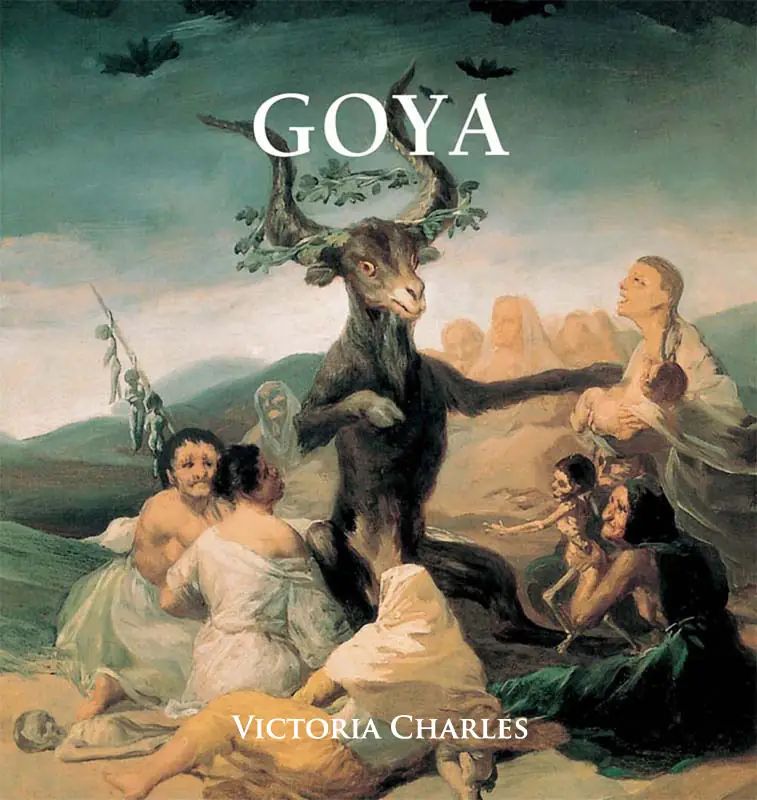
Goya is perhaps the most approachable of painters. His art, like his life, is an open book. He concealed nothing from his contemporaries, and offered his art to them with the same frankness. The entrance to his world is not barricaded with technical difficulties. He proved that if a man has the capacity to live and multiply his experiences, to fight and work, he can produce great art without classical decorum and traditional respectability. He was born in 1746, in Fuendetodos, a small mountain village of a hundred inhabitants. As a child he worked in the fields with his two brothers and his sister until his talent for drawing put an end to his misery. At fourteen, supported by a wealthy patron, he went to Saragossa to study with a court painter and later, when he was nineteen, on to Madrid. Up to his thirty-seventh year, if we leave out of account the tapestry cartoons of unheralded decorative quality and five small pictures, Goya painted nothing of any significance, but once in control of his refractory powers, he produced masterpieces with the speed of Rubens. His court appointment was followed by a decade of incessant activity – years of painting and scandal, with intervals of bad health. Goya’s etchings demonstrate a draughtsmanship of the first rank. In paint, like Velázquez, he is more or less dependent on the model, but not in the detached fashion of the expert in still-life. If a woman was ugly, he made her a despicable horror; if she was alluring, he dramatised her charm. He preferred to finish his portraits at one sitting and was a tyrant with his models. Like Velázquez, he concentrated on faces, but he drew his heads cunningly, and constructed them out of tones of transparent greys. Monstrous forms inhabit his black-and-white world: these are his most profoundly deliberated productions. His fantastic figures, as he called them, fill us with a sense of ignoble joy, aggravate our devilish instincts and delight us with the uncharitable ecstasies of destruction. His genius attained its highest point in his etchings on the horrors of war. When placed beside the work of Goya, other pictures of war pale into sentimental studies of cruelty. He avoided the scattered action of the battlefield, and confined himself to isolated scenes of butchery. Nowhere else did he display such mastery of form and movement, such dramatic gestures and appalling effects of light and darkness. In all directions Goya renewed and innovated.
Audiobook details
Rating★★★★★ 4.6 (18)
Includes Amazon
GenreOther
Length1 hr 19 mins
Narrated byListen with 1,000+ voices
FormateBook with Audio
LanguageEnglish
Table of contents
1Introduction
21. Self-portrait, 1773-74.
32. Portrait of Martin Zapater, 1797.
43. Farnese Hercules,
54. Self-portrait, 1815.
Show all chaptersShow less
65. Portrait of Josefa Bayeu (?), about 1798.
76. Prince Balthasar Carlos, 1778.
87. Self-portrait in the Studio, 1793-95.
98. Portrait of Charles III in Hunting Costume, 1787.
109. The Family of the Infante Don Luis, 1784.
1110. Portrait of the Count of Floridablanca and Goya, 1784.
1211. Charles IV, 1789.
1312. Maria Luisa, 1789.
1413. The Family of Charles IV, 1800-01.
1514. The Countess of Chinchón, 1800.
1615. Half Don Manuel Godoy as Commander in the 'War of the Oranges', about 1801.
1716. Ferdinand VII, 1814.
1817. Countess-Duchess of Benavente, 1785.
1918. Duchess of Alba, 1797.
2019. Dona Isabel de Porcel, 1804-05.
2120. Adoration of the Name of God by Angels, 1772.
2221. Betrothal of the Virgin, 1774.
2322. St Bernardine of Siena preaching before Alfonso V of Aragon, 1781-83.
2423. Mary, Queen of Martyrs, 1780-81.
2524. Miracle of St Anthony of Padua, 1798.
2625. The Crucifixion, 1780.
2726. Saints Justa and Rufina, 1817.
2827. Last Communion of St Joseph of Calasanz, 1819.
2928. Agony in the Garden, 1819.
3029. La Tauromaquia (The Art of Bullfighting), 1816.
3130. The Bullfight, 1812-19.
3231. Dancing by the River Manzanares, 1777.
3332. Hunter loading his gun, 1812-23.
3433. The Picnic, 1776.
3534. The Parasol, 1777.
3635. Summer (Harvesting), 1786-87.
3736. Spring (The Flowergirls), 1786-87.
3837. Autumn (The Vintage), 1786-87.
3938. Winter (The Snow Tempest), 1786-87.
4039. La Gallina Ciega (Blind Man's Buff), 1788-89.
4140. The Meadow of San Isidro, 1788.
4241. The Wedding, 1791-1792.
4342. Las Gigantillas (Little Giants), 1791-92.
4443. The Swing, 1787.
4544. Highwaymen Attacking a Coach, 1787.
4645. Nude Maja, 1798-1805.
4746. Clothed Maja, 1798-1805.
4847. Marquise of Santa Cruz, 1805.
4948. Wounded Mason, 1786-87.
5049. Milkgirl from Bordeaux, 1825-27.
Series
30 de milenii de picturăVictoria Charles, Klaus H. Carl, Joseph Manca, Megan McShane18h 26m$18 · $0.00
1000 de tablouri ale unor pictori de geniuVictoria Charles, Joseph Manca, Megan McShane, Donald Wigal13h 33m4.3 (70)$18 · $0.00
ConstableVictoria Charles1h 22m4.1 (18)$8 · $0.00
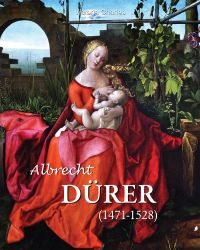
Albrecht Dürer 1471-1528Victoria Charles2h 55m3.8 (37)$16 · $0.00
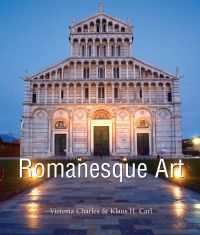
Romanesque ArtVictoria Charles, Klaus H. Carl3h 58m4.0 (19)$15 · $0.00
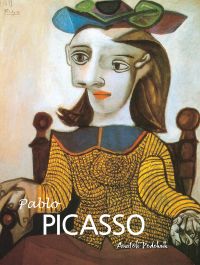
Pablo PicassoVictoria Charles5h 22m$13 · $0.00
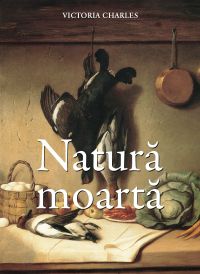
Natură moartăVictoria Charles53m$15 · $0.00
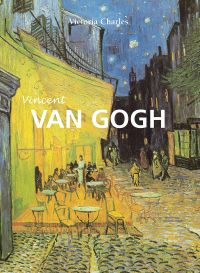
Vincent van GoghVictoria Charles2h 4m4.0 (201)$13 · $0.00
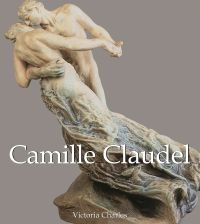
Camille ClaudelVictoria Charles1h 19m$15 · $0.00
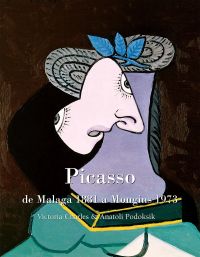
Picasso, de Malaga 1881 a Mougins 1973Victoria Charles, Anatoli Podoksik7h 14m4.2 (54)$19 · $0.00
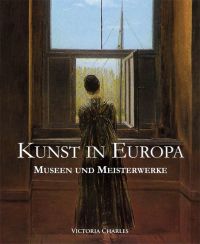
Kunst in EuropaVictoria Charles5h 37m$15 · $0.00
BotticelliVictoria Charles1h 23m4.2 (39)$3.50 · $0.00
Caspar David Friedrich. Master of the tragic landscapeVictoria Charles2h 31m4.3 (32)$16 · $0.00
Pablo PicassoVictoria Charles5h 46m$13 · $0.00

L'Art romanVictoria Charles, Klaus Carl4h 12m3.9 (33)$15 · $0.00
Ivan ChichkineVictoria Charles, Irina Shuvalova3h 1m4.5 (138)$16 · $0.00

Erotische Zeichnungen 120 illustrationenVictoria Charles26m3.5 (24)$15 · $0.00
Baroque ArtVictoria Charles, Klaus H. Carl3h 16m3.7 (12)$15 · $0.00
Les ouvrages d'art: les pontsVictoria Charles2h 15m$15 · $0.00
Mere ChristianityC. S. Lewis7h 7m4.4 (519.7K)$24 · $0.00

Her Daily BreadKate Wood12h 57m4.6 (153)$33 · $0.00
The Holy Bible - 1 SamuelKing James2h 13m4.8 (1.6K)$3 · $0.00
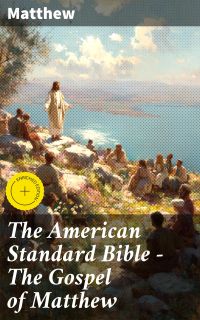
The American Standard Bible — The Gospel of MatthewMatthew3h 56m4.7 (3K)$2 · $0.00

Bad Fat Black GirlSesali Bowen6h 32m4.7 (2.8K)$24 · $0.00
The King James Audio Bible New Testament CompleteChristopher Glyn20h 2m4.7 (2.6K)$12 · $0.00
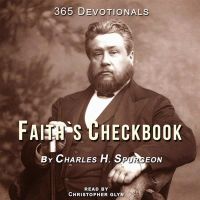
Faiths CheckbookCharles Spurgeon12h 44m4.7 (3.2K)$11 · $0.00

Ten Things I Wish You Knew About Your Child's Mental HealthDr. Billy Garvey4h 53m4.7 (2.4K)$20 · $0.00
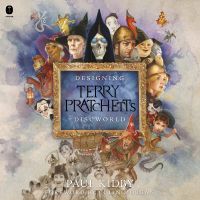
Designing Terry Pratchett’s DiscworldPaul Kidby3h 52m4.7 (343)$20 · $0.00
The Chosen Book OneAmanda Jenkins, Kristen Hendricks, Dallas Jenkins3h 8m4.6 (4.9K)$10 · $0.00
The Lives of BrianBrian Johnson9h 45m4.6 (3.5K)$29 · $0.00
Expository Thoughts on the Gospel of LukeJ.C. Ryle27h 13m4.7 (536)$18 · $0.00

CrossroadsKaleb Dahlgren7h 56m4.6 (4.9K)$26 · $0.00

Across the RiverKent Babb11h 40m4.6 (927)$29 · $0.00

Brain Training for RidersAndrea Monsarrat Waldo5h 56m4.7 (550)$19 · $0.00
My Effin' LifeGeddy Lee17h 11m4.6 (13.1K)$40 · $0.00
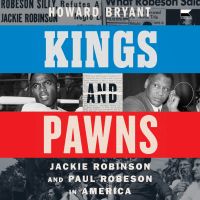
Kings and PawnsHoward Bryant10h 9m4.6 (678)$29 · $0.00

The Elementia Chronicles #2: The New OrderSean Fay Wolfe11h 17m4.6 (841)$29 · $0.00
The ActsLuke2h 55m4.6 (19.7K)$12 · $0.00
New Testament - Easy NavigationWorld English Bible19h 35m4.6 (1.3K)$1.30 · $0.00
You may also like
The Histories & The AnnalsTacitus29h 25m4.3 (1.5K)$1.99 · $0.00
The Napoleon of Notting HillG. K. Chesterton6h 4m3.9 (9K)$2.30 · $0.00
The Greatest Works of Thomas Paine: 39 Books in One EditionThomas Paine77h 14m4.6 (1.2K)$1.99 · $0.00
Common SenseThomas Paine2h 22m4.2 (59K)$14 · $0.00
The Screwtape LettersC. S. Lewis3h 53m4.4 (603.3K)$2 · $0.00
The Collected Biographies of Eminent VictoriansLytton Strachey11h 59m4.0 (5.1K)$1.99 · $0.00

Notes on Democracy (Summarized Edition)H. L. Mencken2h 20m4.1 (635)$2
Rousseau and RevolutionWill Durant, Ariel Durant57h 17m4.4 (4.6K)$30
The PrinceNiccolò Machiavelli4h 56m4.0 (412.9K)$4 · $0.00
THE SCREWTAPE LETTERS & SCREWTAPE PROPOSES A TOAST (Annotated)C. S. Lewis5h 6m4.4 (471K)$2 · $0.00
THE SCREWTAPE LETTERS & SCREWTAPE PROPOSES A TOASTC. S. Lewis4h 57m4.4 (594.6K)$2 · $0.00
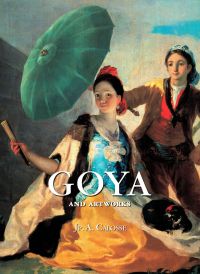
Goya and artworksJp. A. Calosse1h 34m4.1 (19)$15 · $0.00
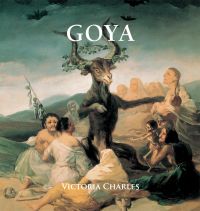
GoyaVictoria Charles1h 25m4.6 (18)$8 · $0.00
GoyaJp. A. Calosse1h 29m$15 · $0.00
The Giants of Russian Literature: The Greatest Russian Novels, Stories, Plays, Folk Tales & LegendsLeonid Andreyev, Saki, Herman Bernstein, Maxim Gorky, Ivan Turgenev, Anton Chekhov, Leo Tolstoy, Fyodor Dostoevsky, Alexander Pushkin, Nikolai Gogol, M.Y. Saltykov, V.G. Korolenko, V.N. Garshin, F.K. Sologub, I.N. Potapenko, S.T. Semyonov, M.P. Artzybashev, A.I. Kuprin, H. H. Munro, Ivan Goncharov367h 19m4.4 (10)$0.99 · $0.00
Dialogues of the DeadMrs. Montagu, George Lyttelton Baron Lyttelton6h 40m3.9 (20)$2 · $0.00
Goya, an account of his life and worksAlbert Frederick Calvert7h 22m$2 · $0.00
Discover the beauty of RomanticismLéon Rosenthal1h 19m4.1 (29)$13 · $0.00
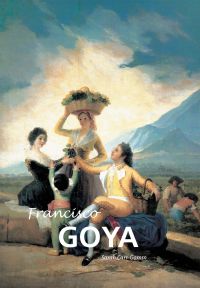
Francisco GoyaSarah Carr-Gomm2h 20m4.0 (30)$13 · $0.00
The Age Of Louis XIV (Complete Edition)Voltaire21h 29m3.9 (129)$1.99 · $0.00