
Audio only
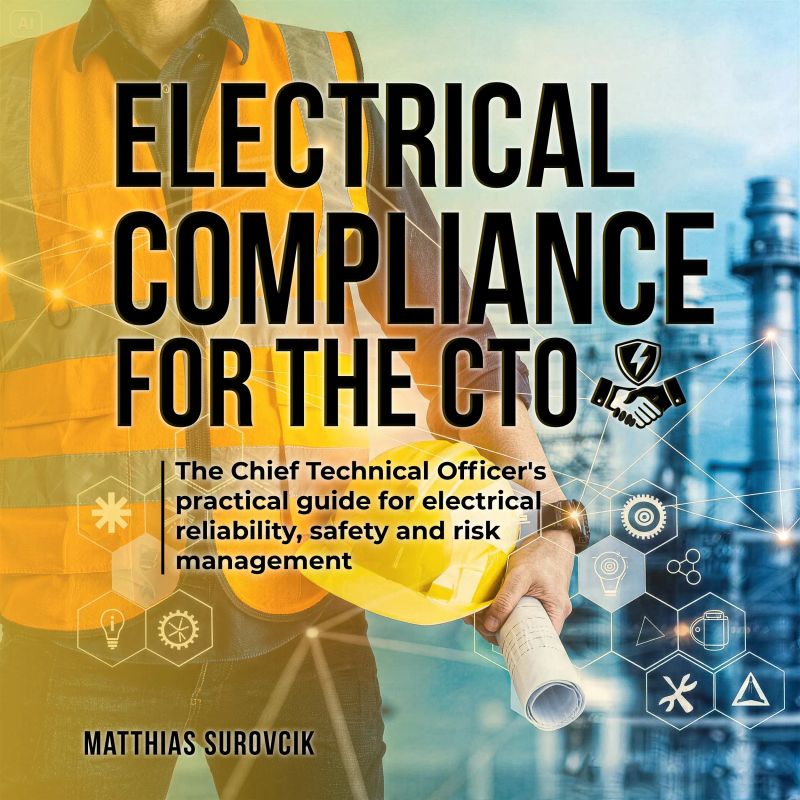
Electrical Compliance for the CTO
The Chief Technical Officer's Practical Guide for Electrical Reliability, Safety and Risk ManagementBy Matthias SurovcikNarrated by Frank BlockLength3h 47m
About this audiobook
In globally active industry, it is no longer enough merely to "comply with local regulations". Customers, audits and supply chain requirements expect demonstrable Electrical Compliance. In truly critical situations, the issue is not just the local site, but the organisation as a whole. As CTO, you bear overall responsibility for results: selection, organisation and control. Delegation provides relief, but it does not replace responsibility. This book explains how to establish Electrical Compliance in a structured way as a management task: with an effectively appointed chief responsible electrical specialist (CRES), clearly defined responsibilities, sound formal delegation of duties, and a control logic that remains effective across multiple sites, with subcontractors involved, and even under time pressure. It connects electrical safety with reliability and risk management - so that systems remain operational, employees are protected, and decisions are documented in a robust and traceable manner. Anyone who merely lets Electrical Compliance - and electrical safety in particular - simply "run alongside" is likely to encounter a disruption or incident. Those who lead it make it plannable.
Audiobook details
GenreBusiness and Economics, Technology
Length3 hrs 47 mins
Narrated byFrank Block
FormatAudiobook
Publish dateSep 14, 2026
LanguageEnglish
Table of contents
1Chapter 1: Introduction
2Chapter 2: Electrical Safety as a Management Responsibility
3Chapter 3: Fundamentals of Electrical Safety in the Company
4Chapter 4: Importance of Electrical Safety Alongside General HSE
5Chapter 5: Electrical Compliance as a Pillar of Strategic Competitive Advantage
Show all chaptersShow less
6Chapter 6: Obligations Under Laws and Contracts
7Chapter 7: the Fundamental Role of the CTO in Electrical Compliance
8Chapter 8: Roles, Delegation, and Structure of Electrical Compliance
9Chapter 9: Selection of a Suitable Chief Responsible Electrical Specialist
10Chapter 10: Appointment Process for a CRES
11Chapter 11: the Electrical Specialist as a Central Figure
12Chapter 12: the Electrotechnically Instructed Person: Electrical Work by Non-Electrical Staff
13Chapter 13: Limits of the CTO's Responsibilities and Control Duties
14Chapter 14: Outsourcing and Legal Pitfalls
15Chapter 15: Implement Measures and Instructions
16Chapter 16: Technical Measures and Organisational Measures
17Chapter 17: Personal Measures and the Stages of (S)TOP as a Control Loop
18Chapter 18: Safety Instruction
19Chapter 19: Delegation, Instruction and Control
20Chapter 20: Form, Content, and Proof of Delegation
21Chapter 21: Control Mechanisms and Audit Systems
22Chapter 22: Delegation and Dismissal of Technical Managers
23Chapter 23: Liability and Criminal Law Risks
24Chapter 24: Guarantor Status of the CRES and the CTO
25Chapter 25: the Issue of Negligence
26Chapter 26: Duty to Ensure Public Safety
27Chapter 27: Avoiding Organisational Fault
28Chapter 28: Responsibility for Legacy Issues
29Chapter 29: Regulations, National and International Laws, Rules, and Standards
30Chapter 30: Implementation in Practice
31Chapter 31: Setting up Your Electrical Organisational Chart
32Chapter 32: Delegation of Tasks Versus Task Overload
33Chapter 33: Correct Transfer of Tasks and Responsibilities
34Chapter 34: Use KPIs in Structures of Responsibility; Do Not Replace Responsibility with KPIs
35Chapter 35: Data Protection and IT Security
36Chapter 36: Effectively Living Responsibility and Leadership in Everyday Life
37Chapter 37: Electrical Compliance Outro
More from Matthias Surovcik

Aufbau und Erhalt einer ElektrosicherheitsstrukturMatthias Surovcik4h 34m$29 · $0.00

Die Verantwortliche ElektrofachkraftMatthias Surovcik1h 48m4.6 (17)$24 · $0.00

Creating and Maintaining an Electrical Safety StructureMatthias Surovcik4h 4m$28 · $0.00

Was jede Elektrofachkraft wissen mussMatthias Surovcik2h 6m3.5 (15)$15 · $0.00
Never Split the DifferenceChris Voss, Tahl Raz8h 7m4.4 (277.7K)$26 · $0.00
The Intelligent Investor Rev Ed.Benjamin Graham17h 48m4.3 (191.5K)$40 · $0.00
The Hard Thing About Hard ThingsBen Horowitz7h 57m4.2 (134.3K)$26 · $0.00
Boundaries for LeadersHenry Cloud7h 36m4.3 (3.6K)$26 · $0.00
Not Everything Counts but Everything Matters: The powerful and inspirational new book about leadership and achieving success from the visionary multi-premiership winning Panthers coachIvan Cleary6h 1m4.6 (680)$24 · $0.00
BuildTony Fadell11h 5m4.5 (14.3K)$8 · $0.00
The Joys Of CompoundingGautam Baid17h 34m4.5 (2.5K)$18 · $0.00
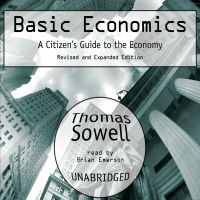
Basic EconomicsThomas Sowell18h 32m4.5 (29.3K)$28 · $0.00

Poor Charlie’s AlmanackGrover Gardener, Charles T. Munger13h 9m4.5 (24.7K)$18 · $0.00

The Ambuja StoryNarotam Sekhsaria13h 59m4.5 (830)$33 · $0.00

The Secret Door to SuccessFlorence Scovel Shinn2h 25m4.5 (2.1K)$1.20 · $0.00

This Is Going to HurtAdam Kay5h 47m4.4 (444.7K)$24 · $0.00

Big TrustShadé Zahrai, Fayçal Sekkouah8h 36m4.6 (406)$26 · $0.00
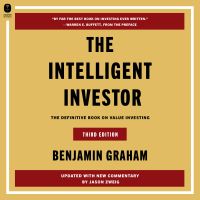
The Intelligent Investor Third EditionBenjamin Graham, Jason Zweig20h4.4 (156.6K)$46 · $0.00

Bottle of LiesKatherine Eban14h 25m4.4 (12K)$33 · $0.00

The Antiracist Business BookTrudi Lebrón6h 10m4.6 (275)$17 · $0.00
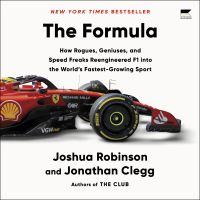
The FormulaJoshua Robinson, Jonathan Clegg10h 41m4.4 (6.9K)$29 · $0.00
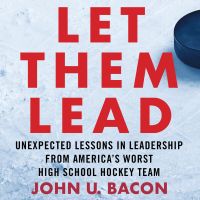
Let Them LeadJohn U. Bacon7h 10m4.5 (1.4K)$24 · $0.00
Secrets of the Millionaire MindT. Harv Eker5h 11m4.4 (301.4K)$24 · $0.00

The Person You Mean to BeDolly Chugh9h 6m4.4 (7.2K)$29 · $0.00

Operation PedestalMax Hastings12h 29m4.4 (5.2K)$29 · $0.00

When the Heavens Went on SaleAshlee Vance18h 20m4.4 (3K)$40 · $0.00

Everybody Has a Podcast (Except You)Justin McElroy, Travis McElroy, Griffin McElroy5h 9m4.3 (2.3K)$24 · $0.00

Hands of TimeRebecca Struthers8h 8m4.4 (1.3K)$26 · $0.00
Never Lost AgainBill Kilday10h 1m4.4 (805)$29 · $0.00
How the Internet HappenedBrian McCullough13h 28m4.3 (2.7K)$23 · $0.00

Collected Writings of Nikola TeslaNikola Tesla, Thomas Commerford Martin21h 50m4.3 (1.7K)$1 · $0.00

Just AspireAjai Chowdhry9h 13m4.4 (260)$29 · $0.00

The Little Book of AliensAdam Frank8h 20m4.3 (1.3K)$26 · $0.00
The inventions, researches and writings of Nikola Tesla (Annotated)Thomas Commerford Martin16h 59m4.3 (1.3K)$2 · $0.00

KargilV.P. Malik15h 18m4.3 (2K)$24 · $0.00
Experiments with Alternating CurrentsNikola Tesla9h 16m4.3 (874)$1.99 · $0.00

Fire on the HorizonTom Shroder, John Konrad8h 23m4.3 (858)$26 · $0.00

The Smell of Kerosene (Annotated)National Aeronautics and Space Administration, Donald L. Mallick, Peter W. Merlin11h 32m4.3 (523)$2 · $0.00

The Boy Who Harnessed the WindWilliam Kamkwamba, Bryan Mealer10h 5m4.2 (78.9K)$29 · $0.00

Across the Airless WildsEarl Swift10h 8m4.3 (1.3K)$29 · $0.00

Console WarsBlake J. Harris20h 41m4.2 (13.7K)$46 · $0.00
Improvised Munitions HandbookU.S. Department of Defense4h 49m4.3 (1.6K)$1.99 · $0.00
Escaping GravityLori Garver10h 54m4.2 (2.2K)$20 · $0.00

Wireless WarsJonathan Pelson8h 2m4.3 (418)$20 · $0.00
You may also like
The Art of Money Getting or, Golden Rules for Making MoneyP.T. Barnum1h 17m3.9 (5.9K)$2 · $0.00
How to Speak and Write CorrectlyJoseph Devlin5h 43m3.7 (3.6K)$2 · $0.00
The Elements of Style (Annotated)William Strunk3h 16m4.4 (100.2K)$2 · $0.00
Lord, Teach Us To Pray (Treatise On Prayer)Andrew Murray1h 28m4.4 (3.1K)$2 · $0.00

Blogging: The Best Little Darn Guide to Starting a Profitable Blog (A Step by Step Guide for How to Start a Money Making Blog and Work From Anywhere)Kevin Blackwelder3h 23m$3.50 · $0.00

Canvas Of LifeSocialuser5m$7 · $0.00
Rembrandt: A short biography5 Minutes, 5 Minute Biographies, George Fritsche6m$1 · $0.00

Management 101Made for Success8h 4m4.3 (11)$20
The Wealth Gap Is a Knowledge GapDorian Frinch21m$14 · $0.00
Building a Personal Board of AdvisorsAtlAs Pemberton6h 30m$11 · $0.00
Public SpeakingClarence Stratton6h 4m3.4 (10)$2 · $0.00

LLC for BeginnersImad Muratspahic4h 5m$7.90 · $0.00
James Watt: A short biography5 Minutes, 5 Minute Biographies, George Fritsche5m$1 · $0.00
Kurt Tucholsky: A short biography5 Minutes, 5 Minute Biographies, George Fritsche5m$1 · $0.00

Making Life a MasterpieceOrison Swett Marden6h 53m4.5 (53)$3.40 · $0.00

Verbal Mastery Vocabulary SystemMade for Success7h 23m3.1 (50)$20

Talks on Writing English. First SeriesArlo Bates6h 31m3.9 (38)$2 · $0.00

Bound by the Bridge KeeperTalia Morvane11h 36m$5

CONTRACTOR LICENSE EXAM STUDY GUIDE 2026/2027Adrian Hartwell12h 53m$10

TEXAS BARBER LICENSE EXAM PREP 2026/2027Adrian Hartwell12h 22m$10