
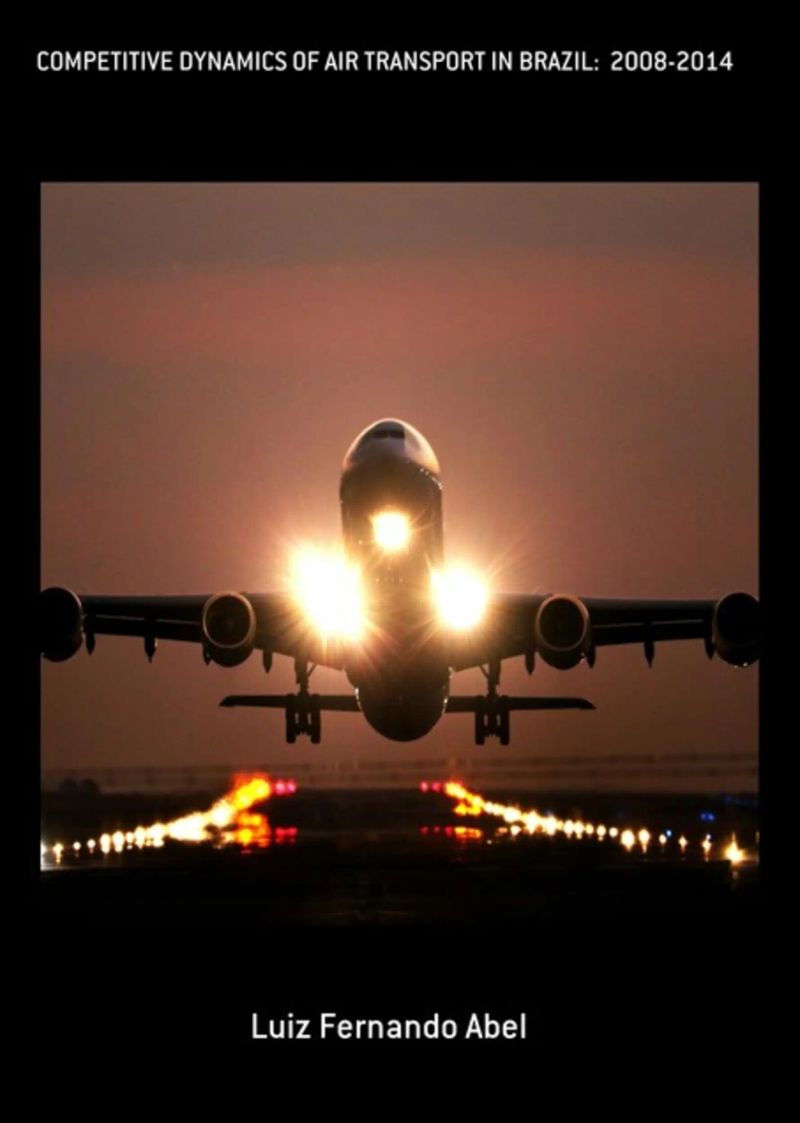
Competitive Dynamics Of Air Transport In Brazil: 2008-2014
By Luiz Fernando Abel


Length4h 54m
About this audiobook
Commercial aviation in Brazil has been facing great changes in the past years, from the regulatory point of view to a competition perspective, given the increase in demand, revision of past legislation and the rise of new players in this market. The airline business has showed to be very dynamic in Brazil, with the rise and fall of a number of companies. One of them specifically, called VARIG – Portuguese acronym for Viação Aérea Rio-Grandense -, which stopped operating domestic and international routes in 2006, changed the market significantly, since it was the longest standing air company in the country and also the market leader. This scenario of disruption, after VARIG's bankruptcy, gave room to the consolidation of other major companies already operating at that time – TAM and Gol -, as well as the emergence of Avianca Brazil and Azul, which absorbed part of the increasing demand for air transport in the country and placed this market into a new era of competition. All these factors combined with the flexibility given, due to revision of legislation - referring to prices and alliances, for example -, have transformed the way business in the industry are run. Hence the changes in the way air companies operate nowadays and provide different types of services. Thus, the purpose of this work is to understand what are the competitive advantages of the Brazilian airline companies to face the local competition, given the changes between 2008 and 2014 in this sector's environment. In addition, this work aims to identify competitive changes with possible new entrants to this market in the future.
Audiobook details
GenreBusiness and Economics
Length4 hrs 54 mins
Narrated byListen with 1,000+ voices
FormateBook with Audio
Publish dateJun 4, 2021
LanguageEnglish
Table of contents
1FUNDAÇÃO GETULIO VARGAS
2RESUMO
31.1. Research question
4consolidated themselves within this economic sector.
5different:
Show all chaptersShow less
6business strategy level, explorations of the relationships between resources, competition, and
7competitive advantage”.
8Kilometre) and Load factor.
9flown” Tacker, Fleming and Vasigh (2013, p. 19).
10Doganis&(2009)
11air passengers.
12regional aviation programme -, and a business association of Brazilian airline companies
13competitive dynamic to the one found in the South American nation.
14UTAir
155.1. Avianca Brazil
165.1.1. From OceanAir to Avianca Brazil
17Transbrasil combined (Binder, 2006).
18out of the turboprop Embraer and Fokker models.
195.1.2. Period of standardisation
20president of the company in that period.
21traffic airports of Sao Paulo and Rio de Janeiro.
22Air fleet
23back to 14 aircraft.
24models (18 in total).
25first than the latter.
26Flight ticket price and service
27passengers.
28Economia, 2015)
29Frequent flyer programme
30the programme.
31card for a partner bank.
32Destinos, 2015).
335.1.3. New visual identity and member of Star Alliance
345.2. Azul
355.2.1. A new player nationwide
36leaders in commercial aviation.
37Northeast of the country.
38the tightness” and fly from Viracopos.
39Air fleet
40Flight ticket price and service
41programme for the next flights.
42Frequent flyer programme
43another Azul flight.
44everything’s blue!” (Beting, 2012).
459 From June 2010.
465.2.3. Further domestic and international expansion
47numbers in the country.
48Social Development (BNDES).
495.3.1. Low cost carrier in the Brazilian market
50turnaround time).

Never Split the DifferenceChris Voss, Tahl Raz8h 7m4.4 (277.7K)$26 · $0.00
The Intelligent Investor Rev Ed.Benjamin Graham17h 48m4.3 (191.5K)$40 · $0.00
The Hard Thing About Hard ThingsBen Horowitz7h 57m4.2 (134.3K)$26 · $0.00

Boundaries for LeadersHenry Cloud7h 36m4.3 (3.6K)$26 · $0.00

The Joys Of CompoundingGautam Baid17h 34m4.5 (2.5K)$18 · $0.00
Basic EconomicsThomas Sowell18h 32m4.5 (29.3K)$28 · $0.00

Poor Charlie’s AlmanackGrover Gardener, Charles T. Munger13h 9m4.5 (24.7K)$18 · $0.00

The Ambuja StoryNarotam Sekhsaria13h 59m4.5 (830)$33 · $0.00

The Secret Door to SuccessFlorence Scovel Shinn2h 25m4.5 (2.1K)$1.20 · $0.00

This Is Going to HurtAdam Kay5h 47m4.4 (444.7K)$24 · $0.00

Big TrustShadé Zahrai, Fayçal Sekkouah8h 36m4.6 (406)$26 · $0.00
The Intelligent Investor Third EditionBenjamin Graham, Jason Zweig20h4.4 (156.6K)$46 · $0.00

Bottle of LiesKatherine Eban14h 25m4.4 (12K)$33 · $0.00

The Antiracist Business BookTrudi Lebrón6h 10m4.6 (275)$17 · $0.00

The FormulaJoshua Robinson, Jonathan Clegg10h 41m4.4 (6.9K)$29 · $0.00

Let Them LeadJohn U. Bacon7h 10m4.5 (1.4K)$24 · $0.00

Secrets of the Millionaire MindT. Harv Eker5h 11m4.4 (301.4K)$24 · $0.00

The Person You Mean to BeDolly Chugh9h 6m4.4 (7.2K)$29 · $0.00

BoundlessNick Kostov, Sean McLain9h 17m4.5 (1.1K)$29 · $0.00

Everyday DharmaSuneel Gupta5h 2m4.5 (761)$20 · $0.00
You may also like

Der StruwwelpeterHeinrich Hoffmann2m4.0 (20.2K)$2.30

CategoriesAristotle1h 34m4.0 (1.9K)$2.30

The Washing Machine Has Seventeen Programs, and I Use One - How to Wash, Dry, and Care for Clothes Without Shrinking Sweaters, Dyeing Whites, or Studying Care Labels Like Ancient HieroglyphsMax Paradox6h 18m4.4 (131)$7.80 · $0.00
Volkswagen Transporters T4 Workshop ManualOwners Edition4m4.4 (42)$24 · $0.00

VegetarianNaumann & Göbel Verlag3h 23m4.4 (15)$5 · $0.00

The Book of CheeseWalter Warner Fisk, Charles Thom11h 9m4.4 (12)$2.30

On Generation and CorruptionAristotle2h 58m3.5 (307)$1.80 · $0.00

Play That Funky MusicBill Brown Jr.23m$2

Structural Reinforced Concrete AnalysisHugo Villalobos16h 2m$99

Welding, Composites, and Building MaterialsIvar Lundqvist15h 17m$70
Motor-Car Principles The Gasoline AutomobileRoger B. Whitman6h 2m$2.30

Musette in GBill Brown Jr.19m$2

I Just Wanna Make Love to YouBill Brown Jr.40m$4
Engineering Electromagnetics for Antennas and MicrowavesKarim Haddadi11h 22m$80

Prelude in Cm (Chopin)Bill Brown Jr.30m$2

History of SportsKenny Abdo17m$2
Basic Electrical Engineering for BeginnersAndreas Lindqvist9h 7m$45

How to Make Money Flipping Houses - How to Find Undervalued Properties, Control Renovation Costs, and Sell at the Right PriceJACK FLIPWELL4h 31m$7.70 · $0.00

Cowboy SongBill Brown Jr.1h 21m$10
HideawayBill Brown Jr.1h 20m$10