
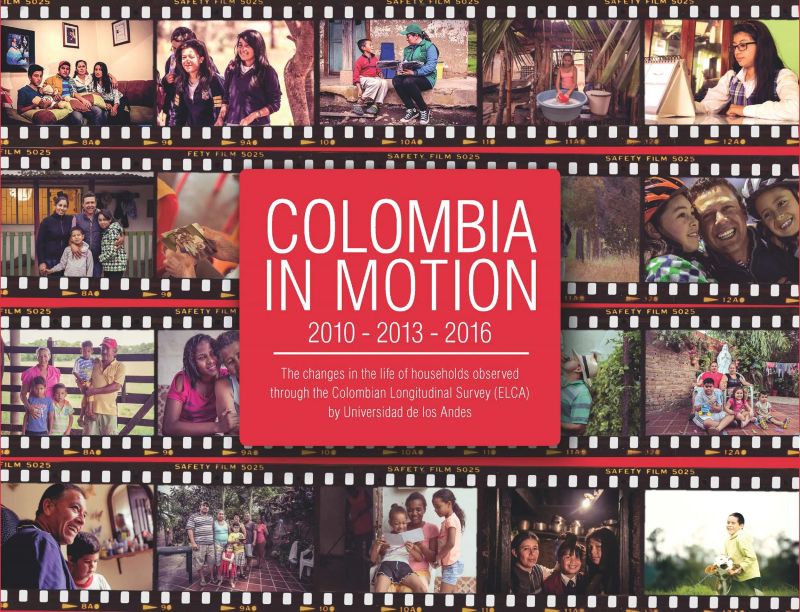
Colombia in motion 2010-2013-2016
The changes in the life of households based on the Colombian Longitudinal Survey (ELCA) by Universidad de los Andes.By Lina María Castaño Mesa


Length9h 14m
About this audiobook
The changes in the life of households based on the Colombian Longitudinal Survey (ELCA) by Universidad de los Andes.
The Colombian Longitudinal Survey by the Universidad de los Andes (ELCA by its acronym in spanish), is the first survey of this type that has been
undertaken in Colombia, and that has, to date, three rounds: the baseline in 2010, the first followup round in 2013, and the second follow-up round
in 2016. The project is being developed by the Department of Economics and its objective is to contribute to research on the country by using unique
sources of information that allow for a more precise analysis to be undertaken on the dynamics of households and the changes in their quality of
life over time. Over a decade, ELCA aims to follow more than ten thousand households in urban and
rural zones in Colombia; until now there have been six follow-up years.
Audiobook details
GenrePsychology
Length9 hrs 14 mins
Narrated byListen with 1,000+ voices
FormateBook with Audio
Publish dateApr 1, 2018
LanguageEnglish
Table of contents
1COLOMBIA IN MOTION 2010 - 2013 - 2016
2© Jaimie Brzezinski, for the translation into English
3table oF contents
4Chapter 9 politiCs and reConCiliation: a CritiCal junCture for state building
5acknowledgements
Show all chaptersShow less
6ELCA
7Source: Authors' own calculations
8Tests
91.2.1. household Coverage
10TOTAL
11Table 1.3. survey Coverage of households by zone
12Table 1.4. household Coverage by region 2010-2016
13URBAN HOUSEHOLDS
14RURAL HOUSEHOLDS
15T O T A L
16Urban
17Rural Micro-regions
18graph 1.1. Coverage by zone and sample of people for follow-up
19Urban Rural micro-regions
20graph 1.2. main reasons for household loss in 2016
21Children
22Total
23Per capita annual expenditure
24referenCes
252.1. introduCtion
26(Córdoba).
272.2. metodology
282.2.1. ConCeptual framework
292.2.2. the model of analysis
302.2.3. the population and variables of analysis
31graph 2.1. number of women by age in 2016 by zone
32Rural micro-regions
3315 years
3416 years
3517 years
3618 years
3720 years
3821 years
3922 years
4023 years
4124 years
422.3. CharaCterization of the females under study
4321-24 years cohort
44Education
45N
46livelihood from a market stall in Corabastos.
472010 Adolescent pregnancy
482016 Adolescent pregnancy
49Wealth tertile
50Contextual factors
What to Make of a LifeJim Collins13h 31m4.4 (794)$33 · $0.00
Braving the TruthRachel Held Evans11h 31m4.7 (359)$29 · $0.00
Level UpRob Dial7h 42m4.6 (3.3K)$26 · $0.00

As a JewSarah Hurwitz8h 36m4.6 (1.2K)$26 · $0.00
Saint Joan (Annotated)George Bernard Shaw6h 20m4.6 (1.2K)$1.20 · $0.00

Burn the HaystackJennie Young, PhD9h 30m4.6 (543)$29 · $0.00

Woman and the New Race (Annotated)Margaret Sanger6h 30m4.6 (1K)$1.99 · $0.00

Good InsideBecky Kennedy9h 55m4.5 (59.3K)$29 · $0.00
The Mis-Education of the NegroCarter Godwin Woodson5h 4m4.5 (29.4K)$1.20 · $0.00

Du Bois: EssaysW.E.B. Du Bois6h 22m4.6 (1.5K)$1 · $0.00

The North American Indian (Illustrated Edition)Edward S. Curtis, Frederick Webb Hodge5h 59m4.6 (1.4K)$2 · $0.00

Valley of the BirdtailAndrew Stobo Sniderman, Douglas Sanderson10h 1m4.6 (2.4K)$29 · $0.00
Lies My Therapist Told MeGreg E. Gifford9h 3m4.6 (503)$29 · $0.00
Disturbed in Their NestsAlephonsion Deng, Judy A. Bernstein11h 22m4.6 (595)$23 · $0.00
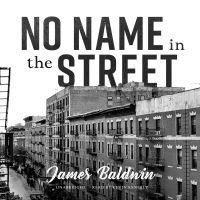
No Name in the StreetJames Baldwin5h4.5 (8.5K)$20 · $0.00
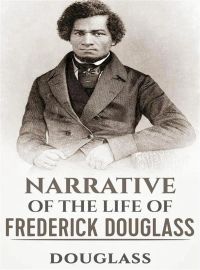
Narrative of the Life of Frederick DouglassFrederick Douglass4h 13m4.5 (309.9K)$1.20 · $0.00
Magic SeasonWade Rouse6h 41m4.6 (855)$24 · $0.00

Consent Laid BareChanel Contos7h 11m4.5 (1.7K)$24 · $0.00

The Big RevealSasha Velour6h 15m4.5 (2.1K)$24 · $0.00

EssaysGeorge Orwell26h 38m4.5 (8.4K)$4 · $0.00
You may also like

The Book of Household Management Isabella Mary Beeton53h 12m3.8 (1.4K)Free

Miss Marjoribanks (Annotated)Mrs. Olifant22h 15m4.0 (4K)$1.99 · $0.00

Where the Rivers Flow NorthHoward Frank Mosher6h 30m4.1 (664)$20
How Green Was My ValleyRichard Llewellyn16h 23m4.3 (22.8K)$28
The Small House at AllingtonAnthony Trollope28h 49m4.1 (8.8K)$1.99 · $0.00
Little Town on the PrairieLaura Ingalls Wilder6h 56m4.3 (115.2K)$1 · $0.00

Little House on the Prairie (Annotated)Laura Ingalls Wilder7h 16m4.2 (15.9K)$2 · $0.00
Tethered to Other StarsElisa Stone Leahy8h 39m4.5 (508)$26 · $0.00

The Cherry HarvestLucy Sanna9h 12m3.6 (3.2K)$29 · $0.00

The History of Genghis KhanJacob Abbott7h3.8 (1.2K)$6 · $0.00

So BigEdna Ferber10h 22m4.1 (17.1K)$2 · $0.00
John Halifax, Gentleman (Annotated)Dinah Craik22h 23m4.3 (1K)$2 · $0.00
O Pioneers!Willa Cather5h 51m4.0 (70.1K)$2.30

Charlie the Ranch DogRee Drummond7m4.2 (4.9K)$4 · $0.00

Inside The EmpireBob Klapisch, Paul Solotaroff6h 51m4.0 (1.1K)$24 · $0.00

The RiftWalter Jon Williams30h 18m3.8 (2.9K)$30

JANE OF LANTERN HILL (Children's Book)Lucy Maud Montgomery12h 10m4.3 (15.8K)$1.99 · $0.00
Lark Rise to CandlefordFlora Thompson21h 48m4.2 (20.8K)$2.30 · $0.00
The Fire Bell Strikes at MidnightShirley Freitas14h 16m4.5 (28)$14 · $0.00

Englisch lernen Audio - Rundgang durch New YorkSpotlight Verlag1h4.4 (12)$13