
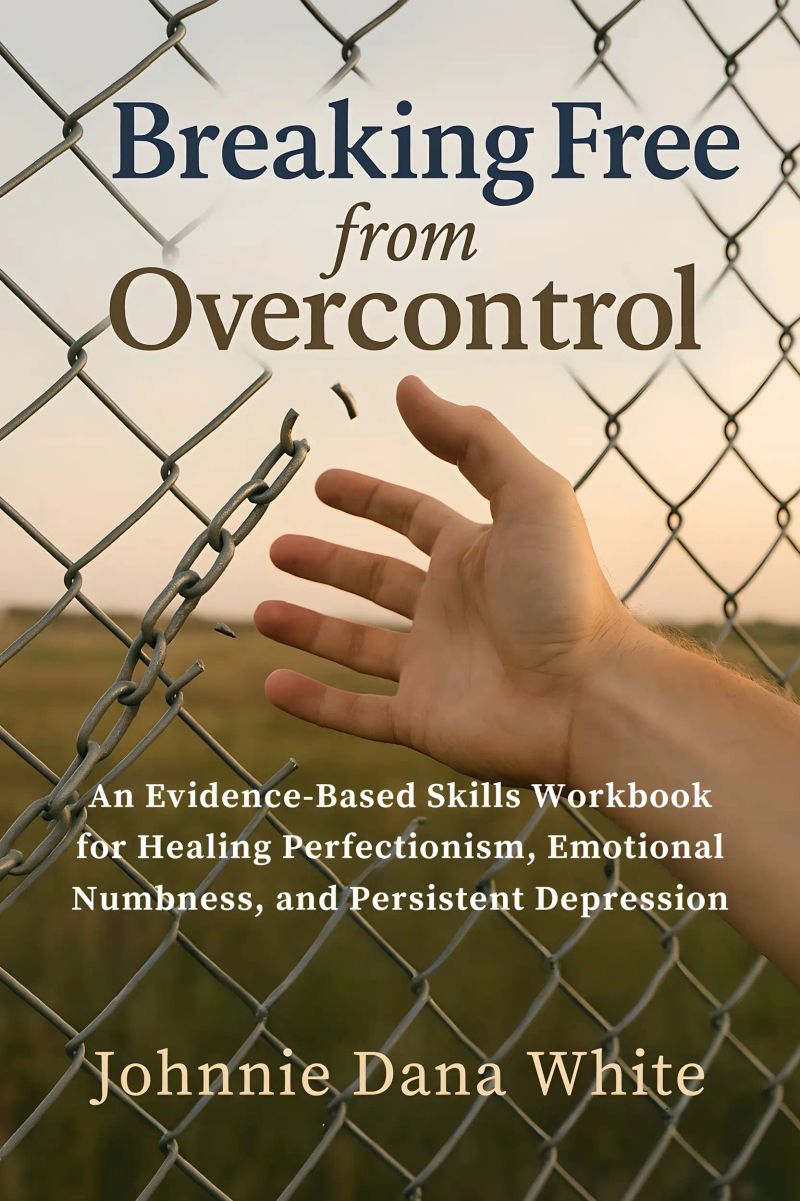
Breaking Free from Overcontrol
An Evidence-Based Skills Workbook for Healing Perfectionism, Emotional Numbness, and Persistent DepressionBy Johnnie Dana White


Length5h 55m
About this audiobook
Break the Invisible Prison of Perfect Control
Have you built a life that looks “fine” on the outside, but feels restrained or emotionally flat on the inside? You may be the dependable one—highly responsible, self-disciplined, and careful—yet still struggle with perfectionism, persistent low mood, or relationships that feel distant even when you truly care.
Breaking Free from Overcontrol is a skills-based workbook for people who tend toward rigid self-control—often called overcontrol. It offers practical exercises drawn from established clinical research on overcontrol, social connection, and behavior change, with a focus on building flexibility, healthy emotional expression, and stronger relationships. This is an independent educational resource and is not connected to any proprietary therapy program or trademarked method.
This workbook helps you work on
Perfectionism and all-or-nothing thinking
Emotional shutdown or numbness, and difficulty showing feelings
Social disconnection, loneliness, or relationships that feel overly formal
Rigid habits and rules that reduce spontaneity and closeness
Persistent low mood or ongoing distress that has not improved as you hoped
Control-driven coping patterns, including food- and routine-related control
Social communication challenges, including difficulties with openness and warmth
Note: This workbook is not a diagnostic tool and does not claim to treat any condition. If symptoms are severe or worsening, seek professional support.
What you’ll practice
Connection skills that support warmth, approachability, and genuine rapport
Self-reflection exercises to reduce harsh self-judgment and increase curiosity
Flexibility training to loosen rigid thinking and rigid routines
Emotional alignment practices to better match inner experience with outward expression
Interpersonal tools for clearer communication, repair, and closeness
Structured tracking to support steady progress over time
How the workbook is structured
Each section includes:
Step-by-step exercises
Real-life examples (fictionalized composites)
Common obstacles and practical ways to respond
Simple progress checks to notice change without perfectionism taking over
Who it’s for
Adults who identify with overcontrol: high standards, caution, emotional restraint, and difficulty receiving support
Readers who want a practical, skills-first approach to improving connection, flexibility, and emotional expression
Professionals seeking an additional client-facing resource to supplement appropriate care
Audiobook details
GenreSelf-Help, Psychology
Length5 hrs 55 mins
Narrated byListen with 1,000+ voices
FormateBook with Audio
Publish dateSep 6, 2025
LanguageEnglish
Table of contents
1Breaking Free from Overcontrol
2Chapter 1: When Self-Control Becomes Self-Destruction
3The Overcontrol Epidemic Hidden in Plain Sight
4The Paradox of Excessive Self-Control
5Recognizing Overcontrol in Daily Life
Show all chaptersShow less
6The Promise of Radical Openness
7The Brief Overcontrol Scale
8Daily Life Overcontrol Checklist
9Personal Reflection Questions
10Building Awareness
11Key Insights From This Foundation
12Chapter 2: The Science of Social Connection
13The Evolutionary Foundation of Social Signaling
14Understanding Polyvagal Theory in Simple Terms
15The Vicious Cycle of Isolation
16Mirror Neurons and Human Connection
17The Evolutionary Importance of Emotional Expression
18How Masked Emotions Prevent Tribal Belonging
19Research on Neuroplasticity and Change Potential
20Practical Assessment and Awareness Building
21Understanding Your Social Signaling Patterns
22Chapter 3: The Many Faces of Overcontrol
23Treatment-Resistant Depression: When Sadness Goes Underground
24Anorexia Nervosa and Restrictive Eating Patterns
25Autism Spectrum Disorders and the Overcontrolled Presentation
26Personality Disorders and Overcontrol Patterns
27Chronic Anxiety and Perfectionism
28Transdiagnostic Overcontrol Patterns
29Why Traditional Treatments Often Fail
30The Promise of a Different Approach
31Assessment Tools for Overcontrol Recognition
32Symptom Tracking for Multiple Domains
33Preparing for Transformation
34Chapter 4: What Is Radical Openness?
35The Three Pillars of Radical Openness
36Understanding the Biosocial Theory of Overcontrol
37Moving from Emotional Control to Authentic Expression
38Cultural Factors in Overcontrol Development
39Practical Exercises for Building Openness
40The Courage Required for Openness
41Building a Foundation for Change
42Chapter 5: Rewiring Your Social Brain
43Understanding Neuroplasticity and Change Potential
44Learning Social Signaling Fundamentals
45Mirror Neurons and Human Connection
46The Evolutionary Importance of Emotional Expression
47How Masked Emotions Prevent Tribal Belonging
48Practical Social Brain Rewiring Exercises
49Building New Neural Pathways for Connection
50Overcoming Common Barriers to Social Brain Change
More from Johnnie Dana White

Learning to PrayJames Martin13h 24m4.5 (3.4K)$33 · $0.00

The Happiest Man on EarthEddie Jaku3h 48m4.6 (178K)$7 · $0.00

Finding MeViola Davis9h 15m4.6 (256.4K)$29 · $0.00

Spiritual AnatomyDaaji Kamlesh D. Patel9h 47m4.7 (319)$29 · $0.00

The Dangerous Truth about Today’s MarijuanaLaura Stack CSP, MBA9h 57m4.7 (385)$20 · $0.00

The Gospel according to Spiritualism (Translated)Allan Kardec14h 39m4.6 (3.9K)$5.70 · $0.00

Birdie & HarlowTaylor Wolfe7h 50m4.6 (6.5K)$26 · $0.00

CrossroadsKaleb Dahlgren7h 56m4.6 (4.9K)$26 · $0.00

Life on the BridgeKaelynn Partlow5h 40m4.6 (1.1K)$24 · $0.00

Keep Your Love OnDanny Silk9h 4m4.6 (8.1K)$10 · $0.00

The Tao of Joy Every DayDerek Lin10h 24m4.6 (762)$20 · $0.00

UndividedVicky Beeching9h 2m4.6 (1.3K)$29 · $0.00

HE CAN WHO THINKS HE CAN & OTHER BOOKS ON SUCCESSOrison Swett Marden5h 54m4.6 (1.2K)$1.99 · $0.00
Level UpRob Dial7h 42m4.6 (3.3K)$26 · $0.00

Burn the HaystackJennie Young, PhD9h 30m4.6 (543)$29 · $0.00

ACRES OF DIAMONDS: Our Every-day Opportunities (Wisdom & Empowerment Series) (Annotated)Russell Conwell2h 26m4.6 (1K)$2 · $0.00

Good InsideBecky Kennedy9h 55m4.5 (59.3K)$29 · $0.00

The Lost VoiceGreta Morgan8h 30m4.7 (285)$26 · $0.00

Stripped DownBunnie Xo8h 25m4.5 (32.9K)$26 · $0.00

UnthinkableJamie Raskin15h 8m4.5 (9.3K)$8 · $0.00

What to Make of a LifeJim Collins13h 31m4.4 (794)$33 · $0.00

TerraformPropaganda5h 39m4.7 (594)$24 · $0.00

Southern Horrors: Lynch Law in All Its Phases (Annotated)Ida B. Wells-Barnett2h 44m4.6 (1.3K)$2 · $0.00

Hour of the HeartIrvin D. Yalom, Benjamin Yalom8h 19m4.6 (2.3K)$26 · $0.00

Braving the TruthRachel Held Evans11h 31m4.7 (359)$29 · $0.00
Level UpRob Dial7h 42m4.6 (3.3K)$26 · $0.00

As a JewSarah Hurwitz8h 36m4.6 (1.2K)$26 · $0.00

Saint Joan (Annotated)George Bernard Shaw6h 20m4.6 (1.2K)$1.20 · $0.00
Burn the HaystackJennie Young, PhD9h 30m4.6 (543)$29 · $0.00

Woman and the New Race (Annotated)Margaret Sanger6h 30m4.6 (1K)$0.99 · $0.00
Good InsideBecky Kennedy9h 55m4.5 (59.3K)$29 · $0.00

The Mis-Education of the NegroCarter Godwin Woodson5h 4m4.5 (29.4K)$1.20 · $0.00

Du Bois: EssaysW.E.B. Du Bois6h 22m4.6 (1.5K)$1 · $0.00

The North American Indian (Illustrated Edition)Edward S. Curtis, Frederick Webb Hodge5h 59m4.6 (1.4K)$2 · $0.00

Valley of the BirdtailAndrew Stobo Sniderman, Douglas Sanderson10h 1m4.6 (2.4K)$29 · $0.00

Lies My Therapist Told MeGreg E. Gifford9h 3m4.6 (503)$29 · $0.00

Disturbed in Their NestsAlephonsion Deng, Judy A. Bernstein11h 22m4.6 (595)$23 · $0.00

No Name in the StreetJames Baldwin5h4.5 (8.5K)$20 · $0.00

Narrative of the Life of Frederick DouglassFrederick Douglass4h 13m4.5 (309.9K)$1.20 · $0.00

Magic SeasonWade Rouse6h 41m4.6 (855)$24 · $0.00
You may also like

The Rule of Saint Benedict (Annotated)Benedict of Nursia3h 56m4.0 (8.6K)$2 · $0.00

Alternatives to SexStephen McCauley9h 23m3.6 (1.2K)$20 · $0.00

A Dog Named BooLisa Edwards7h 50m4.0 (1.2K)$22
RebootJerry Colonna7h 34m4.0 (3.3K)$26 · $0.00

Addicted to PerfectVitale Buford7h 56m4.1 (1.6K)$20

The Cleaner of ChartresSalley Vickers9h 11m3.9 (8.5K)$20 · $0.00

Things No One Else Can Teach UsHumble the Poet6h 27m4.2 (3K)$24 · $0.00
This Close to HappyDaphne Merkin9h 31m3.6 (2K)$20 · $0.00

Hit HardJoey Kramer6h 6m3.9 (1K)$24 · $0.00

Chronicles of The Juice ManSoren Baker, Juicy J7h 17m4.2 (568)$24 · $0.00

Black Girls Must Have It AllJayne Allen7h 53m4.0 (6K)$26 · $0.00

#IMomSoHardKristin Hensley, Jen Smedley7h 19m4.3 (7.3K)$24 · $0.00

The Lamplighter (Annotated)Maria S. Cummins16h 15m4.0 (7K)$2 · $0.00

Secrets to Life and HappinessChris Widener2h 26m4.0 (28)$18

YANG JOON-IL MAYBE : Password of You and I (Korean-English special edition)Ice cream, Yang Joon-il (JIY) 양준일2h 42m4.9 (28)$6 · $0.00

Overcoming AddictionsAnthony Ekanem43m$4 · $0.00

How to Keep Your Sanity as New ParentsAurora Brooks1h 6m$3.50 · $0.00

Adoption- A Beacon of Hope for Children in NeedAurora Brooks1h 13m$3.50 · $0.00

FriendingGina Handley Schmitt MA, LMHC3h 24m4.1 (234)$15 · $0.00

No Other HomeMatt Besler5h 5m4.4 (186)$15