
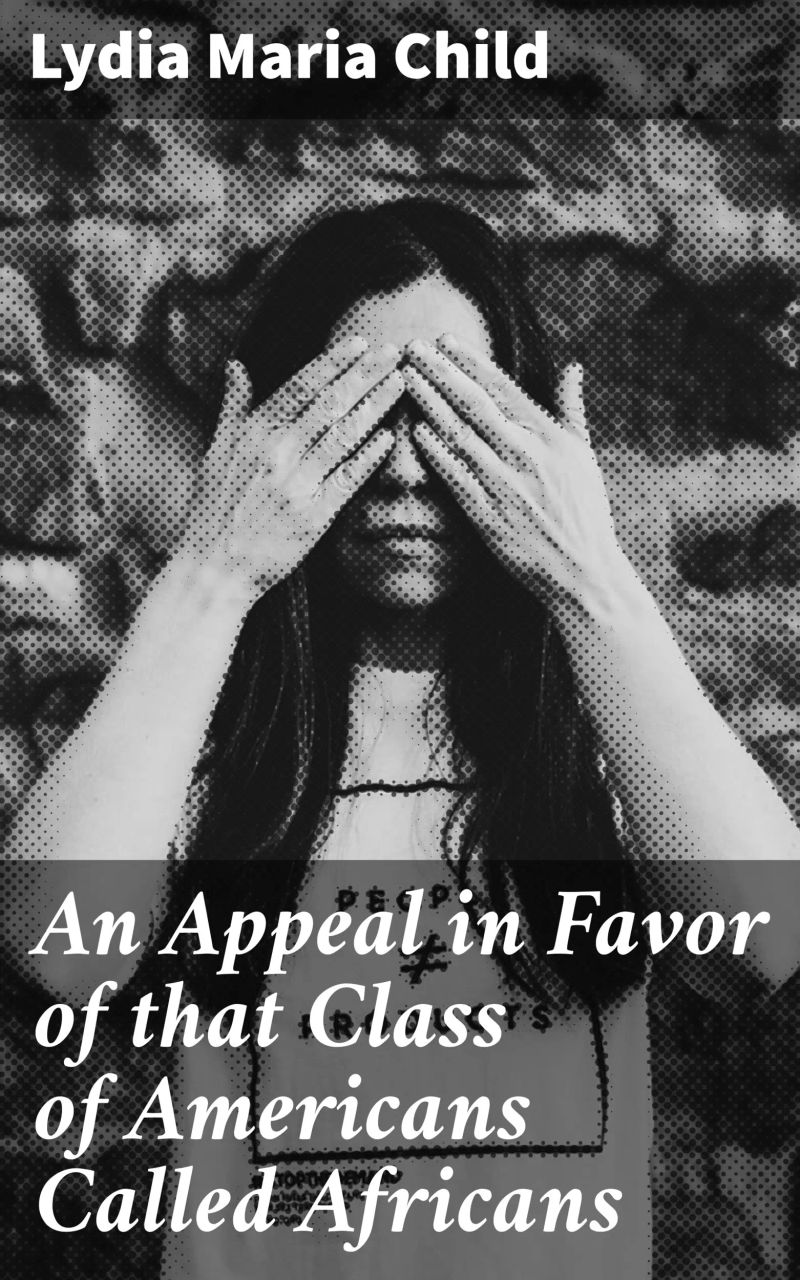
An Appeal in Favor of that Class of Americans Called Africans
A Bold Appeal for Freedom: Fighting for Equality and Justice in AmericaBy Lydia Maria Child


Length9h 35m
About this audiobook
In 'An Appeal in Favor of that Class of Americans Called Africans,' Lydia Maria Child passionately advocates for the rights of African Americans, a powerful piece emerging against the backdrop of 19th-century abolitionist movements. Child employs a compellingly rational and emotive literary style, blending moral argumentation with poignant narratives that humanize the African American experience. This work stands as a vital document within the larger corpus of American abolitionist literature, calling into question the prevailing societal and racial prejudices of her time while demanding justice and equality for an oppressed class. Lydia Maria Child, an influential writer, and social reformer, was deeply affected by the injustices she observed in society. Growing up in a progressive New England family, her abolitionist convictions were shaped by her own experiences with social inequities. Her extensive involvement in reform movements, including women'Äôs rights and Native American rights, lends credibility to her impassioned arguments in this book, as she seeks not only to elevate the plight of African Americans but also to challenge her contemporaries'Äô moral compasses. This seminal work is essential for readers interested in American history, social justice, or literary studies. By engaging with Child's profound insights, readers will gain a deeper understanding of the complexities surrounding race and equality in America while appreciating the eloquence and courage of one of the nation's earliest voices for justice against oppression.
Audiobook details
Rating★★★★ 4.2 (38)
Includes Goodreads
GenrePsychology
Length9 hrs 35 mins
Narrated byListen with 1,000+ voices
FormateBook with Audio
Publish dateApr 25, 2021
LanguageEnglish
Table of contents
1Introduction
2CHAPTER I.
3CHAPTER II.
4Proposition 1.—Slavery hereditary and perpetual.
5Prop. 2.—Labor compulsory and uncompensated, &c.
Show all chaptersShow less
6Prop. 3.—Slaves considered personal chattels, liable to be sold, pledged, &c.
7Prop. 4.—Slaves can have no legal claim to any property.
8Prop. 5.—No colored man can be evidence against a white man, &c.
9Prop. 6.—The master has absolute power to punish a slave, &c.
10Prop. 7.—The slave never allowed to resist a white man.
11Prop. 8.—Slaves cannot redeem themselves or change masters.
12Prop. 9.—Slave unprotected in his domestic relations.
13Prop. 10.—The laws obstruct emancipation.
14Prop. 11.—Operation of the laws interferes with religious privileges.
15Prop. 12.—Whole power of the laws exerted to keep negroes in ignorance.
16Prop. 13.—There is a monstrous inequality of law and right.
17Prop. 14.—The laws operate oppressively on free colored people.
18CHAPTER III.
19CHAPTER IV.
20CHAPTER V.
21CHAPTER VI.
22CHAPTER VII.
23CHAPTER VIII.
24INDEX.
More from Lydia Maria Child
Slavery's Pleasant Homes & Other TalesLydia Maria Child3h 14m3.6 (14)$1.99 · $0.00

The American Frugal Housewife: EssaysLydia Maria Child5h 27m3.8 (1.9K)$1.99 · $0.00
Slavery's Pleasant Homes & Other Tales (Annotated)Lydia Maria Child3h 20m$2 · $0.00

The American Frugal Housewife (Annotated)Lydia Maria Child5h 23m3.8 (1.9K)$2 · $0.00
7 FOOTSTEPS OF FEAR (Annotated)Lydia Maria Child3h 18m$2 · $0.00
A Romance of the RepublicLydia Maria Child13h 19m3.2 (59)$2 · $0.00

The Magician's Show Box, and Other StoriesLydia Maria Child, Caroline Sturgis Tappan4h 43m$1 · $0.00

HobomokLydia Maria Child6h 45m3.4 (723)$2 · $0.00

The American Frugal HousewifeLydia Maria Child5h 18m3.8 (2.5K)$2 · $0.00
Hobomok (Annotated)Lydia Maria Child6h 54m2.9 (450)$0.99 · $0.00
What to Make of a LifeJim Collins13h 31m4.4 (794)$33 · $0.00

Black AF HistoryMichael Harriot15h 43m4.7 (14.6K)$33 · $0.00
Bad Fat Black GirlSesali Bowen6h 32m4.7 (2.8K)$24 · $0.00

Invisible StormJason Kander6h 48m4.7 (3.2K)$24 · $0.00

I Am The StormJanice Dean9h4.6 (1.5K)$8 · $0.00

On Democracies and Death CultsDouglas Murray10h 38m4.6 (6.5K)$29 · $0.00

TerraformPropaganda5h 39m4.7 (594)$24 · $0.00
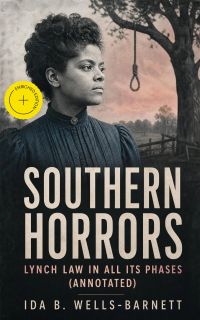
Southern Horrors: Lynch Law in All Its Phases (Annotated)Ida B. Wells-Barnett2h 44m4.6 (1.3K)$2 · $0.00
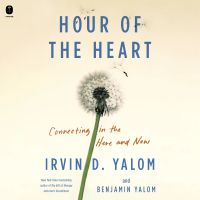
Hour of the HeartIrvin D. Yalom, Benjamin Yalom8h 19m4.6 (2.3K)$26 · $0.00

Braving the TruthRachel Held Evans11h 31m4.7 (359)$29 · $0.00
Level UpRob Dial7h 42m4.6 (3.3K)$26 · $0.00

As a JewSarah Hurwitz8h 36m4.6 (1.2K)$26 · $0.00
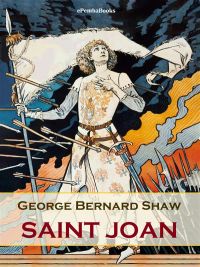
Saint Joan (Annotated)George Bernard Shaw6h 20m4.6 (1.2K)$1.20 · $0.00
Burn the HaystackJennie Young, PhD9h 30m4.6 (543)$29 · $0.00

Woman and the New Race (Annotated)Margaret Sanger6h 30m4.6 (1K)$0.99 · $0.00

Good InsideBecky Kennedy9h 55m4.5 (59.3K)$29 · $0.00
The Mis-Education of the NegroCarter Godwin Woodson5h 4m4.5 (29.4K)$1.20 · $0.00
Du Bois: EssaysW.E.B. Du Bois6h 22m4.6 (1.5K)$1 · $0.00

The North American Indian (Illustrated Edition)Edward S. Curtis, Frederick Webb Hodge5h 59m4.6 (1.4K)$2 · $0.00

Valley of the BirdtailAndrew Stobo Sniderman, Douglas Sanderson10h 1m4.6 (2.4K)$29 · $0.00
You may also like
Anarchism and Other EssaysEmma Goldman4h 38m4.2 (9.8K)$2.30
Suicidal EmpathyGad Saad8h 24m4.1 (734)$28 · $0.00
The LawFrédéric Bastiat2h 7m4.4 (17K)$10

Hannah ArendtAnne C. Heller4h 11m4.0 (625)$15 · $0.00
NobodyMarc Lamont Hill6h 5m4.4 (2.8K)$20
America's Cultural RevolutionChristopher F. Rufo11h 24m4.5 (3.9K)$29 · $0.00

Policing the Black ManAngela J. Davis10h 11m4.3 (1.6K)$20 · $0.00

The Collected WorksThomas Paine77h 16m4.4 (291)$0.99 · $0.00
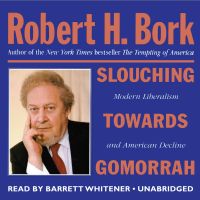
Slouching towards GomorrahRobert H. Bork13h 8m3.9 (1.4K)$23 · $0.00
Southern Horrors: Lynch Law in All Its Phases (Annotated)Ida B. Wells-Barnett2h 44m4.6 (1.3K)$2 · $0.00

AlmightyDan Zak10h 49m4.1 (473)$20 · $0.00

The Abolition of SexKara Dansky4h 8m4.5 (442)$15 · $0.00
Affirmative Action Around the WorldThomas Sowell7h 24m4.4 (1.1K)$23
Bad NewsBatya Ungar-Sargon7h 50m4.1 (981)$20 · $0.00

Jihad AcademyNicolas Hénin4h 28m4.0 (405)$14
Under Western EyesJoseph Conrad10h 53m4.0 (22.8K)$1 · $0.00
Policing the WombMichele Goodwin13h 15m4.5 (481)$23

Southern Horrors: Lynch Law in All Its PhasesIda B. Wells-Barnett59m4.4 (990)Free

The Third CoastThomas Dyja17h 45m3.8 (2K)$23

2009 Human Rights Report: China (includes Tibet, Hong Kong, and Macau)United States Department of State6h 47m$2 · $0.00