
Audio only
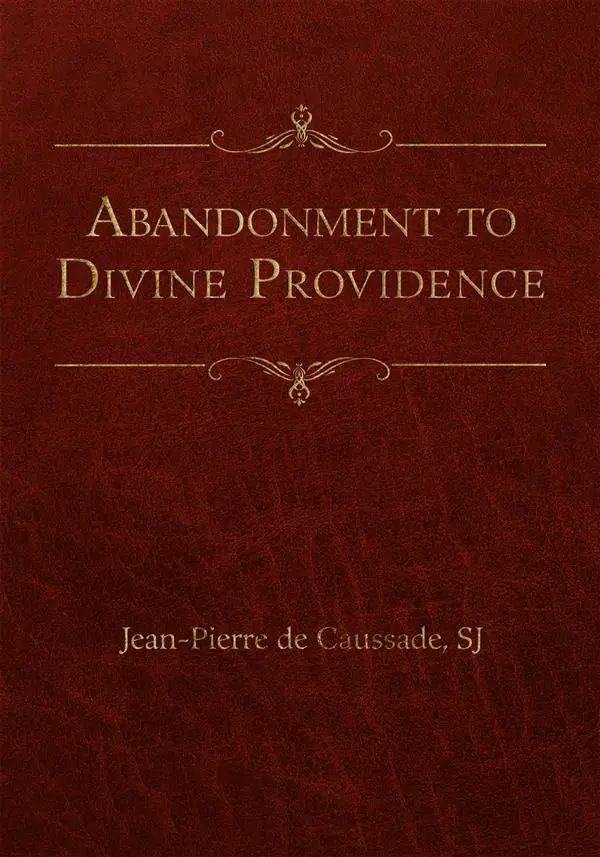
Abandonment to Divine Providence
By Jean-Pierre de Caussade


Length6h
About this audiobook
“All will be well if we live in the present moment and give ourselves over into the loving hands of our provident God.” —From the Introduction
Abandonment to Divine Providence by Jean-Pierre de Caussade, SJ, is considered one of the world’s great spiritual classics. This collection of brief meditations has guided countless men and women—including many canonized saints—toward greater peace, trust, and confidence in God’s provident love since its first printing in 1751.
This new edition revives de Caussade’s wisdom for contemporary readers with an updated but faithful translation of the original French, plus new reflections and prayers by Sr. Mary Mark Wickenhiser, FSP, to help readers live and grow in trustful surrender to God in their daily lives. A rare appendix includes four short treatises and several prayers on the theme of abandonment by prominent French spiritual writers, including St. Francis de Sales, from the eighth French edition of Abandonment to Divine Providence. Includes a Forward by Fr. Timothy Gallagher, OMV.
Audiobook details
Rating★★★★ 4.4 (16.1K)
Includes Goodreads, Amazon, LibraryThing, StoryGraph
GenreSpirituality and Religion
Length6 hrs
Narrated byListen with 1,000+ voices
FormateBook with Audio
Publish dateMay 15, 2023
LanguageEnglish
Table of contents
1Introduction
2Foreword
3Introduction
4Preface from the Original French Edition
5Book One: The Nature and Excellence of the Virtue of Holy Abandonment
Show all chaptersShow less
6Chapter I. The holiness of the saints of the Old Testament, Joseph, and Mary herself consisted in fidelity to the will of God
7Chapter II. The duties of each moment are shadows that veil God’s will
8Chapter III. How much easier holiness becomes when considered from this point of view
9Chapter IV. Perfection does not consist in understanding God’s will but in doing it
10Chapter V. Reading and other pious exercises sanctify us only insofar as they are channels of God’s will
11Chapter VI. The mind and other human faculties are useful only insofar as they are instruments of the divine action
12Chapter VII. There is no enduring peace except in obedience to God’s will
13Chapter VIII. The perfection of souls and the degree of excellence of different states in life are proportionate to their conformity to the will of God
14Chapter IX. The secret of holiness is love for God’s will
15Book Two: The Divine Action Works Unceasingly for the Sanctification of Souls
16Chapter I. The divine action is everywhere and always, present, but only visible to the eyes of faith
17Chapter II. The divine action is visible to the eyes of faith even when it is hidden under appearances repugnant to the senses
18Chapter III. Every moment God’s will offers us infinite blessings, which we receive in proportion to our faith and love
19Chapter IV. God reveals himself to us in mysterious ways in ordinary events as wonderfully and truly as he did in the great events of history and the Holy Scriptures
20Chapter V. The divine action continues to write in our hearts the revelation begun in Holy Scripture, but the characters used in this writing will be visible only on the day of judgment
21Chapter VI. Divine love is communicated to us under the veil of creatures, as Jesus communicates himself to us under the veil of the eucharistic species
22Chapter VII. The divine action, the work of God, is treated unworthily and disregarded in its daily manifestation by many Christians, as Jesus was mistreated by many people of his time
23Chapter VIII. Everything that comes to us at the present moment is most profitable, because it is intended for us personally
24Chapter IX. The present moment is a continuous source of holiness
25Chapter X. The present moment is the manifestation of God’s name and the coming of his kingdom
26Chapter XI. The divine will inspires souls to seek the highest degrees of holiness; they have only to abandon themselves to this divine action
27Chapter XII. Only divine activity can make us holy, for it alone forms us according to the divine model of our perfection
28Book Three: On the Nature and Excellence of the State of Abandonment
29Chapter I. Divine activity in the soul cannot be perceived
30Chapter II. The divine action guides souls in whom God lives through every kind of obscurity
31Chapter III. The state of abandonment contains in itself pure faith, hope, and charity
32Chapter IV. The state of abandonment involves the most heroic generosity
33Chapter V. Abandonment with pure faith is more meritorious than exceptional good works
34Chapter VI. Abandonment involves submission in all things
35Chapter VII. Every soul is called to enjoy the infinite benefits of abandonment
36Chapter VIII. All the riches of grace are the fruit of purity of heart and perfect self-abandonment
37Book Four: The Duties of Those Souls Called by God to the State of Abandonment
38Chapter I. God himself guides souls who wholly abandon themselves to him
39Chapter II. To reach the state of abandonment the soul must divest itself of all created things
40Chapter III. The state of abandonment calls for activity on our part
41Chapter IV. For a soul of goodwill God does all
42Chapter V. While valuing all the workings of divine grace, the soul should focus only on those of the present moment
43Chapter VI. For souls in this state, the duty of the present moment is the only rule
44Chapter VII. The docile soul will not seek to learn by what road God is conducting it
45Chapter VIII. The effects of total abandonment are marvelous
46Book Five: Trials Connected with the State of Abandonment
47Chapter I. Persons noted for wisdom and piety may subject the soul to unreasonable expectations
48Chapter II. The soul whom God raises to this state may be allowed to experience exterior defects and seemingly little worth
49Chapter III. The soul may suffer interior humiliations
50Chapter IV. The soul may suffer from self-doubt regarding its love of God and obedience to his will

A Little God Time for Women Morning & Evening DevotionalBroadStreet Publishing Group LLC15h 15m4.9 (1.2K)$10 · $0.00

The Chosen Presents: A Blended Harmony of the GospelsSteve Laube, Amanda Jenkins, Dallas Jenkins7h 8m4.9 (823)$10 · $0.00

Prayers from the Throne RoomBrian Simmons8h 55m4.9 (256)$10 · $0.00
31 Decrees of Blessing for Your LifePatricia King2h 38m4.8 (1.4K)$10 · $0.00

Loved BabySarah Philpott4h 51m4.8 (1.4K)$10 · $0.00

The QuranAllah23h 7m4.7 (136.1K)$1 · $0.00

The Secret of the RosaryLouis de Montfort6h 1m4.7 (16K)$2 · $0.00

The Holy Qur-an: Text, Translation and CommentaryAbdullah Yusuf Ali22h 16m4.7 (133K)$1 · $0.00

All of Grace (Annotated)Charles Spurgeon5h 1m4.7 (1.3K)$1.99 · $0.00

Steps to ChristEllen G. White3h 12m4.7 (13.8K)$2 · $0.00
The Doctrine and Selected CovenantsJoseph Smith13h 53m4.7 (10.4K)$1.99 · $0.00

Sinners in the Hands of an Angry God & Other Sermons (Annotated)Jonathan Edwards7h 51m4.7 (1.5K)$2 · $0.00

Swayam Ki AwaazPrem Rawat8h 34m4.7 (1.1K)$26 · $0.00

Behind the BadgeAdam Davis10h 18m4.7 (2.7K)$10 · $0.00
The New Human Revolution, vol. 1Daisaku Ikeda7h 46m4.7 (669)$12 · $0.00

You Are Worth ItKyle Carpenter, Don Yaeger8h 53m4.7 (4.8K)$29 · $0.00
Praying GraceDavid A. Holland3h 2m4.7 (658)$10 · $0.00

Evidence Not SeenDarlene Deibler Rose11h 11m4.6 (11.9K)$29 · $0.00

The Christ KeyChad Bird, Chad Bird7h 33m4.7 (592)$17.40 · $0.00

He and IGabrielle Bossis10h 12m4.7 (554)$17 · $0.00
You may also like
Thirsting for PrayerJacques Philippe3h 54m4.7 (2K)$19.99
Celebration of DisciplineRichard J. Foster7h 11m4.4 (51.8K)$24 · $0.00

LESSONS IN TRUTH - A Course of Twelve Lessons in Practical ChristianityH. Emilie Cady4h 18m4.5 (734)$1 · $0.00

The Science of Being Great: Personal Self-Help Book of Wallace D. Wattles (Unabridged) (Annotated)Wallace D. Wattles3h 14m4.2 (3.4K)$2 · $0.00
The Practice of the Presence of GodBrother Lawrence1h 21m4.4 (83.1K)$1 · $0.00

The Science of Wallace D. Wattles (Complete Trilogy) (Annotated)Wallace D. Wattles8h 11m4.5 (3.3K)$1.99 · $0.00

Eat, Fast, FeastJay W. Richards8h 2m4.2 (1.1K)$26 · $0.00

God Wants You HappyJonathan Morris7h 6m4.0 (289)$24 · $0.00
The Practice of the Presence of GodBrother Lawrence1h 21m4.4 (83K)$10 · $0.00

The Struggle Is RealNicole Unice6h 46m4.2 (714)$20 · $0.00
The Complete Works of Swami VivekanandaSwami Vivekananda158h 11m4.7 (6.6K)$1.99 · $0.00

The Deeper Christian Life (Annotated)Andrew Murray3h 20m4.4 (2.5K)$2 · $0.00
Lessons in Truth: A Course of 12 Lessons in Practical ChristianityH. Emilie Cady4h 28m4.5 (733)$1.99 · $0.00

365 Days of KindnessBroadStreet Publishing Group LLC7h 24m4.6 (1.1K)$10 · $0.00
An Invitation to PrayerKathy Branzell4h 16m4.6 (29)$10 · $0.00
Letters on Living the FaithC. S. Lewis4h 50m4.5 (58)$20 · $0.00

52 Devotions for Cat LoversBroadStreet Publishing Group LLC2h 53m4.2 (22)$10 · $0.00

The Power of Love (Annotated)Henry Drummond10h 21m$2 · $0.00

Steps Toward Inner Peace (Annotated)Peace Pilgrim1h 25m4.5 (77)$2 · $0.00

Wake Up to LoveNikki Walton8h 22m4.6 (14)$26 · $0.00